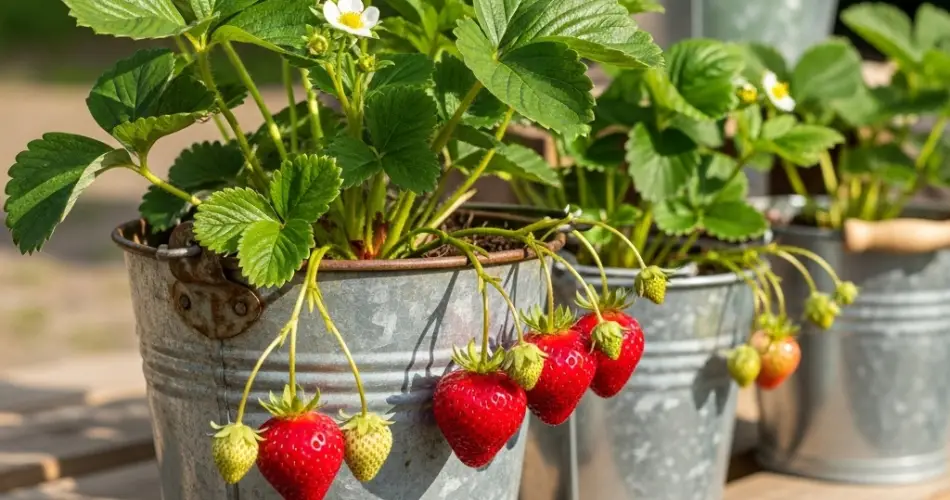
Sweet, juicy strawberries are one of the most rewarding fruits to grow at home. Even if you don’t have a garden, you can enjoy continuous harvests of strawberries right from a few buckets on your balcony, patio, or windowsill. Container-grown strawberries are not only space-saving but also make harvesting easy, reduce pest problems, and allow you to enjoy fresh fruit right at your fingertips.
With a little planning and regular care, you can grow strawberries in buckets and keep them producing for months. Here’s how to set up your strawberry bucket garden and enjoy a continuous supply of homegrown berries.
Why Grow Strawberries in Buckets?
Growing strawberries in buckets offers several unique advantages:
-
Space-efficient: Perfect for small spaces, balconies, or patios.
-
Mobility: Move buckets to follow the sun or protect from extreme weather.
-
Pest control: Containers reduce contact with soil-borne diseases and ground pests like slugs.
-
Easy access: Harvesting is more convenient, and maintenance is simpler.
-
Beautiful and productive: Strawberry plants have attractive foliage and flowers, adding charm to small spaces.
Whether you’re growing a few plants or creating a strawberry tower with stacked containers, bucket gardening is ideal for maximizing yield in a compact area.
Best Strawberry Varieties for Buckets
There are three main types of strawberries to consider, and your choice will affect how often and how long your plants produce fruit:
-
June-bearing: Produce one large crop per year, usually in late spring or early summer.
-
Everbearing: Produce two to three harvests per season—typically in spring, summer, and early fall.
-
Day-neutral: Produce fruit continuously throughout the growing season (best for continuous harvests in buckets).
For bucket gardening and steady fruiting, everbearing and day-neutral varieties are ideal. Some excellent options include:
-
‘Albion’ – Day-neutral with large, sweet berries.
-
‘Seascape’ – Productive and flavorful, well-suited for containers.
-
‘Ozark Beauty’ – A hardy everbearing type with good yield.
-
‘Mara des Bois’ – A French variety known for its aromatic, wild-strawberry flavor.
Choosing the Right Bucket and Setup
Strawberry plants have shallow roots, so they don’t require deep containers—but they do need good drainage.
Bucket requirements:
-
Depth: 8–10 inches minimum
-
Diameter: 10–14 inches (wide enough for multiple plants)
-
Drainage: Drill several holes in the bottom to prevent soggy roots
Each bucket can support 2–3 plants comfortably. You can also use hanging baskets or stackable pots for vertical growing.
Preparing the Soil
Strawberries thrive in well-draining, slightly acidic soil. Poor soil can lead to small berries or root rot.
Ideal soil mix:
-
60% high-quality potting mix
-
30% compost (for nutrients)
-
10% perlite or coconut coir (to improve drainage)
The pH should be slightly acidic, around 5.5 to 6.5. Avoid heavy garden soil, which can compact and restrict root growth in containers.
Planting Your Strawberries
-
Fill your bucket with moist soil mix, leaving about 1 inch at the top.
-
Make a small hole for each plant, ensuring the crown (where leaves meet the roots) sits just above the soil line.
-
Space plants evenly, allowing room for growth and air circulation.
-
Gently firm the soil around the roots and water thoroughly.
For bare-root strawberries, soak the roots in water for 15–30 minutes before planting.
Caring for Strawberries in Buckets
Sunlight
Strawberries need at least 6–8 hours of full sun daily. Place your buckets in the sunniest spot available.
Watering
Keep the soil consistently moist but not waterlogged. Buckets dry out faster than ground soil, so monitor them regularly—especially during hot weather.
Feeding
Feed your strawberries with a balanced liquid fertilizer every 2–3 weeks, or use a slow-release organic fertilizer at the start of the season. Avoid high-nitrogen fertilizers, which encourage leafy growth at the expense of fruit.
Mulching
Add a thin layer of straw or shredded leaves to retain moisture, prevent weeds, and keep berries clean.
Encouraging Continuous Harvests
To get the most out of your strawberry buckets:
-
Choose everbearing or day-neutral varieties for repeat fruiting.
-
Remove runners (long stems with baby plants) if you want the plant to focus energy on producing berries instead of spreading.
-
Pick berries regularly—frequent harvesting encourages more blooms and fruits.
-
Trim old leaves at the end of the season to promote new growth.
With care, your plants can produce fruit from late spring through early fall.
Overwintering Your Plants
Strawberry plants are perennials, meaning they can grow for several years. In colder climates, protect your bucket-grown strawberries in winter:
-
Move buckets to a sheltered location (like a garage or shed).
-
Mulch heavily with straw or dry leaves to insulate roots.
-
Water lightly during dry periods.
In mild climates, strawberries can often overwinter outdoors with minimal protection.
Final Thoughts
Strawberries grown in buckets offer a fun, accessible way to enjoy homegrown fruit even without a garden. With the right variety, a sunny spot, and regular care, you can enjoy sweet, fresh strawberries throughout the growing season—and even into the following year.
Container gardening has never been so sweet. Start small, stay consistent, and soon you’ll be enjoying bowlfuls of berries picked right from your balcony or patio.


