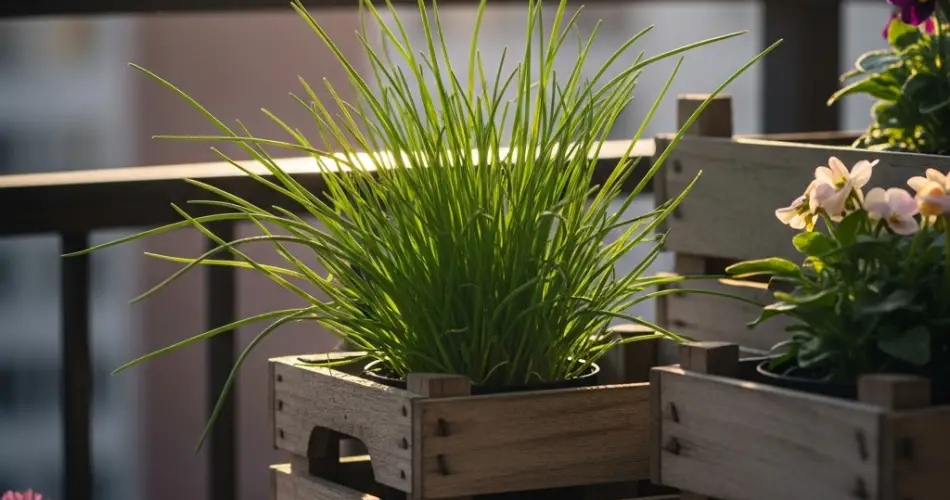
Chives (Allium schoenoprasum) are one of the easiest and most rewarding herbs to grow at home. With their delicate onion flavor and bright green stalks, they make a perfect garnish for a wide range of dishes—from soups and salads to scrambled eggs and baked potatoes. Better yet, they thrive in containers and can flourish on sunny balconies with just a bit of care. Growing chives in wooden boxes adds a rustic charm to your space while keeping your herb garden neat and manageable.
Why Choose Wooden Boxes for Chives?
Wooden boxes offer both function and style. These containers are breathable, allowing roots to stay cool and moisture to regulate naturally. Their shape also makes them ideal for shallow-rooted herbs like chives, which don’t require deep soil but benefit from some spreading room. Crates or wooden planters can be easily moved or placed on shelves or balcony railings, making them a great option for limited-space gardening.
What You’ll Need
Before planting, gather these materials:
-
A wooden box or crate (untreated wood is best)
-
Landscaping fabric or coconut coir to line the box
-
Well-draining potting mix
-
Organic compost
-
Chive seeds or seedlings
-
A hand trowel
-
Watering can or spray bottle
Optional: Small gravel or pebbles for additional drainage at the bottom
Preparing the Container
If the box has wide slats or large gaps, line it with landscaping fabric to hold the soil in place while still allowing water to drain. For best results, ensure the box is at least 15–20 cm deep. To improve drainage, place a thin layer of gravel or pebbles at the bottom before adding soil.
Mix potting soil with a bit of compost to enrich it. Chives prefer fertile, loamy soil with good drainage. Fill the box, leaving a couple of centimeters at the top to prevent water and soil from spilling out during watering.
Planting Chives
You can grow chives either from seeds or seedlings. If using seeds, sow them in rows about 5 mm deep and lightly cover them with soil. Space rows about 10–15 cm apart. Mist the soil gently with water to keep it evenly moist during germination, which usually takes 7 to 14 days.
If using seedlings, plant them about 10–15 cm apart. They grow in clumps and expand over time, so give them a bit of space to spread.
Sunlight and Positioning
Chives need full sun for healthy growth—aim for at least 6 hours of direct sunlight each day. A sunny balcony railing, wall-mounted shelf, or windowsill is ideal. In very hot climates, partial afternoon shade can help prevent the plant from drying out too quickly.
If your balcony doesn’t receive much sunlight, consider rotating the planter weekly or using a reflective surface nearby to direct more light onto the plants.
Watering and Fertilizing
Keep the soil consistently moist but not soggy. Water the chives when the top layer of soil feels dry to the touch. In hot or windy conditions, you may need to water more frequently, especially in wooden containers that dry out faster than plastic ones.
Chives aren’t heavy feeders but benefit from occasional nourishment. Apply a diluted organic liquid fertilizer or compost tea once every 4 to 6 weeks during the growing season. Avoid over-fertilizing, as this can reduce the intensity of flavor in the leaves.
Ongoing Care and Harvesting
Chives grow quickly and can be harvested once they reach about 15 cm in height. Use clean scissors to snip the leaves about 2–3 cm above the base. Harvest from the outer edges first, allowing the center to continue growing. Regular trimming encourages denser, bushier growth.
Avoid cutting more than one-third of the plant at a time, especially in the early stages, to keep it healthy and productive. In early summer, chives may produce round purple flowers. These are not only attractive but also edible—perfect for garnishing salads.
Pest and Disease Tips
Chives are generally low-maintenance and pest-resistant thanks to their onion-like aroma. However, you may occasionally encounter aphids or fungal issues if airflow is poor. Improve ventilation by spacing your containers well, and avoid overwatering to prevent rot or mildew.
If pests appear, rinse the plants with a strong spray of water or apply a mild neem oil solution to affected areas.
Winter Care and Propagation
Chives are perennial and can survive colder months. In regions with frost, the top growth will die back, but the roots will remain dormant and re-sprout in spring. In milder climates, the plant may continue to grow through winter with reduced vigor.
Every two to three years, divide the clumps to rejuvenate the plant and prevent overcrowding. Simply dig up the root ball, separate it into smaller sections, and replant in fresh soil.
Conclusion
Growing chives in wooden boxes is an easy and rewarding project for any urban gardener. These adaptable herbs bring both beauty and flavor to your balcony, requiring minimal space and effort. With the right sunlight, occasional feeding, and proper watering, your wooden box will be overflowing with lush green chives ready to snip and serve whenever your cooking needs a fresh, flavorful touch.


