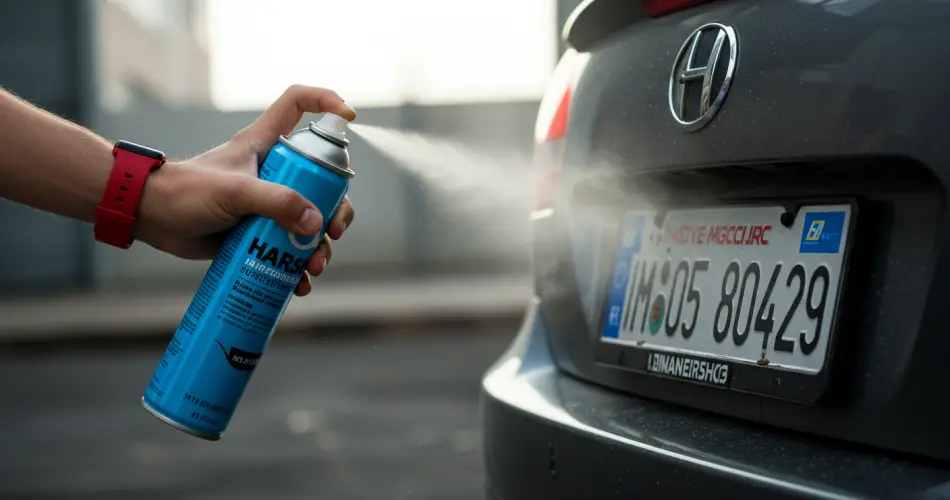
Sometimes unusual trends emerge on the road that make us stop and wonder, “Why would anyone do that?” One of these odd practices gaining attention involves motorists spraying hairspray directly onto their vehicle’s license plates. At first glance, it seems like a bizarre and meaningless act. Yet, a surprising number of drivers have started doing it.
But what is the purpose of this unusual behavior? Why would anyone reach for a can of hairspray, a product meant for styling hair, and apply it to the back of their car? The truth is that there is a calculated—though illegal—reason behind it. Let’s take a closer look at what motivates drivers to use this tactic, and more importantly, the severe legal consequences that can follow.
A Trick Outside the Law
To some, the idea of spraying hairspray on a license plate may appear clever or inventive. They believe it creates a reflective barrier that makes numbers and letters on the plate difficult for speed cameras to capture clearly. In practice, it’s a way of trying to outsmart the growing number of traffic cameras and speed enforcement systems.
But make no mistake: this is not a harmless trick. It is, in fact, a serious violation of the law. Both traffic regulations and criminal codes classify any attempt to alter, obscure, or falsify a license plate as a criminal offense. In other words, the moment you spray hairspray—or any substance—with the intent to make a plate unreadable, you’re stepping into the territory of fraud and counterfeiting.
Drivers who think this is just a harmless shortcut to avoid a speeding ticket often don’t realize how grave the consequences are. And once they do, it’s usually too late.
Why Drivers Do It
The main motivation behind this act is simple: to avoid being detected by speed cameras and automated traffic enforcement systems.
Across many countries, the number of roadside cameras has increased significantly in recent years. They are used to monitor not only speeding but also red-light violations, toll evasion, and other traffic infractions. Some drivers, frustrated by the constant surveillance, look for ways to make their license plates unreadable.
By spraying a thin layer of hairspray over the plate, they hope that the flash of the camera will cause glare, blurring the numbers and letters in the recorded image. Others may use similar methods, such as transparent sprays, reflective covers, or even tape, to alter how the plate appears.
While they may believe this method gives them an edge, it’s important to stress: it doesn’t make them invisible. Traffic police are well aware of these tricks, and the law treats them with absolute seriousness.
Why It’s Illegal
License plates exist for one simple reason: to identify vehicles and their drivers. Altering, concealing, or tampering with a plate undermines this system and is therefore considered a form of forgery or falsification under the law.
Whether it’s applying hairspray to create glare, sticking black tape to change a letter (for example, turning an “I” into a “T”), or driving with a plate so dirty that it becomes unreadable—these are all treated as attempts to deceive authorities.
Legally, this falls under the category of counterfeiting or declaring false information. According to most legal systems, this is not a minor infraction but a criminal offense.
The Consequences
Drivers who engage in this practice face severe consequences that go far beyond a simple speeding fine. Depending on the country’s laws, penalties can include:
-
Prison time: In some jurisdictions, falsifying a license plate can result in 3 to 12 years in prison.
-
Heavy fines: Monetary penalties are steep. Fines can range anywhere from around €2,000 to nearly €8,000 (or equivalent in other currencies), depending on the severity of the offense and whether it is classified as an administrative violation or a criminal act.
-
Criminal record: Being convicted of falsifying or altering a license plate can permanently stain a driver’s record. This can affect employment opportunities, international travel, and other aspects of daily life.
It’s worth noting that the law does not only punish those who intentionally spray hairspray or use tape. Even having a license plate that is “equivocal,” meaning difficult to read—whether due to dirt, damage, or deliberate neglect—can result in a fine. In some places, these minor fines range from about €25 to €100.
Why It’s Not Worth the Risk
The idea of saving money by avoiding a speeding ticket might sound tempting to some drivers. But when compared to the potential consequences—years in prison, thousands of euros in fines, and a criminal record—the logic quickly falls apart.
Moreover, traffic enforcement technology is constantly improving. Modern speed cameras are often capable of reading through glare, dirt, and minor alterations. In other words, the hairspray trick may not even work as intended, making the risk even more pointless.
Instead of trying to “cheat” the system, the safer and far more sensible option is simply to follow speed limits and respect traffic laws. These rules exist not only to generate revenue but to protect everyone’s safety on the road. Speeding increases the risk of accidents, injuries, and fatalities—not just for the driver but also for passengers, pedestrians, and other motorists.
Final Thoughts
Spraying hairspray on a license plate may seem like a clever hack, but in reality, it is a reckless, illegal act that can have life-changing consequences. From hefty fines to years in prison, the law does not take such behavior lightly.
While the temptation to outsmart speed cameras may exist, the risks far outweigh the benefits. Drivers who try this tactic are essentially committing fraud, and sooner or later, the law catches up with them.
The bottom line? Forget shortcuts, gimmicks, or tricks with hairspray. The only real way to avoid fines and stay safe is simple: obey traffic rules, drive responsibly, and keep your license plate clean and visible.