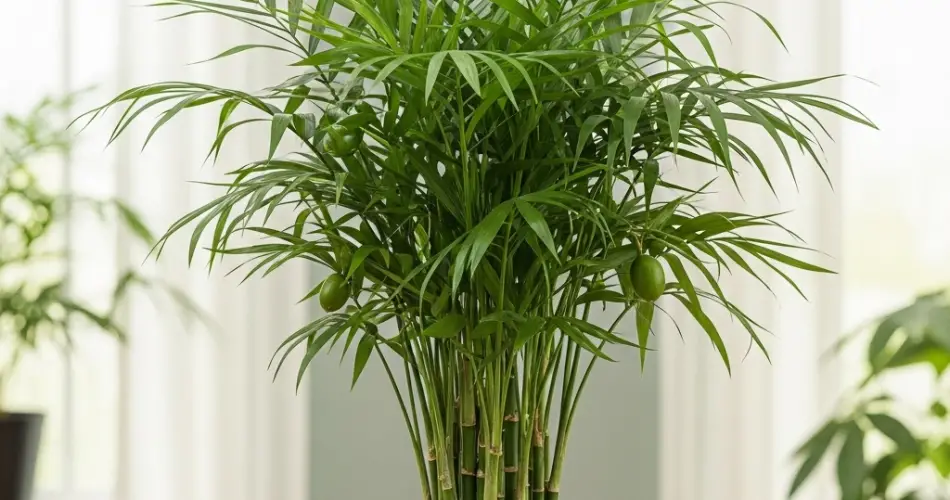
Bamboo palms (Chamaedorea seifrizii) are elegant and versatile indoor plants known for their slender stems and feathery, arching fronds. With a graceful, bamboo-like appearance, they bring a tropical touch to homes and offices while also improving air quality. Because of their reputation as easy-to-care-for plants, many people wonder: Can bamboo palms grow in low light conditions?
The good news is that bamboo palms are among the best indoor palms for low to medium light environments. While they do not thrive in complete darkness, they adapt remarkably well to shaded spaces and indirect light, making them ideal for rooms where sunlight is limited.
Natural Habitat and Light Adaptation
Bamboo palms are native to the understory of Central and South American rainforests. In their natural environment, they grow beneath taller trees, receiving dappled or filtered sunlight instead of direct exposure. This background explains their tolerance for low-light conditions indoors.
Unlike some palms that require constant bright light, bamboo palms are naturally adapted to grow in shaded spots. However, like all plants, they still need some light to carry out photosynthesis and maintain their lush, green foliage.
Can Bamboo Palms Survive in Low Light?
Yes, bamboo palms can survive—and even do quite well—in low light settings. They are excellent choices for corners of rooms, offices with fluorescent lights, or spaces where direct sunlight is scarce.
Here’s how they respond in different light levels:
-
Bright, indirect light: Ideal for faster, fuller growth and vibrant fronds.
-
Low to medium light: Growth slows, but the plant remains healthy and attractive.
-
Very dark spaces with no light: Not sustainable long-term. Bamboo palms need at least some indirect natural light or artificial light to survive.
So, while they cannot live in total darkness, they tolerate dimmer conditions better than many other palms or houseplants.
Benefits of Growing Bamboo Palms in Low Light
Growing bamboo palms in shaded areas has some surprising advantages:
-
No risk of leaf burn – Unlike in bright, direct sunlight where fronds can scorch, shaded light keeps foliage soft and green.
-
Easy to manage indoors – They adapt to artificial lighting, making them great for offices, hallways, or living rooms away from windows.
-
Consistent greenery – Even in lower light, they maintain their lush, bushy look without demanding much maintenance.
Challenges of Low Light for Bamboo Palms
While bamboo palms tolerate low light, they do face some challenges if conditions are too dim:
-
Slower growth – You may see fewer new fronds emerging.
-
Yellowing leaves – A sign the plant is struggling with insufficient light or overwatering.
-
Sparse foliage – In very dim spaces, the plant may grow thin and less full.
These issues don’t necessarily mean your palm is unhealthy, but they are reminders that even low-light plants need some brightness.
Tips for Caring for Bamboo Palms in Low Light
If you’re keeping your bamboo palm in a shaded or low-light room, a few adjustments can help it thrive:
-
Use artificial light if needed
Place the plant near LED grow lights or fluorescent office lights if natural sunlight is minimal. Aim for 10–12 hours of light daily. -
Avoid overwatering
In low light, the soil dries out more slowly. Let the top 1–2 inches of soil dry before watering again. Overwatering in dim light often leads to root rot. -
Maintain humidity
Bamboo palms love moist air. Mist the leaves, use a humidifier, or place the pot on a tray with water and pebbles. -
Clean the leaves
Dust reduces the plant’s ability to absorb light. Wipe fronds regularly to keep them healthy. -
Rotate the plant
Turn the pot every couple of weeks so all sides receive equal light exposure.
Signs Your Bamboo Palm Needs More Light
If your plant isn’t thriving, it may be a sign it needs more brightness. Watch for:
-
Pale, yellowing fronds
-
Very slow or stunted growth
-
Thin, leggy stems
In such cases, moving the palm closer to a brighter window with filtered light or adding a grow light can restore its health.
Final Thoughts
Bamboo palms are one of the most adaptable indoor palms, making them an excellent choice for homes and offices with limited natural sunlight. They not only survive in low-light conditions but often look their best when protected from harsh, direct rays.
While they cannot live in total darkness, providing a little indirect natural light or consistent artificial light allows them to maintain their lush, tropical appearance. With proper care—especially avoiding overwatering and ensuring enough humidity—your bamboo palm can thrive in shaded corners, bringing lasting greenery and elegance to your space.


