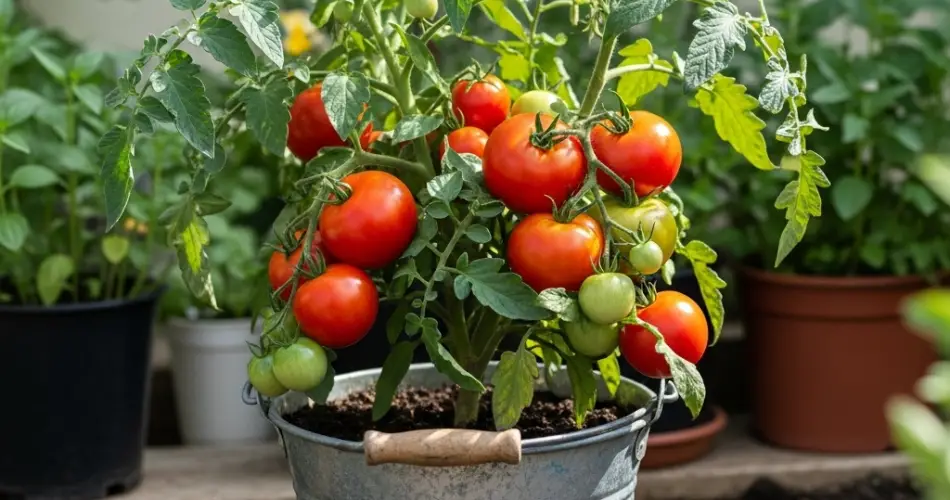
Tomatoes are one of the most rewarding crops for home gardeners, offering a steady supply of juicy, flavorful fruits throughout the growing season. While many people think they need large garden beds to grow tomatoes successfully, the truth is that tomatoes can thrive in containers, especially buckets. With just a little space, the right soil mix, and proper care, even beginners can harvest an abundant crop of homegrown tomatoes.
This guide explains how to grow tomatoes in buckets, covering everything from choosing the right varieties to harvesting ripe fruits.
Why Grow Tomatoes in Buckets?
Growing tomatoes in buckets has several advantages:
-
Space-friendly: Perfect for balconies, patios, or small backyards.
-
Portability: Buckets can be moved to follow the sun or shield plants from heavy rain.
-
Pest and disease control: Reduces exposure to soil-borne issues common in garden beds.
-
Simplified harvest: Fruits are easier to reach and pick compared to sprawling garden plants.
For beginners, bucket gardening provides a manageable, low-cost way to start growing tomatoes at home.
Choosing the Right Bucket
The container you use will determine how healthy your plants grow. Tomatoes need room for their roots, so choose a 5-gallon bucket at minimum. Larger is even better for stronger root systems and higher yields.
Ensure the bucket has drainage holes at the bottom. Without proper drainage, water accumulates and can lead to root rot. Elevating the bucket slightly on bricks or pot feet also helps excess water escape.
Best Tomato Varieties for Buckets
Not all tomatoes are equally suited to container gardening. Compact, determinate (bush-type) varieties are easier for beginners since they stay smaller and require less staking. Some great options include:
-
Roma – dependable, meaty tomatoes ideal for sauces.
-
Patio Princess – bred for small spaces, perfect in buckets.
-
Tiny Tim or Tumbling Tom – cherry varieties that grow well in hanging or upright containers.
-
Celebrity – a versatile hybrid with good disease resistance.
If you want larger fruit, indeterminate varieties like Beefsteak or Big Boy can also grow in buckets but will need taller supports.
Preparing the Soil Mix
Tomatoes thrive in loose, fertile, and well-draining soil. A good mix for bucket gardening includes:
-
60% quality potting mix
-
30% compost for organic nutrients
-
10% perlite or sand for aeration
Avoid using garden soil directly, as it may compact too much and hinder root growth in containers.
Planting Tomatoes in Buckets
-
Fill the bucket halfway with soil mix.
-
Plant deep: Place the tomato seedling into the bucket, burying it up to the first set of true leaves. Tomatoes can grow roots along buried stems, which strengthens the plant.
-
Top up with soil until about two inches from the rim of the bucket.
-
Water thoroughly to help settle the roots.
Planting deeply ensures a sturdier plant capable of supporting heavy fruit loads later.
Caring for Tomato Plants
Sunlight
Tomatoes are sun-loving plants. Place the bucket in a location that receives 6–8 hours of direct sunlight daily. Without enough sun, plants will grow tall and thin, with fewer fruits.
Watering
Consistent moisture is key. Check the soil daily, especially during hot weather, and water when the top inch feels dry. Water deeply until excess drains from the bottom. Inconsistent watering can cause problems like blossom end rot or fruit cracking.
Feeding
Tomatoes are heavy feeders. Start fertilizing two weeks after planting with a balanced liquid fertilizer. Once flowering begins, switch to a fertilizer higher in potassium and phosphorus to encourage fruit development.
Supporting the Plant
Even compact tomato plants benefit from support. Insert a stake, cage, or trellis into the bucket at planting time to avoid damaging roots later. This keeps the plant upright and fruits off the soil, reducing disease risk.
Common Problems and Solutions
-
Yellowing leaves: Often a sign of nutrient deficiency. Supplement with compost tea or a balanced fertilizer.
-
Blossom end rot: Caused by calcium deficiency and inconsistent watering. Maintain steady moisture and consider adding crushed eggshells to the soil.
-
Pests like aphids or whiteflies: Spray leaves with a mild soap solution or introduce beneficial insects like ladybugs if infestations occur.
By monitoring plants regularly, you can catch problems early and keep them healthy.
Harvesting Tomatoes
Tomatoes are ready to pick when they reach their full color—red, yellow, or orange depending on the variety—and feel slightly soft when gently squeezed. Regular harvesting encourages the plant to produce more fruits.
If frost or storms are approaching, you can harvest green tomatoes and let them ripen indoors on a sunny windowsill or in a paper bag with a ripe banana.
Final Thoughts
Bucket gardening is a beginner-friendly way to grow delicious tomatoes at home, even in small spaces. With a sturdy container, good soil, and consistent care, you can enjoy a continuous harvest of fresh tomatoes throughout the season.
For urban gardeners, balcony growers, or anyone without traditional garden beds, buckets provide a practical solution. Once you taste your first sun-ripened tomato grown in a bucket, you’ll see why this method has become so popular.


