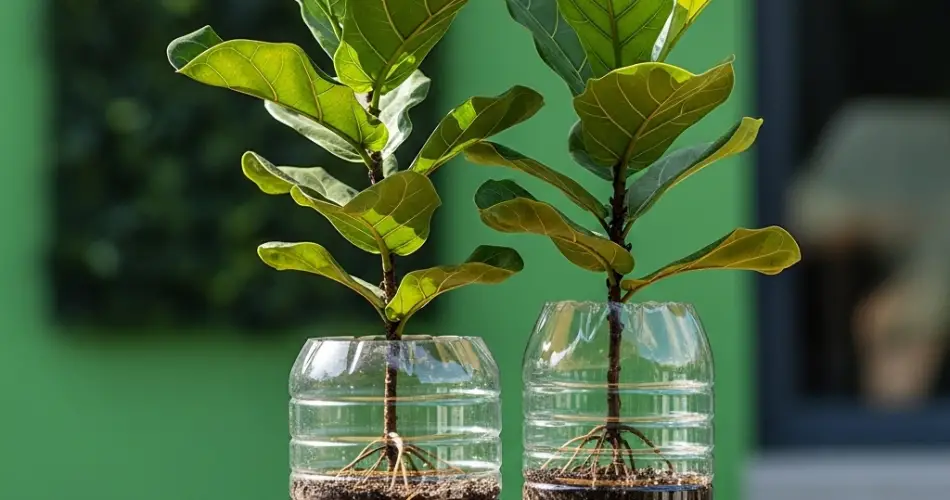
The fiddle leaf fig (Ficus lyrata) is a favorite among indoor plant lovers, thanks to its large, glossy leaves and bold structure. While traditionally grown in large pots, it’s possible to grow a young fiddle leaf fig in an upcycled plastic bottle—making it ideal for small apartments where floor space is limited. Bottle gardening is a sustainable, space-saving solution that allows urban gardeners to enjoy greenery without sacrificing room or style.
Here’s how to grow and care for a fiddle leaf fig using a simple plastic bottle, turning even a tiny corner into a lush, green statement.
Why Use Bottles for Fiddle Leaf Fig?
Fiddle leaf figs can adapt to container gardening when properly managed. Using plastic bottles as planters not only recycles waste but also creates a compact growing space that fits neatly on windowsills, shelves, or countertops.
This method works best for young plants or rooted cuttings. While mature fiddle leaf figs will eventually outgrow a bottle, starting small gives you time to enjoy the plant and transplant it later when space or need allows.
Preparing the Bottle Planter
Choose a clean, sturdy plastic bottle—preferably 1.5 or 2 liters in size. Transparent bottles are suitable but should be covered or painted to block light and protect the plant’s roots.
Steps for preparing the bottle:
-
Cut the bottle: Using a sharp knife or scissors, cut the top third of the bottle off. You’ll use the bottom portion as your planter.
-
Make drainage holes: Puncture 3–5 small holes at the bottom to allow excess water to drain freely.
-
Optional outer design: To enhance appearance and support root health, wrap the outside with jute, cloth, or kraft paper to block light and add visual appeal.
A layer of gravel or small stones can be added to the bottom for extra drainage support.
Choosing the Right Soil
Fiddle leaf figs prefer rich, well-draining soil that retains some moisture without becoming soggy. Use a premium indoor plant mix or create your own by mixing:
-
2 parts potting soil
-
1 part coco coir or peat moss
-
1 part perlite or coarse sand
This blend ensures the plant gets good airflow and nutrients while preventing compacted, waterlogged soil—conditions that often lead to root rot.
Planting the Fiddle Leaf Fig
Bottle planters are best for small fiddle leaf fig cuttings or saplings. Avoid placing mature plants in such tight spaces, as their large roots need more room to spread.
To plant:
-
Fill the bottle halfway with your soil mix.
-
Gently position the fiddle leaf fig cutting or small plant in the center.
-
Add more soil until it supports the plant upright, keeping the base of the stem just above the soil line.
-
Water lightly to settle the soil around the roots.
Place the bottle where it will receive ample light but not direct sun all day long.
Light and Placement
Fiddle leaf figs need bright, indirect sunlight to thrive. A spot near a large window with filtered morning light is ideal. Avoid dark corners and locations with harsh afternoon sun, which can scorch the leaves through the bottle wall.
Rotate the plant occasionally to promote even growth and prevent it from leaning toward the light.
Watering and Humidity
These plants prefer consistent but moderate moisture. Overwatering is a common mistake, especially in plastic containers with limited drainage.
Watering tips:
-
Check the top inch of soil—if it’s dry, it’s time to water.
-
Water until it drains out of the bottom, then allow the excess to escape.
-
Avoid letting the bottle sit in standing water.
-
Mist the leaves occasionally, especially in dry indoor environments, to mimic the humid conditions fiddle leaf figs enjoy.
Feeding Your Plant
During the growing season (spring and summer), fertilize once a month using a balanced liquid houseplant fertilizer diluted to half strength. In fall and winter, reduce feeding as the plant’s growth slows.
Overfeeding can lead to leaf discoloration or salt buildup in the soil, so always follow label instructions and avoid fertilizing too often.
Pruning and Maintenance
Pruning is rarely needed for young plants in bottle gardens, but you can pinch off any damaged or yellowing leaves at the base. Wipe the leaves gently with a damp cloth to remove dust and maintain their shine.
As your plant grows, observe its height and root spread. If the roots begin to circle tightly or fill the bottle, consider transplanting it to a larger pot to maintain health and structure.
When to Repot
Fiddle leaf figs don’t like being rootbound for long. Once the roots become too cramped or start poking through the drainage holes, it’s time to repot.
To transition:
-
Gently remove the plant and shake off excess soil.
-
Transfer it to a larger pot with fresh soil mix.
-
Water thoroughly and place it in the same light conditions.
Final Thoughts
Growing a fiddle leaf fig in a plastic bottle is a smart, eco-friendly way to bring vibrant greenery into small living spaces. With the right care, light, and a touch of creativity, even a recycled bottle can become a stylish planter for this elegant indoor tree. Whether you’re experimenting with a cutting or nurturing a sapling, this compact setup allows you to enjoy the beauty of a fiddle leaf fig without sacrificing space or sustainability.


