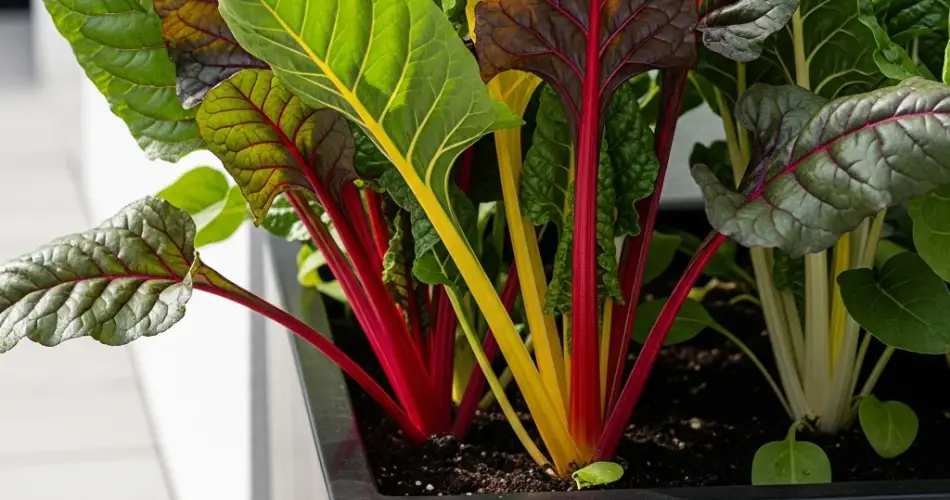
If you’re looking for a leafy green that’s as beautiful as it is nutritious, look no further than Swiss chard. With its vibrant stems in hues of red, pink, yellow, orange, and white, Swiss chard is a striking addition to any garden—and it thrives in containers. This cool- and warm-season vegetable grows well in limited space and is incredibly easy to maintain, making it ideal for small-space gardeners, apartment dwellers, and beginners alike.
Swiss chard is not only ornamental but also highly productive. It can be harvested continuously for months, offering a generous supply of flavorful leaves for sautés, salads, and soups. Whether grown on a sunny balcony or a cozy patio, Swiss chard brings bold color and fresh harvests to your container garden.
Why Grow Swiss Chard in Containers?
Swiss chard adapts well to containers because of its shallow root system and tolerance for varying temperatures. It’s more heat-tolerant than spinach and more cold-tolerant than many other greens, making it a versatile choice year-round.
Benefits of growing Swiss chard in containers:
-
Adds vibrant color to small spaces
-
Thrives in partial to full sun
-
Produces continuously with proper harvesting
-
Requires minimal space and maintenance
-
Resists bolting in warm weather
-
Ideal for patios, balconies, decks, or windowsills
Best Varieties for Container Gardening
There are several Swiss chard varieties well-suited for containers, each offering different colors and leaf textures.
Popular options include:
-
Bright Lights – A mix of colorful stems (gold, pink, red, white); visually stunning
-
Fordhook Giant – Thick white stems and crinkled, dark green leaves
-
Ruby Red – Glossy green leaves with deep red veins and stems
-
Lucullus – Pale green leaves with white stalks, milder flavor
These varieties don’t just taste great—they also add ornamental appeal to your garden space.
What You’ll Need
Before you begin planting, gather the following materials:
-
A container at least 10–12 inches deep
-
Quality potting soil rich in organic matter
-
Swiss chard seeds or seedlings
-
A sunny or partially shaded location (at least 4–6 hours of sunlight daily)
-
Watering can or hose with a gentle spray
-
Optional: liquid fertilizer or compost tea
Step-by-Step Guide to Growing Swiss Chard in Containers
1. Choose the Right Container
Select a pot that’s at least 12 inches deep and wide enough to accommodate multiple plants. Make sure the container has proper drainage holes to prevent root rot.
2. Prepare the Soil
Use a well-draining potting mix enriched with compost or organic matter. Swiss chard prefers slightly acidic to neutral soil (pH 6.0–7.0).
3. Sow Seeds or Plant Seedlings
-
Seeds: Sow ½ inch deep, spacing seeds about 2 inches apart. Once seedlings emerge, thin them to 6–8 inches apart.
-
Seedlings: Plant 8–10 inches apart to allow mature growth.
4. Provide Light and Water
Place the container in a spot that receives 4–6 hours of sunlight each day. In hot climates, afternoon shade can help prevent heat stress. Keep the soil consistently moist, but not soggy.
Ongoing Care for Healthy Plants
Swiss chard is fairly low-maintenance but benefits from a little regular care:
-
Watering: Check the soil daily. Water when the top inch feels dry. Avoid letting the soil dry out completely.
-
Feeding: Every 2–3 weeks, feed with a diluted liquid fertilizer or apply compost tea to support continuous leaf production.
-
Mulching: A thin layer of mulch can help conserve moisture and regulate soil temperature.
-
Pest Control: Swiss chard is generally pest-resistant but may attract aphids or leaf miners. Use insecticidal soap or neem oil if needed.
Harvesting Swiss Chard
Swiss chard is ready to harvest when leaves are about 6–8 inches long. Harvesting often encourages new growth and extends the plant’s productivity.
To harvest:
-
Use scissors or garden shears to cut outer leaves near the base.
-
Leave the inner leaves and central crown intact.
-
Regular harvesting keeps the plant productive for several months.
Even mature plants can regenerate new leaves after harvesting, making Swiss chard an excellent “cut-and-come-again” crop.
Troubleshooting Common Problems
Leggy or pale leaves
-
Cause: Not enough sunlight
-
Solution: Move container to a sunnier spot
Wilting or yellowing
-
Cause: Overwatering or poor drainage
-
Solution: Ensure proper drainage and let soil dry slightly between watering
Slow growth or small leaves
-
Cause: Nutrient deficiency
-
Solution: Apply a balanced liquid fertilizer or refresh the potting mix with compost
Final Thoughts
Swiss chard is a bold, beautiful, and bountiful crop that’s perfect for container gardening. With vibrant stems and nutrient-rich leaves, it brings both color and flavor to your space—and your meals. Easy to grow and even easier to harvest, Swiss chard proves that you don’t need a large garden to enjoy fresh, homegrown vegetables.
Whether you’re a beginner looking to grow your first leafy greens or an experienced gardener experimenting with small-space crops, Swiss chard delivers on both beauty and taste. With just a container, some soil, and a little sunlight, you can enjoy this stunning supergreen right at home.


