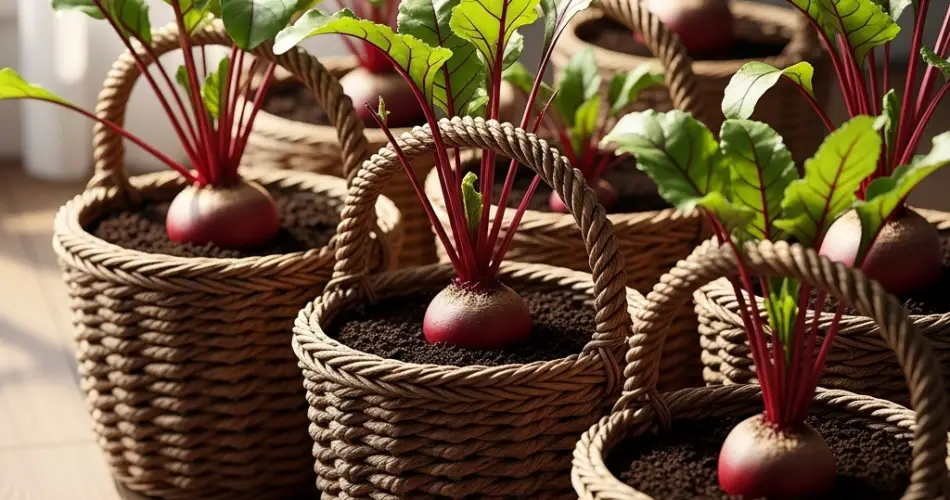
Beetroots are a colorful, nutritious, and surprisingly easy crop to grow at home. Their earthy sweetness makes them a favorite for salads, roasts, juices, and even pickling. While many gardeners assume beetroots require large garden beds, the truth is they adapt beautifully to container gardening — especially in woven baskets and fabric containers. With the right setup, you can enjoy fresh, homegrown beets right from your balcony, patio, or small urban garden.
Why Grow Beetroots in Woven Containers?
Woven baskets, fabric grow bags, or breathable containers create the ideal growing environment for beetroots. Unlike solid plastic pots, woven containers allow for better airflow, preventing soil from becoming compacted and ensuring that roots develop evenly. Good aeration also helps reduce the risk of root diseases and allows water to drain efficiently while keeping the soil moist but not soggy.
Another advantage is flexibility. Woven containers are lightweight and portable, making it easy to move them for optimal sunlight or shelter during extreme weather. They also add a rustic, natural aesthetic to your balcony or patio garden, blending beauty with practicality.
Choosing the Right Basket and Soil
The first step to successful beetroot container gardening is choosing the proper container and soil.
-
Basket size: Select a woven basket or fabric grow bag that is at least 12 inches deep. Beetroots need room for their taproots to swell into round bulbs. A wider basket also allows you to plant multiple beets in one container.
-
Lining: If you’re using a traditional wicker or bamboo basket, line the inside with burlap, coco coir, or a reusable grow liner. This keeps soil from falling through gaps while still allowing drainage.
-
Soil mix: Beetroots thrive in light, loose, and nutrient-rich soil. Use a potting mix with equal parts compost, garden soil, and sand or perlite for aeration. Avoid heavy clay soil, which can restrict root growth and cause misshapen beets.
Before planting, mix in a balanced organic fertilizer or compost tea to provide a steady supply of nutrients. Beets particularly benefit from phosphorus and potassium for strong root development.
Planting Beetroots in Containers
You can grow beetroots either from seeds or seedlings, though seeds are usually more reliable and cost-effective.
-
Sowing seeds: Plant beetroot seeds about ½ inch deep and 2–3 inches apart. Each seed cluster actually contains several seeds, so expect multiple sprouts per spot. Once seedlings appear, thin them out by snipping extras at the base, leaving only the strongest seedling per cluster.
-
Spacing: Beetroots need space to develop properly. Keep at least 3 inches between plants to allow bulbs to expand. For smaller baby beets, closer spacing is fine.
-
Watering: Water gently but thoroughly after planting. Maintain consistent soil moisture, as uneven watering can lead to woody roots or cracking.
Sunlight and Temperature Needs
Beetroots grow best in cool to mild temperatures, thriving between 50°F and 75°F (10°C to 24°C). They require at least 6 hours of sunlight daily but also tolerate partial shade. In very hot climates, place baskets where they receive morning sun and afternoon shade to prevent stress.
Because woven baskets are portable, you can easily shift them to maintain ideal growing conditions. In colder months, insulating the container with straw or fabric can extend your growing season.
Fertilizing and Care
Beetroots are light feeders but appreciate steady nutrition. Apply a balanced, water-soluble fertilizer every three weeks or top-dress with compost during the growing period. Avoid excessive nitrogen, as it promotes leafy growth at the expense of root development.
Weeding is rarely an issue in containers, but keep an eye out for pests like aphids or leaf miners. Regular inspection and natural remedies, such as neem oil sprays, can keep problems under control.
Harvesting Your Beets
Beetroots mature in about 50–70 days, depending on the variety. You can harvest them at different stages:
-
Baby beets: Harvest when the roots are about 1–2 inches across for tender, sweet flavor.
-
Full-sized beets: Wait until they reach 3 inches in diameter for heartier roots.
To harvest, gently loosen the soil and pull the beets by their leafy tops. The greens themselves are edible and can be used like spinach or Swiss chard in salads and stir-fries. This makes beetroots a double-yield crop: roots and greens.
Continuous Planting for Ongoing Harvests
For a steady supply of fresh beets, practice succession planting. Sow new seeds every 3–4 weeks in additional containers or in sections of your basket. This ensures that while some beets are ready to harvest, others are still growing.
You can also interplant with fast-growing leafy greens, such as lettuce or arugula, since they mature before the beets need full space. This maximizes your harvest in a single container.
Conclusion
Growing beetroots in woven containers is a practical and rewarding way to enjoy fresh, homegrown produce, even in limited spaces. With breathable baskets, loose soil, consistent watering, and proper spacing, you can cultivate healthy, flavorful beets right on your balcony or patio. Their dual harvest of roots and greens adds even more value to your small garden.
Whether you enjoy them roasted, pickled, or freshly sliced into salads, beetroots grown in containers bring the joy of gardening within everyone’s reach. With just a little effort and creativity, your woven basket can become a source of vibrant harvests season after season.


