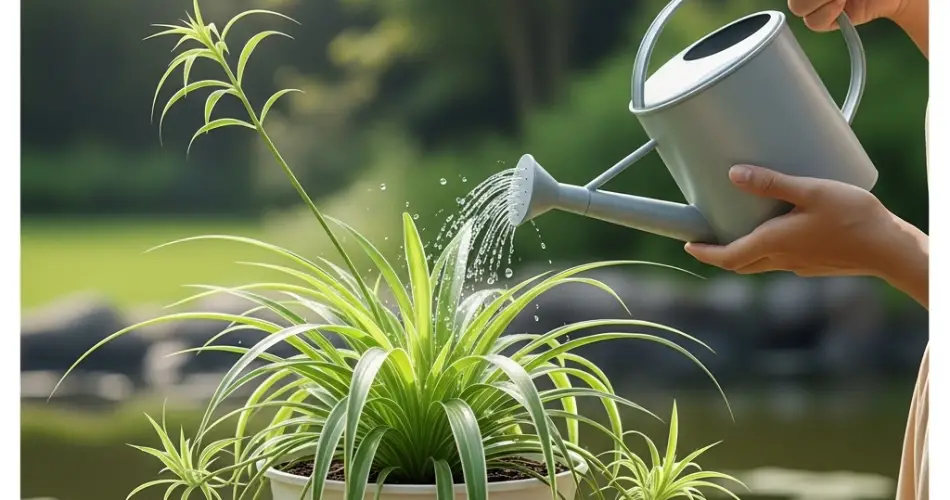
Spider plants (Chlorophytum comosum) are among the most popular houseplants for a reason—they’re easy to grow, adaptable to various environments, and have an appealing, arching form with cascading baby plantlets. However, even though they’re low-maintenance, many growers encounter one common issue: brown tips on the leaves. In most cases, improper watering habits are to blame.
If you want to keep your spider plant looking lush, vibrant, and free from those unsightly brown edges, learning how to water it correctly is key.
Why Spider Plants Get Brown Tips
Spider plants are relatively forgiving, but their leaf tips are quite sensitive. Brown tips usually develop because of one or more of the following issues:
-
Inconsistent watering (too much or too little)
-
Mineral buildup from tap water
-
Low humidity
-
Over-fertilizing
Among these, watering problems top the list. So, getting your watering routine right can significantly improve your plant’s appearance and overall health.
How Often Should You Water a Spider Plant?
Spider plants like consistently moist—but not soggy—soil. They don’t appreciate being bone dry for long, but they also don’t thrive in waterlogged conditions. Typically, watering once every 5 to 10 days is ideal, depending on environmental conditions.
Here’s what to consider:
-
Season: During spring and summer, spider plants grow more actively and need more water. In fall and winter, growth slows, so reduce watering frequency.
-
Humidity and Temperature: Warm, dry air will cause the soil to dry out faster, requiring more frequent watering. High humidity slows evaporation.
-
Light Conditions: Spider plants in bright, indirect light may need water more often than those in shady spots.
Always check the soil before watering. If the top inch (about 2.5 cm) feels dry, it’s time to water.
Best Practices for Watering Spider Plants
-
Water Evenly and Thoroughly
When it’s time to water, do so slowly and evenly until excess water drains from the bottom of the pot. This ensures the entire root system is hydrated. -
Let Excess Water Drain Completely
Never let your spider plant sit in standing water. Empty the saucer or outer pot after watering to prevent root rot. -
Use Room Temperature, Filtered Water if Possible
Spider plants are sensitive to chemicals like chlorine and fluoride found in tap water. These can accumulate in the soil and cause leaf tips to brown. If you use tap water, let it sit out for 24 hours to allow chemicals to dissipate. Even better, use filtered, distilled, or rainwater. -
Avoid Misting as a Substitute for Watering
Misting may slightly boost humidity but doesn’t hydrate the roots. Water should always be delivered directly to the soil.
Signs of Overwatering
Too much water can suffocate roots and lead to rot. Watch for these signs:
-
Yellowing or drooping leaves
-
Mushy or soft base of the plant
-
Constantly wet or foul-smelling soil
-
Brown tips that spread rapidly despite proper humidity
If this occurs, reduce watering and let the soil dry out. In severe cases, repot in fresh, dry soil with better drainage.
Signs of Underwatering
If the plant’s soil is left dry for too long, the plant becomes stressed. Symptoms include:
-
Crispy or curling leaf tips
-
Drooping leaves
-
Slow or stunted growth
-
Soil pulling away from the sides of the pot
If underwatering is the problem, give the plant a deep drink and adjust your routine for more consistent moisture.
Choosing the Right Pot and Soil
For healthy watering habits, it’s essential to use:
-
Well-draining potting mix: A high-quality houseplant mix with added perlite or pumice works well. Avoid dense soils that retain excess moisture.
-
A pot with drainage holes: This allows excess water to escape and prevents soggy roots. Terracotta pots are a good choice, as they help the soil dry out between waterings.
Humidity and Environmental Factors
Spider plants enjoy average room humidity but may struggle in overly dry air, especially in winter with indoor heating. If you suspect low humidity is contributing to brown tips:
-
Use a humidifier nearby
-
Place the plant on a tray of pebbles and water (without letting the pot sit in water)
-
Group plants together to naturally raise humidity
While humidity can play a role, proper watering and water quality remain the primary factors in preventing brown tips.
Final Thoughts
To avoid brown tips on your spider plant, focus on consistent, appropriate watering. Let the top inch of soil dry out, avoid harsh tap water, and make sure your pot and soil allow for proper drainage. When these basics are in place, your spider plant will reward you with healthy, arching foliage and plenty of baby plantlets ready to be propagated.


