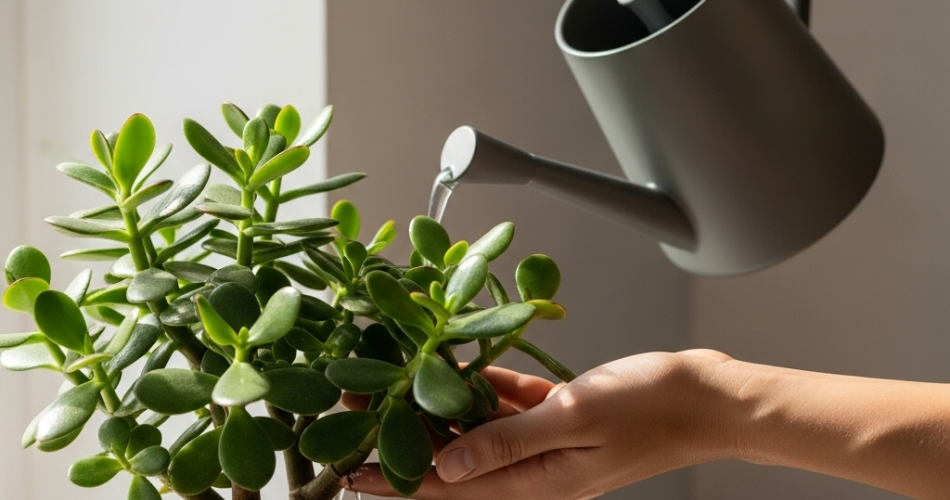
Jade plants (Crassula ovata) are popular succulent houseplants known for their fleshy leaves, tree-like growth, and easygoing nature. They’re often associated with good luck and prosperity, but their longevity and beauty depend heavily on one crucial factor: proper watering.
While jade plants are drought-tolerant and don’t require frequent watering, they’re not immune to damage from neglect or overwatering. Knowing exactly when to water is essential for maintaining a healthy, thriving jade plant. Here’s a detailed guide to help you recognize when your jade plant needs water and how to do it the right way.
Why Watering Matters
As succulents, jade plants store water in their thick, waxy leaves and stems. This adaptation allows them to survive extended dry periods, but it also makes them vulnerable to root rot when exposed to excess moisture.
Too much water can suffocate the roots, encourage fungal growth, and eventually kill the plant. On the other hand, letting it stay dry for too long can cause leaves to shrivel, drop, or stop growing altogether.
The secret to healthy jade plant care lies in striking a balance between moisture and dryness—giving water only when the plant truly needs it.
Signs Your Jade Plant Needs Water
The most effective way to know when to water your jade plant is to observe its appearance and feel the soil. Here are the main signs to watch for:
1. Soil Feels Completely Dry
Check the top 1–2 inches of soil with your finger. If it’s dry to the touch, your jade plant is likely ready for watering. In larger pots, test even deeper or use a moisture meter for accuracy.
If the soil still feels moist, wait a few days and check again. Watering while the soil is damp can cause root rot over time.
2. Leaves Feel Soft or Wrinkled
Healthy jade leaves are firm and plump. If they begin to feel soft, rubbery, or show signs of wrinkling or puckering, the plant may be dehydrated. This is how a jade plant uses up its stored water in the leaves when it hasn’t received moisture from the soil.
3. Dull or Drooping Leaves
Jade plants normally have glossy, vibrant leaves. When the plant is thirsty, the leaves may appear dull, lose their sheen, or begin to droop. While this may not always mean dehydration, when combined with dry soil, it’s a strong indicator that it’s time to water.
4. Leaf Drop (Especially Lower Leaves)
A dehydrated jade plant may begin to drop older leaves from the bottom. If you notice this happening and the soil is dry, give the plant a deep watering.
How to Properly Water a Jade Plant
Once you’ve confirmed your jade plant needs water, the method you use is just as important. Improper watering techniques can still lead to problems even if the timing is right.
Best Practices:
-
Water deeply: Pour water slowly into the soil until it drains from the bottom of the pot. This ensures that all roots receive moisture.
-
Avoid shallow watering: Don’t just wet the surface—this leads to weak roots and dry lower soil.
-
Let excess water drain: Always use a pot with drainage holes. Never allow the plant to sit in a saucer of standing water.
-
Use room-temperature water: Cold water can shock the roots, while warm water may promote bacterial growth.
How Often Should You Water?
There’s no fixed schedule, but most jade plants need watering every 2 to 3 weeks in spring and summer, and even less in fall and winter. During the dormant season, the plant uses less water and takes longer to dry out.
Always base your watering frequency on the plant’s environment—factors like sunlight, room temperature, pot size, and soil type can significantly affect how quickly the soil dries.
Common Watering Mistakes to Avoid
-
Overwatering: This is the most frequent cause of jade plant decline. Wet soil for extended periods leads to root rot.
-
Watering on a schedule: Stick to checking the soil rather than following a fixed calendar.
-
Using pots without drainage: These trap water and make it difficult to gauge moisture levels.
-
Mistaking other symptoms: Leaf drop, yellowing, or wilting can also result from overwatering, pests, or poor lighting. Always confirm by checking soil moisture.
Final Tips for Success
-
Use well-draining soil: A succulent or cactus mix is ideal.
-
Choose the right pot: Terracotta pots help wick away excess moisture.
-
Provide plenty of light: Bright, indirect sunlight helps the plant regulate water use efficiently.
-
Keep a consistent routine: Check the soil regularly and observe your plant’s condition to stay ahead of any issues.
By learning to read the signs and adopting a smart, responsive watering approach, you’ll help your jade plant grow strong, stay glossy, and bring its distinctive charm into your home for many years to come.


