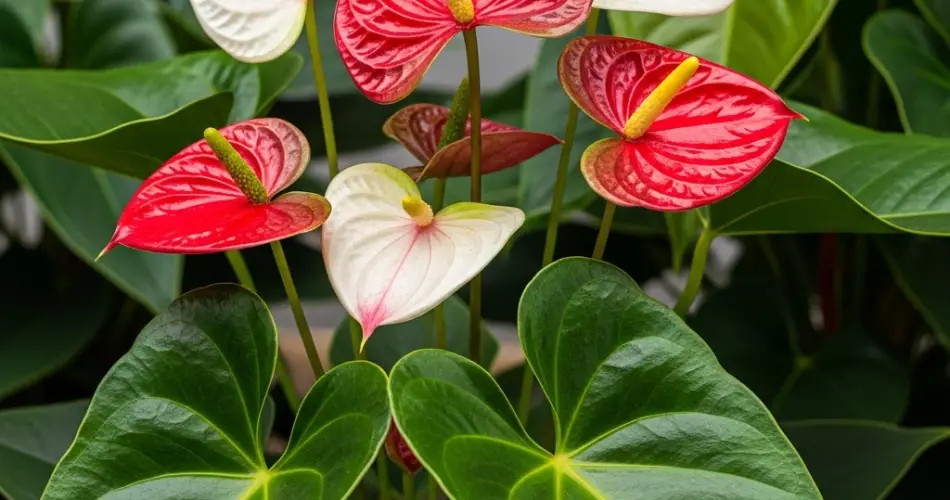
Anthuriums, known for their vibrant, heart-shaped flowers and glossy foliage, are a favorite among indoor plant lovers. With their long-lasting blooms and exotic appeal, these tropical plants brighten any room. However, to keep them thriving and blooming, one key factor must be addressed: proper lighting. Anthuriums are quite particular when it comes to light, and understanding their needs is the first step to helping them flourish indoors.
This guide will walk you through everything you need to know about anthurium light requirements, so you can choose the perfect spot in your home for this tropical beauty.
Understanding Anthurium’s Natural Habitat
To determine the ideal light conditions for your anthurium, it helps to understand where these plants come from. Anthuriums are native to the tropical rainforests of Central and South America. In the wild, they grow beneath the canopy of tall trees, receiving filtered sunlight or dappled shade.
This means they’re adapted to indirect, yet bright light—not the harsh, direct rays of the sun. Mimicking these conditions indoors will keep the plant healthy, encourage regular blooming, and maintain those vibrant leaf colors.
The Best Light for Anthuriums: Bright, Indirect Light
Anthuriums thrive in bright, indirect light for most of the day. They need plenty of light to produce their stunning flowers and maintain rich, green leaves—but the light should not be too intense.
What does “bright, indirect light” mean?
-
It’s the kind of light you get near a sunny window but not directly in the path of the sun.
-
It can be achieved by placing the plant behind a sheer curtain or a few feet away from a window.
-
A good test: if you can comfortably read a book in that spot during the day without artificial lighting, it’s likely bright enough for your anthurium.
Ideal Placement in Your Home
Here are some placement tips based on different window orientations:
-
East-facing window: One of the best spots. Morning sun is gentle, and the plant can soak up indirect light throughout the day.
-
North-facing window: Can work well in bright climates, but may need a boost from grow lights during winter or cloudy days.
-
South-facing window: Offers strong sunlight, so keep the plant a few feet back or use a sheer curtain to prevent scorching.
-
West-facing window: Acceptable, but afternoon sun can be intense. Filter the light or place the plant slightly off to the side.
Avoid placing your anthurium in dark corners or areas with minimal daylight. Without enough light, it will stop blooming, and the leaves may become limp or yellow.
Signs Your Anthurium Is Getting the Wrong Light
Your plant will give you clues about its light environment. Here are the signs to watch for:
Too much direct light:
-
Leaf edges turning brown or crispy
-
Faded leaf or flower color
-
Burn spots or sun scorch on the foliage
Too little light:
-
Lack of flowers or very sparse blooming
-
Drooping, leggy growth
-
Yellowing leaves, especially lower ones
-
Slow or no new growth
Adjust the plant’s position if you see any of these symptoms. Often, a small change—like moving it closer to the window or adding a sheer curtain—can make a big difference.
Using Grow Lights for Anthuriums
If your home doesn’t get much natural light—especially during winter—you can use a full-spectrum LED grow light to supplement. Anthuriums respond well to artificial lighting when placed about 12–18 inches below the light source.
Keep the grow light on for 10–12 hours a day to mimic natural daylight, and use a timer for consistency.
Seasonal Adjustments
Light levels naturally change throughout the year, and your anthurium may need to be moved depending on the season:
-
Winter: Shorter days mean less light, so move the plant closer to a window or add artificial lighting.
-
Summer: The sun is stronger and more direct, so consider pulling the plant back a bit to prevent leaf burn.
Always avoid abrupt changes. Gradually transition the plant between different light conditions to reduce stress and prevent leaf drop.
Final Tips
-
Dust the leaves regularly with a damp cloth to keep them clean. Dust blocks light absorption.
-
Rotate the plant every couple of weeks to promote even growth and prevent leaning.
-
Avoid placing it near heating vents or cold drafts, as extreme temperatures can also impact the plant’s health.
Conclusion
Providing the right amount and quality of light is essential to keeping your anthurium beautiful and blooming. Bright, indirect light is the sweet spot. Whether placed near a filtered window or supported with a grow light, your anthurium will reward you with vibrant foliage and striking blooms if given the light conditions it craves. With just a little attention to placement and light monitoring, this tropical gem can be a stunning and long-lasting addition to your indoor garden


