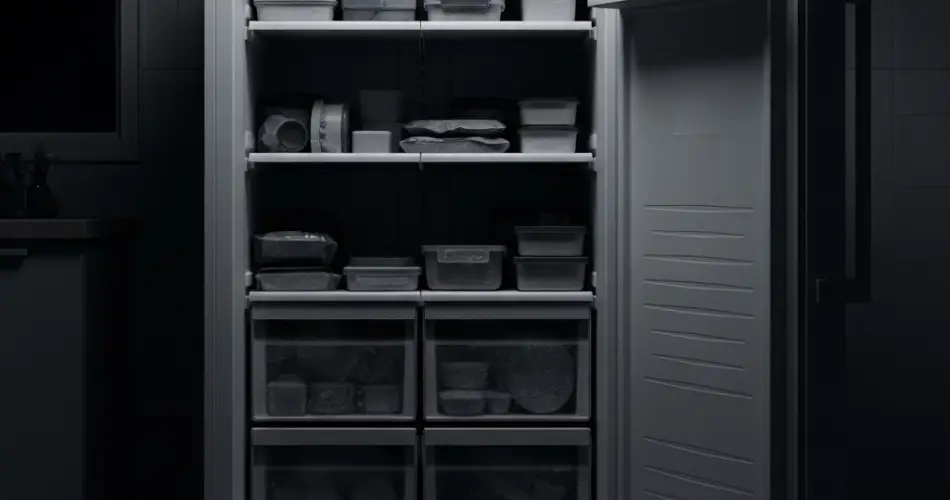
Have you ever opened a freezer and noticed it’s dark inside, even when the refrigerator lights up as soon as you open the door? It might seem like a minor detail, but there’s actually a fascinating reason why most freezers don’t come equipped with lights. While refrigerators have bright, welcoming interiors, freezers often remain shrouded in darkness, leaving many to wonder why.
The primary reason revolves around how freezers are designed to work. Unlike refrigerators, freezers maintain extremely low temperatures, typically ranging from -18°C (0°F) for standard home freezers to even colder for deep freezers. Maintaining such cold temperatures requires efficient insulation to prevent heat from entering and causing the appliance to work harder. Installing a light inside a freezer is more complicated than it seems. The light requires wiring and a bulb, both of which generate a small amount of heat. While seemingly negligible, even this tiny amount of heat can slightly impact the freezer’s efficiency, forcing it to consume more electricity to maintain its freezing temperature.
Another key factor is space constraints. Freezers, especially chest-style freezers, often have irregular shapes or thick insulated walls. Fitting a durable, long-lasting light that can withstand extreme cold and still illuminate the entire space is a challenge. Standard bulbs, including LEDs, can struggle with the extreme temperatures found in freezers, reducing their lifespan or causing them to fail altogether. This is less of an issue in refrigerators, where temperatures are warmer and more consistent, making lighting both feasible and practical.
Practical usage also plays a role. People tend to open freezers for shorter periods compared to refrigerators. The freezer is usually used to retrieve frozen food in quick bursts, whereas the refrigerator is accessed frequently for various items throughout the day. Manufacturers may have decided that the inconvenience of a dark interior in a freezer is minimal compared to the cost and complexity of installing a light that can endure such conditions reliably.
Interestingly, the history of freezers also contributes to this design choice. Early domestic freezers, dating back to the mid-20th century, were designed primarily as chest units. These freezers opened from the top and were intended to store bulk frozen goods for long periods. Because users typically looked from the top down and stored items in organized layers or baskets, the need for interior lighting was deemed unnecessary. Even as freezers evolved to upright designs similar to refrigerators, the tradition of leaving them unlit largely continued.
Safety considerations also play a part. Electrical components in extremely cold and humid environments can present risks, especially if frost builds up inside the freezer. Ensuring that wiring and lights remain safe under these conditions adds to the cost and complexity of manufacturing. Some modern freezers have started including interior lights, particularly high-end upright models, but these lights are carefully designed to resist cold and moisture and tend to be LED-based, which generates minimal heat and energy usage.
Some users have experimented with adding DIY lighting solutions to freezers, such as battery-powered LED strips. While these can help illuminate dark interiors, it’s important to remember that most freezers are not designed for internal electrical modifications. Incorrect installation could pose safety risks or damage the appliance. Therefore, manufacturers often choose the safer and more cost-effective route: leaving freezers dark.
Despite the darkness, there are simple ways to make your freezer more user-friendly. Organizing food in clear bins, labeling packages, and grouping similar items together can reduce the time the door stays open, minimizing frost buildup and energy consumption. Additionally, investing in a freezer with a transparent basket system or an upright freezer with optional LED lighting can help balance convenience with efficiency.
In conclusion, the reason freezers don’t have lights is a combination of engineering challenges, energy efficiency concerns, historical design habits, and safety considerations. While a lit freezer may seem like a small convenience, adding a light requires careful thought about temperature, insulation, and electrical safety. As technology continues to improve, more freezers with reliable LED lighting are appearing on the market, offering a glimpse of what the future may hold. For now, though, the darkness of the freezer remains a practical compromise in the pursuit of keeping our food frozen efficiently and safely.