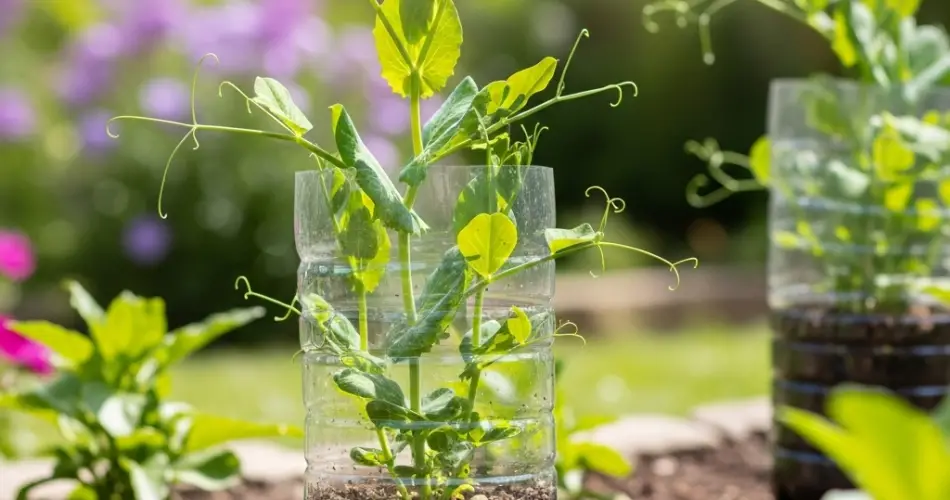
Peas are a cool-season crop that grows quickly and rewards gardeners with tender, sweet pods perfect for salads, stir-fries, and snacking straight from the vine. These climbing plants naturally seek support, making them excellent candidates for vertical gardening. By using recycled plastic bottles to create vertical trellises, you can grow peas even in limited spaces while repurposing household waste in an eco-conscious way.
Whether you’re working with a balcony, patio, or sunny wall, a vertical bottle trellis setup is a practical and creative solution for compact urban gardening.
Why Grow Peas Vertically?
Pea plants are vines by nature. They produce tendrils that latch onto nearby supports to climb upward. Growing them vertically not only saves space but also promotes better airflow, prevents disease, and simplifies harvesting.
Benefits of vertical pea gardening with bottles:
-
Reuses plastic bottles, reducing environmental impact
-
Makes efficient use of limited space
-
Keeps vines tidy and off the ground
-
Reduces pest and fungal issues by improving ventilation
-
Makes harvesting easier and cleaner
Best Pea Varieties for Vertical Growing
While all peas benefit from vertical support, some varieties are especially suited for climbing systems:
-
Sugar Snap Peas – Sweet and crunchy, ideal for fresh eating
-
Snow Peas – Flat, tender pods used in many Asian dishes
-
Garden Peas (Shelling Peas) – Classic peas for shelling and cooking
-
Telephone Peas or Tall Climbing Varieties – Can grow up to 6 feet tall and produce high yields
Look for varieties labeled “climbing,” “tall,” or “vining” to ensure compatibility with trellis setups.
What You’ll Need
-
Clean 1.5–2-liter plastic bottles
-
Sharp scissors or utility knife
-
Screwdriver or heated nail (for drainage holes)
-
Garden twine, string, or wire
-
Sturdy frame, bamboo poles, or balcony railing
-
Potting soil mixed with compost
-
Pea seeds
-
A location with 5–6 hours of daily sunlight
Preparing the Bottle Trellis System
Step 1: Clean and Cut the Bottles
Wash the bottles thoroughly to remove any residue. Cut off the bottom of each bottle and pierce a few drainage holes near the neck. If growing directly in the bottles, cut a rectangular opening on one side to serve as a planting window.
Step 2: Stack or Hang the Bottles
You have two options:
-
Vertical Stack: Insert the neck of one bottle into the cut base of another to create a column. Use tape or string to secure the joints.
-
Hanging Style: Attach bottles to a wooden or wire frame using string, ensuring each bottle has a planting window facing outward and enough light access.
Place the lowest bottle slightly elevated from the ground for good drainage.
Step 3: Add Support Strings
Attach vertical strings or twine from the top of your frame down to each planting area. These will serve as climbing guides for the pea vines.
Planting Peas in Bottle Planters
-
Fill with Soil
Add a mix of light potting soil and compost to each bottle section, leaving some space at the top for watering. -
Sow the Seeds
Plant 2–3 pea seeds per bottle section about 1 inch deep. Water gently to moisten the soil. -
Position in Sunlight
Place the trellis where it will get at least 5–6 hours of sunlight daily. Avoid areas with strong afternoon heat, as peas prefer cooler conditions.
Caring for Pea Plants
-
Watering: Keep soil consistently moist but not soggy. Bottles can dry out quickly, so monitor closely in warm weather.
-
Feeding: Peas are light feeders. A light compost top-up or diluted organic fertilizer every few weeks will suffice.
-
Training: As plants sprout, gently guide tendrils toward the support strings or trellis. They will naturally begin to wrap around as they grow.
-
Mulching (Optional): If growing in containers with open tops, add a light layer of straw or shredded leaves to retain moisture.
Flowering and Harvesting
Peas typically flower about 30–40 days after planting, followed by pod formation.
-
Harvest Snap and Snow Peas when pods are plump but still tender.
-
Shelling Peas should be picked once the pods swell noticeably and peas are full-sized inside.
Pick peas regularly to encourage more production. Use scissors or pinch off pods carefully to avoid damaging the vines.
End of Season Tips
-
After harvesting is complete, cut the vines at the soil line instead of pulling them up to avoid disturbing the roots of nearby plants.
-
Compost old plant material and refresh the soil in your bottles before replanting.
-
Clean the bottles with warm, soapy water and check for cracks or damage before reusing.
Final Thoughts
Growing peas with vertical bottle trellises is an excellent way to produce fresh, homegrown vegetables while reducing plastic waste. This space-saving, sustainable gardening method is ideal for beginners, families, and anyone interested in creating a low-cost, productive green corner. With a little care and sunlight, you’ll be rewarded with sweet, crunchy peas—and the satisfaction of growing them yourself in a truly innovative way.


