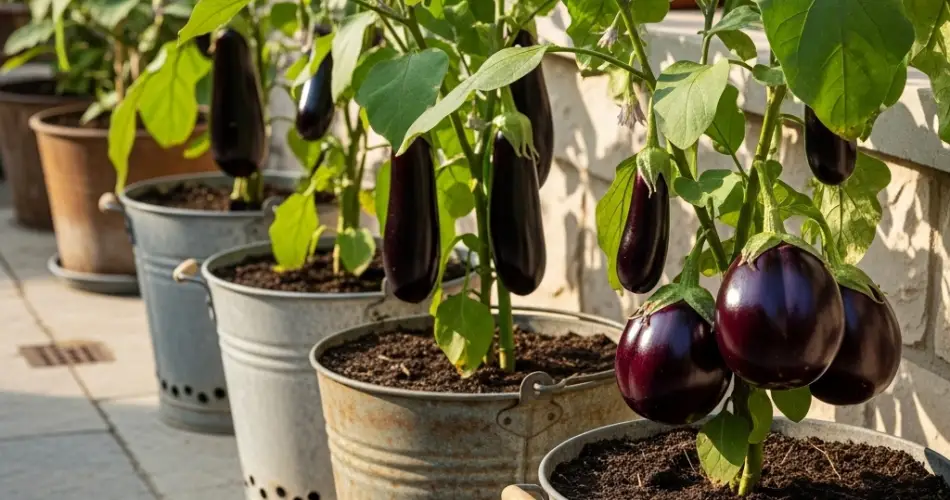
Growing eggplants in urban settings may seem challenging, but with the right techniques, it’s both practical and rewarding. Container gardening, especially using buckets, allows gardeners with limited space to cultivate fresh, healthy eggplants on balconies, rooftops, or small patios. This approach not only saves space but also provides full control over soil quality, watering, and plant health, resulting in vibrant plants and delicious harvests.
Why Choose Buckets for Eggplants?
Buckets are an excellent choice for urban gardening for several reasons. They are inexpensive, widely available, and easy to move, making them ideal for small spaces. Additionally, buckets allow for precise soil control and proper drainage, reducing the risk of root rot and other soil-borne issues. The height of a bucket also keeps plants off the ground, which helps prevent pests and makes harvesting more convenient.
Selecting the Right Bucket
Choosing the appropriate bucket is crucial for eggplant success. A container with a capacity of 5 to 7 gallons provides enough space for the root system to grow. Ensure the bucket has drainage holes at the bottom to allow excess water to escape, preventing waterlogged soil that can damage roots. If drainage holes are not present, drill several holes evenly spaced across the bottom.
Light-colored buckets are preferable in hot climates because they reflect sunlight and keep the soil temperature stable. Darker containers can absorb heat, potentially stressing the plant during extreme heat.
Preparing the Soil
Eggplants thrive in well-draining, fertile soil with a slightly acidic to neutral pH (6.0–7.0). A high-quality potting mix supplemented with compost or organic matter provides essential nutrients and retains moisture without becoming soggy. Mixing in a small amount of perlite or sand improves aeration and drainage, promoting healthy root growth.
Before planting, fill the bucket with soil up to about 1–2 inches below the rim, leaving space for watering. Gently firm the soil to create a stable base while avoiding compacting it too much, which can restrict root development.
Planting Eggplants in Buckets
Eggplants can be started from seeds or young seedlings. If using seeds, start them indoors 6–8 weeks before the last expected frost, transplanting them into buckets once seedlings have developed a few true leaves. Seedlings purchased from nurseries can be planted directly into prepared buckets.
Plant one seedling per bucket to allow enough space for root expansion and foliage growth. Dig a hole deep enough to accommodate the root ball, place the plant inside, and gently cover the roots with soil. Water immediately to settle the soil around the roots.
Watering and Fertilization
Consistent watering is essential for eggplants in containers. The soil should remain evenly moist but not waterlogged. Water thoroughly until excess drains from the bottom of the bucket. During hot weather or flowering periods, the plant may require more frequent watering to prevent stress and ensure fruit development.
Fertilization supports healthy growth and abundant fruiting. Use a balanced, slow-release fertilizer or an organic option like compost tea every 3–4 weeks during the growing season. Avoid excessive nitrogen, which encourages foliage growth at the expense of fruit production.
Sunlight and Temperature
Eggplants are sun-loving plants and require at least 6–8 hours of direct sunlight per day. Place buckets in the sunniest location available, rotating them periodically to ensure even growth. Warm temperatures between 70–85°F (21–29°C) are ideal. In cooler climates, consider moving the buckets indoors or using protective covers during cold nights.
Supporting Growth
As eggplants grow, staking or caging helps support their stems and keep fruit off the soil. This practice reduces the risk of breakage and disease. Gently tie the main stem to a stake or use a small cage around the plant for additional support.
Harvesting Eggplants
Eggplants are ready to harvest when their skin is glossy and firm. Overripe fruit may become dull or tough. Use a sharp knife or scissors to cut the fruit from the plant, leaving a short stem attached. Regular harvesting encourages continuous production throughout the season.
Benefits of Bucket Gardening for Eggplants
Growing eggplants in buckets allows urban gardeners to enjoy fresh, homegrown vegetables without needing a large yard. It provides control over soil quality, reduces pest problems, and offers flexibility in positioning plants for optimal sunlight. With proper care, bucket-grown eggplants can produce abundant harvests, turning small spaces into productive urban gardens.
By following these simple steps—selecting the right bucket, preparing soil, ensuring adequate sunlight, and providing consistent water and nutrients—urban gardeners can successfully grow eggplants in containers. This approach makes urban gardening accessible, enjoyable, and highly rewarding.


