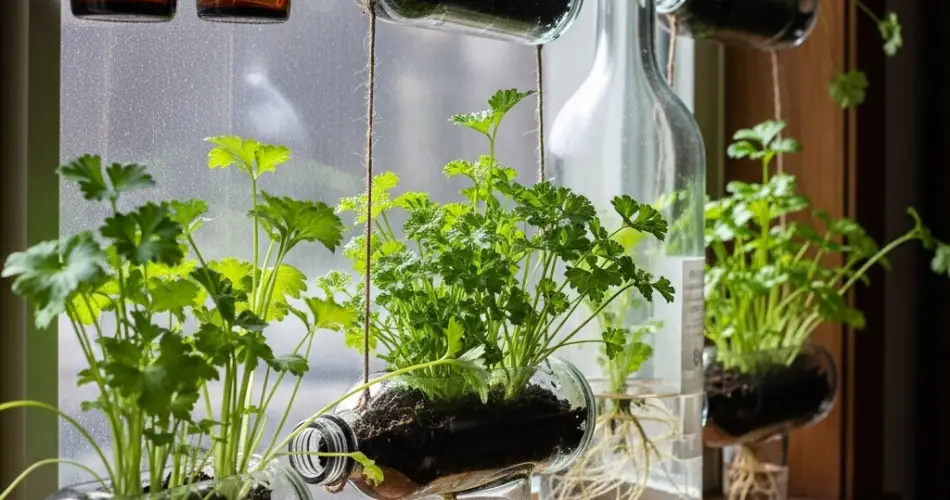
Urban gardening has become increasingly popular, especially for those with limited space. One creative and sustainable solution is transforming used plastic bottles into a vertical wall garden. Parsley, a versatile and nutrient-rich herb, thrives in such setups, providing fresh leaves for cooking while adding greenery to your living space. With a few simple steps, you can turn ordinary bottles into a functional and attractive herb garden.
Selecting the Right Bottles
The first step is to gather suitable plastic bottles. Medium-sized bottles, such as 1–2 liters, work best, as they provide enough soil volume for parsley roots while remaining lightweight for wall mounting. Ensure the bottles are clean and free of residues. You can choose transparent bottles to monitor soil moisture or colored bottles for a more decorative look. Cutting the bottles strategically will allow the plants to grow comfortably and make watering easier.
Preparing the Bottles
Prepare your bottles by cutting a horizontal section near the top to create an opening for planting. The opening should be wide enough to accommodate the parsley seedling or cutting but still provide support to the plant. Drill or poke small holes in the bottom of each bottle to allow excess water to drain, preventing root rot. If you plan to hang the bottles vertically, attach strings or sturdy hooks to the sides or tops of the bottles for secure mounting.
Choosing the Right Soil
Parsley prefers well-draining, fertile soil. A quality potting mix combined with a small amount of compost or organic fertilizer will provide the necessary nutrients. Fill the prepared bottles with soil, leaving a little space at the top to prevent soil spillage during watering. Gently pat down the soil to eliminate air pockets but avoid compacting it too firmly, as parsley roots need room to grow.
Planting Parsley
You can grow parsley from seeds or small seedlings. Seeds may take longer to germinate but are cost-effective and plentiful, while seedlings provide a faster start. Plant seeds according to the recommended depth on the packet, typically about 1/4 inch deep, and water gently. For seedlings, carefully transplant them into the soil, ensuring the roots are fully covered and the plant is stable. Position each plant in its bottle with enough space to grow without crowding.
Watering and Light Requirements
Parsley requires consistent moisture but does not tolerate waterlogged soil. Water each bottle when the top inch of soil feels dry, allowing excess water to drain through the bottom holes. A regular watering schedule ensures healthy, tender leaves. Light is equally important. Place your vertical garden near a window with bright, indirect sunlight, or use a grow light if natural light is limited. Parsley thrives in at least 4–6 hours of light per day.
Mounting Your Wall Garden
Once the bottles are ready and plants are established, it’s time to mount your vertical garden. You can attach the bottles to a wall, fence, or balcony railing using hooks, nails, or a simple string system. Arrange the bottles in a staggered or grid pattern to maximize space and ensure even light distribution. Ensure that each bottle is securely fastened to prevent falls and spills.
Maintenance and Harvesting
Maintaining a bottle wall garden is simple. Regularly check for adequate moisture and signs of pests or disease. Fertilize occasionally with a balanced, water-soluble fertilizer to encourage lush growth. Harvest parsley by snipping leaves from the outer stems, allowing the inner stems to continue growing. Frequent harvesting promotes bushier plants and prevents the herbs from becoming leggy.
Benefits of a Plastic Bottle Wall Garden
A vertical wall garden made from recycled bottles is both eco-friendly and practical. It reduces plastic waste while creating a productive space for growing fresh herbs. Parsley, rich in vitamins and antioxidants, enhances your meals and encourages healthy eating. The compact, vertical setup is ideal for small apartments, balconies, or kitchens, bringing greenery into otherwise unused spaces.
Creative Variations
Once you are comfortable with a parsley wall garden, you can expand to other herbs such as basil, mint, or chives. Experiment with decorative bottles, paint, or labels to personalize your garden. Staggering bottles at different heights adds visual interest and ensures each plant receives adequate sunlight. This approach allows you to build a colorful, aromatic, and sustainable indoor or outdoor herb garden.
Conclusion
Turning plastic bottles into a vertical wall garden is a clever, eco-conscious way to grow parsley in limited spaces. With proper preparation, soil, light, and watering, your parsley plants will thrive, providing fresh, flavorful leaves year-round. This method combines sustainability, functionality, and aesthetic appeal, transforming simple plastic bottles into a productive and attractive herb display. By reimagining waste as a resource, you create a small but impactful urban garden that enhances your kitchen and your meals.


