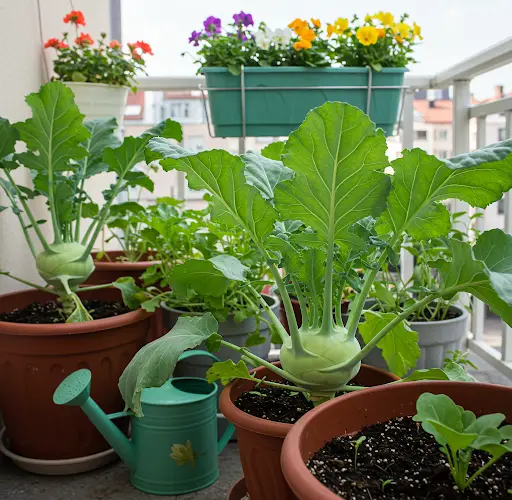
Growing Kohlrabi on the Balcony: A Surprisingly Productive Experience
Many gardeners assume that kohlrabi, with its bulbous stem and large leaves, requires a lot of space to grow successfully. However, growing kohlrabi on the balcony is not only possible but can also be incredibly productive and rewarding. This underrated vegetable, a close relative of cabbage and broccoli, thrives in containers and yields an abundant harvest with the right care. In this guide, we’ll explore how to grow kohlrabi in a small space, ensure healthy growth, and maximize production.
1. Why Grow Kohlrabi on the Balcony?
Kohlrabi is an excellent vegetable for balcony gardening due to its compact size, fast growth, and high productivity. Here are some reasons why you should consider growing it:
✅ Space-Saving – Kohlrabi doesn’t require much room and can grow in medium-sized containers. ✅ Fast Growing – It matures in 6–8 weeks, meaning you can enjoy multiple harvests in a season. ✅ Cold Hardy – Kohlrabi can thrive in cooler temperatures, making it ideal for spring and fall planting. ✅ Nutritious and Delicious – Rich in fiber, vitamin C, and antioxidants, kohlrabi is excellent for a healthy diet. ✅ Minimal Pests – Unlike cabbage or kale, kohlrabi is less prone to pest infestations.
With these benefits, kohlrabi is a perfect addition to your balcony garden.
2. Choosing the Right Container and Soil
Since kohlrabi forms a swollen stem above ground, it requires a wide and deep container for proper growth.
🪴 Container Size: Use a 10–12 inch deep pot with good drainage holes. 🪴 Soil Mix: Choose loose, well-draining soil enriched with compost or organic matter. 🪴 pH Level: Keep the soil slightly acidic to neutral (pH 6.0–7.5). 🪴 Mulching: Add a layer of straw or dried leaves to retain moisture and prevent weeds.
3. Planting Kohlrabi on the Balcony
Kohlrabi can be grown from seeds or seedlings. If you start from seeds, they germinate quickly in 4–7 days.
Step 1: Choosing the Right Time to Plant
- Kohlrabi prefers cool weather (spring or fall) and can tolerate light frosts.
- Avoid planting during the peak summer heat, as high temperatures can cause bolting.
Step 2: Sowing the Seeds
- Plant seeds ¼ to ½ inch deep in the soil.
- Space them 6 inches apart to allow room for the swollen stem.
- Keep the soil evenly moist for successful germination.
Step 3: Transplanting Seedlings (If Needed)
- If using nursery seedlings, transplant them when they have 3–4 true leaves.
- Be gentle with the roots to avoid transplant shock.
Proper planting ensures strong and healthy growth right from the start.
4. Caring for Kohlrabi on the Balcony
Watering
💧 Keep the soil moist but not soggy. Inconsistent watering can result in a tough or woody stem. 💧 Water deeply at least twice a week, or more frequently in dry weather. 💧 Avoid overhead watering to prevent fungal diseases.
Fertilization
🌱 Kohlrabi is a moderate feeder, so a balanced fertilizer is ideal. 🌱 Apply a low-nitrogen fertilizer every 2–3 weeks to encourage root growth instead of excess leaves. 🌱 Organic options like compost tea or fish emulsion work well.
Sunlight Requirements
☀️ Kohlrabi thrives in full sun (6–8 hours daily) but can tolerate partial shade. ☀️ In hot climates, provide light afternoon shade to prevent stress.
5. The Unexpected Productivity of Balcony-Grown Kohlrabi
Many balcony gardeners are amazed by how productive kohlrabi can be in small spaces. Some surprising advantages include:
🌿 Multiple Harvests – With staggered planting, you can enjoy a continuous supply of kohlrabi. 🌿 Great Companion Plant – Kohlrabi grows well alongside lettuce, spinach, and herbs, making balcony gardening more efficient. 🌿 Compact Growth – Unlike other brassicas, kohlrabi doesn’t take up much space and fits easily into containers. 🌿 Minimal Pests – Being grown above ground on a balcony helps avoid pests like slugs and snails.
Even in a small container, kohlrabi can produce plenty of crunchy, delicious bulbs!
6. Common Problems and How to Solve Them
🚨 Small or Woody Bulbs? – Ensure consistent watering and avoid high temperatures. 🚨 Bolting (Early Flowering)? – Avoid planting in extreme heat and choose heat-resistant varieties. 🚨 Yellowing Leaves? – Could be due to nitrogen deficiency. Use a balanced organic fertilizer. 🚨 Pest Infestation? – While kohlrabi is pest-resistant, keep an eye out for aphids and cabbage worms. Use neem oil or insecticidal soap if needed.
By managing these common issues, your balcony-grown kohlrabi will remain healthy and productive.
7. Harvesting Kohlrabi
Kohlrabi is ready to harvest in about 50–60 days, depending on the variety.
🔪 Best Harvest Size – Pick when bulbs reach 2.5–4 inches in diameter for the best texture and flavor. 🔪 How to Harvest – Cut the stem just above the soil line using a sharp knife. 🔪 Storage Tips – Kohlrabi can be stored in the refrigerator for 2–3 weeks.
If left too long, bulbs can become fibrous and tough, so timely harvesting is important.
8. Why You Should Try Growing Kohlrabi on Your Balcony
Many gardeners underestimate how well kohlrabi can grow in small spaces. However, once you try it, you’ll be amazed by the results. Even with limited space, minimal maintenance, and just a few pots, kohlrabi can produce a bountiful harvest.
Key Takeaways:
✅ Use deep, well-draining containers for best growth. ✅ Provide consistent moisture and 6+ hours of sunlight. ✅ Harvest at the right time to avoid tough or fibrous bulbs. ✅ Protect from pests and extreme temperatures for better results.
Whether you’re an experienced gardener or just starting out, kohlrabi is a fantastic addition to any balcony garden. Give it a try, and you may be surprised by just how productive this vegetable can be! 🥬🌿


