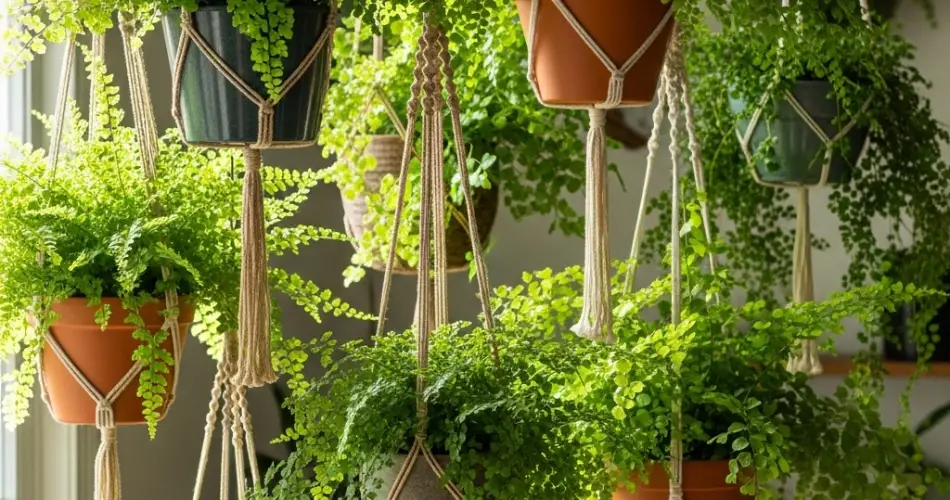
Ferns bring a soft, lush touch to indoor spaces with their elegant fronds and rich green color. Among the most popular choices for houseplants are the Boston Fern (Nephrolepis exaltata) and Maidenhair Fern (Adiantum spp.), each known for its unique beauty and graceful appearance. While they have different growing habits, both varieties thrive in similar indoor conditions when properly cared for in pots.
If you’re looking to add natural texture to your home with these stunning plants, here are practical tips to help you grow and maintain healthy Boston and Maidenhair ferns indoors.
1. Choose the Right Pot and Soil
Start with containers that allow good drainage. Ferns dislike soggy roots, so opt for pots with drainage holes. For Boston ferns, a medium to large hanging pot or pedestal planter works well, allowing the long fronds to cascade naturally. Maidenhair ferns, with their delicate leaflets, do better in smaller upright pots that support their fine stems.
Use a light, well-draining soil mix that retains some moisture but doesn’t stay wet. A peat-based mix with added perlite or orchid bark is ideal. You can also use commercial potting soil for ferns or modify an all-purpose mix by adding a bit of sand or coco coir.
2. Provide Indirect but Bright Light
Ferns are shade-loving plants in nature, growing under forest canopies. Indoors, they need bright but indirect sunlight to stay lush. Avoid direct rays that can scorch the leaves, especially for Maidenhair ferns, which are more sensitive to light.
Place your ferns near east- or north-facing windows, or filter the sunlight with sheer curtains if placing them near a brighter spot. If your home has low natural light, supplement with fluorescent or LED grow lights for a few hours daily.
3. Keep the Humidity High
Humidity is crucial for ferns. Boston and Maidenhair ferns both suffer when the air is too dry, showing symptoms like browning leaf tips and crispy fronds.
Here are some ways to keep humidity levels optimal:
-
Group plants together to create a microclimate.
-
Use a humidifier near your fern display.
-
Place pots on trays filled with water and pebbles (ensure the pot base isn’t sitting in water).
-
Mist the plants occasionally, especially during dry seasons, but avoid overdoing it to prevent fungal issues.
Aim for 50–70% humidity to keep your ferns thriving.
4. Water with Care
Ferns need consistently moist soil, but not soggy. The top inch of soil should feel slightly damp most of the time. Water thoroughly when the top starts to dry out. For Maidenhair ferns, it’s important not to let the soil completely dry, even briefly, as they are quick to wilt.
Tips for watering:
-
Use room-temperature water to avoid shocking the roots.
-
Water less in winter when growth slows down.
-
Ensure water drains freely from the pot to avoid root rot.
A good habit is to check the soil moisture regularly and adjust your watering frequency based on your home’s temperature and humidity.
5. Feed Lightly During Growing Season
Ferns don’t require heavy feeding. During the growing months (spring to early fall), you can fertilize your Boston and Maidenhair ferns with a diluted liquid houseplant fertilizer (at half-strength) once every 4–6 weeks.
Avoid overfertilizing, which can damage the roots and lead to leaf burn. In winter, you can stop fertilizing entirely or apply only once every two months if the plant shows signs of new growth.
6. Groom and Repot as Needed
Both Boston and Maidenhair ferns benefit from regular grooming. Trim off:
-
Brown or crispy leaves
-
Old or dying fronds near the base
-
Any yellowing foliage
Repotting is only necessary when the plant becomes root-bound or outgrows its container. This is typically every 1–2 years. When repotting, choose a container that’s only slightly larger than the current one to avoid overwatering risks due to excess soil.
7. Watch for Pests and Disease
Indoor ferns are relatively pest-resistant, but they can occasionally attract:
-
Spider mites
-
Fungus gnats
-
Mealybugs
Maintain cleanliness by wiping pots and checking under the leaves regularly. If pests appear, treat them with neem oil spray or insecticidal soap. Improve air circulation around your ferns to prevent fungal problems, especially in high-humidity conditions.
Final Thoughts
Boston and Maidenhair ferns may look delicate, but with the right environment, they can be surprisingly resilient houseplants. The keys to success include consistent moisture, high humidity, filtered light, and occasional grooming. By giving attention to their specific needs and adjusting your care according to seasonal changes, you can enjoy their lush, graceful foliage year-round.
With these tips in hand, you’ll find that adding ferns to your indoor garden not only elevates your décor but also brings a calming, forest-like charm to your living space.


