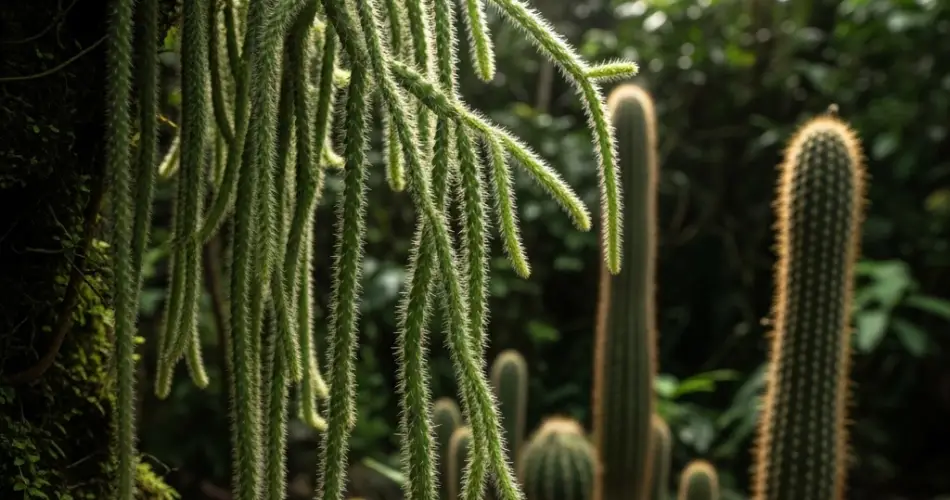
When we think of cacti, we often imagine spiky plants that thrive in arid deserts. However, not all cacti come from dry, sun-drenched regions. Some, like Rhipsalis and Schlumbergera (commonly known as the Christmas Cactus), originate from tropical and subtropical forests. These unique “forest cacti” are epiphytic, meaning they often grow on trees and absorb moisture from the air rather than from arid soil.
Unlike their desert relatives, forest cacti prefer humidity, indirect light, and regular watering. With the right care, these plants can thrive for many years, even decades, brightening your home with beautiful blooms and trailing green stems.
What Is Rhipsalis?
Rhipsalis, sometimes called the mistletoe cactus, is a genus of epiphytic cacti native to Central and South America. Unlike traditional cacti, Rhipsalis has thin, trailing stems and lacks spines. It’s known for its unique shape and adaptability, making it perfect for hanging baskets and indoor settings.
Rhipsalis prefers humid environments and bright, indirect light. It’s a favorite among indoor plant lovers for its low-maintenance nature and decorative appearance.
What Is the Christmas Cactus (Schlumbergera)?
Schlumbergera, or Christmas Cactus, is another forest cactus that blooms during the winter holidays. Native to the Brazilian rainforests, this plant is known for its segmented stems and vivid flowers that come in pink, red, white, or orange. Despite its name, it is not a true cactus in the traditional sense—it needs much more moisture and gentler care than desert species.
Ideal Environment and Light Conditions
Both Rhipsalis and Schlumbergera thrive in environments that mimic their natural tropical forest habitats:
-
Light: Provide bright, indirect sunlight. Avoid placing them in direct sun, as it can scorch their stems. A location near an east-facing window is ideal.
-
Temperature: These plants prefer temperatures between 15°C to 25°C (59°F to 77°F). They do not tolerate frost, so bring them indoors if your climate drops below 10°C (50°F).
-
Humidity: Both plants love humidity. Mist the leaves regularly or place the pot on a tray of pebbles and water to maintain ambient moisture.
Watering and Soil Requirements
Forest cacti are not drought-tolerant like their desert cousins. They require regular watering, but also well-draining soil to prevent root rot.
-
Soil: Use a mix designed for succulents and cacti, but enhance it with orchid bark or peat moss to improve aeration and water retention.
-
Watering: Water thoroughly when the top inch of soil feels dry. Allow excess water to drain completely. In winter, reduce watering slightly when the plant is not actively growing or blooming.
-
Drainage: Always use pots with drainage holes. Sitting water will lead to root rot.
Feeding and Fertilization
Feeding your Rhipsalis or Christmas Cactus supports healthy growth and flower production.
-
Use a balanced, water-soluble fertilizer (e.g., 10-10-10) every 4–6 weeks during the growing season (spring to early fall).
-
Stop feeding during winter dormancy or flowering, as too much fertilizer can affect blooming and leaf color.
Flowering Tips for Schlumbergera (Christmas Cactus)
Getting your Christmas Cactus to bloom each year requires a bit of preparation.
-
Light/Dark Cycle: In the fall, give your plant at least 12–14 hours of darkness per day for about six weeks to initiate bud formation.
-
Cooler Temperatures: Keep the plant at around 10°C to 15°C (50°F to 59°F) during this time to mimic natural seasonal changes.
-
Don’t Disturb: Once buds form, avoid moving the plant or changing light conditions. Buds can drop if the environment changes suddenly.
With these adjustments, your Christmas Cactus should bloom beautifully during the holiday season.
Propagation
Both Rhipsalis and Schlumbergera are easy to propagate through stem cuttings.
-
Cut a healthy segment of the stem (2–4 inches long).
-
Let it dry for a day or two.
-
Place it in a moist, well-draining soil mix.
-
Keep the cutting in indirect light and water lightly until roots develop.
New growth should appear within a few weeks.
Common Issues and Solutions
-
Wrinkled stems: Often a sign of underwatering or root rot from overwatering. Adjust watering accordingly.
-
Yellowing leaves: Could indicate too much sun or poor drainage.
-
No blooms: Usually due to excessive light at night or insufficient rest period. Make sure the plant experiences enough darkness and cooler temperatures before blooming season.
Final Thoughts
Rhipsalis and Schlumbergera are ideal houseplants for those looking to add a touch of green elegance to their homes with minimal fuss. Their unique appearance, combined with their long lifespan and ease of propagation, make them rewarding plants for both beginners and experienced gardeners.
With proper care, these forest cacti can thrive for many years, gracing your space with lush growth and spectacular seasonal blooms.


