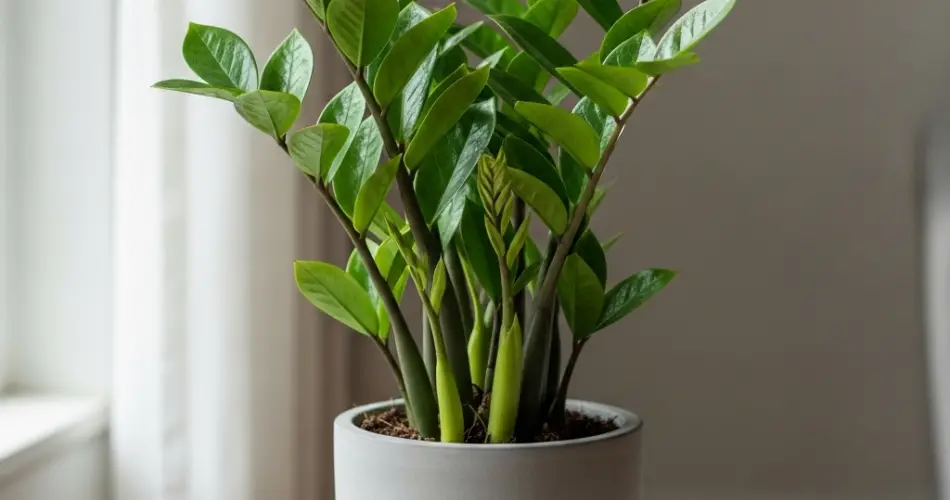
ZZ plants (Zamioculcas zamiifolia) are renowned for their glossy, waxy leaves, low maintenance, and ability to thrive in challenging indoor conditions. They are particularly popular for low-light areas, such as offices, hallways, or apartments with limited natural sunlight. Despite their hardiness, proper watering is essential for maintaining healthy growth. Overwatering or inconsistent watering can lead to root rot or yellowing leaves, while underwatering can cause drooping or wrinkled foliage. Understanding how to water ZZ plants correctly in low-light environments ensures a robust, vibrant plant year-round.
Understanding ZZ Plant Water Needs
ZZ plants are succulents that store water in their thick rhizomes, making them highly drought-tolerant. In low-light conditions, their growth slows down, reducing water requirements. Because they absorb water slowly in such environments, overwatering is the most common issue that beginners face. Root rot develops quickly if the soil remains soggy, causing leaves to yellow and the plant to weaken. Conversely, underwatering results in dry, drooping leaves, signaling that the plant is using stored moisture to survive.
Choosing the Right Container and Soil
Proper drainage is crucial for ZZ plant care, especially in low-light rooms where evaporation is slower. Choose a pot with drainage holes to allow excess water to escape. Terracotta or unglazed ceramic pots are ideal, as they absorb excess moisture and promote soil aeration. Avoid containers without drainage, as water accumulation can damage the roots.
For soil, use a well-draining mix designed for succulents or cacti. A combination of standard potting soil, perlite, and sand creates an environment that holds enough moisture for the plant while preventing waterlogging. Well-draining soil ensures the plant receives hydration without risking root rot.
Watering Techniques for Low-Light Conditions
Watering ZZ plants in low-light areas requires careful observation:
-
Check Soil Moisture: Before watering, insert your finger 1–2 inches into the soil. Only water if it feels dry at this depth.
-
Water Thoroughly: When watering, saturate the soil evenly until water drains from the bottom. Avoid shallow watering, which only moistens the surface and leaves roots dry.
-
Avoid Wet Leaves: Water the soil directly and avoid wetting the leaves, as excess moisture on foliage can encourage mold or fungal growth.
-
Use Room-Temperature Water: Cold water can shock the roots, while room-temperature water promotes healthy absorption.
Seasonal Adjustments
Even in low-light rooms, seasonal changes affect watering frequency:
-
Spring and Summer: These are the active growth periods. Water roughly every 2–3 weeks, but always check soil dryness first. Growth is slower in low-light conditions, so you may need to water less than recommended for well-lit environments.
-
Fall and Winter: Growth slows further during cooler months. Water every 4–6 weeks, ensuring the soil dries out completely between sessions. Overwatering in winter is a major cause of root issues.
Environmental factors, such as indoor temperature and humidity, also influence watering needs. Heated or air-conditioned rooms may slightly increase water requirements, but caution is essential to prevent waterlogging.
Signs of Proper Hydration
Healthy ZZ plant leaves are firm, glossy, and upright. Drooping, wrinkled, or soft leaves indicate dehydration, while yellowing or mushy leaves suggest overwatering. Monitoring these signs ensures you provide the correct amount of water, preventing damage and promoting steady growth.
Additional Tips for Low-Light Care
-
Light: Even in low-light rooms, ZZ plants need some indirect light to maintain their foliage and water balance. Avoid placing them in complete darkness.
-
Humidity: ZZ plants tolerate a range of humidity levels, making them ideal for indoor spaces. In extremely dry rooms, occasional misting can help maintain leaf turgor.
-
Fertilization: Fertilize sparingly during the growing season with a diluted, balanced fertilizer to support slow but steady growth.
-
Repotting: Repot every 2–3 years to refresh soil and accommodate rhizome growth, improving water absorption and root health.
Benefits of Proper Watering in Low-Light Rooms
Correct watering helps ZZ plants maintain their signature glossy leaves, upright posture, and overall resilience. Proper hydration reduces susceptibility to pests, disease, and leaf drop. In low-light environments, careful moisture management ensures the plant remains healthy, visually appealing, and long-lasting.
By understanding the plant’s unique water storage abilities, adjusting for seasonal and environmental changes, and using well-draining soil and pots, indoor gardeners can keep ZZ plants thriving even in challenging conditions. Proper watering is the key to a strong, vibrant plant that adds greenery and elegance to any low-light space.


