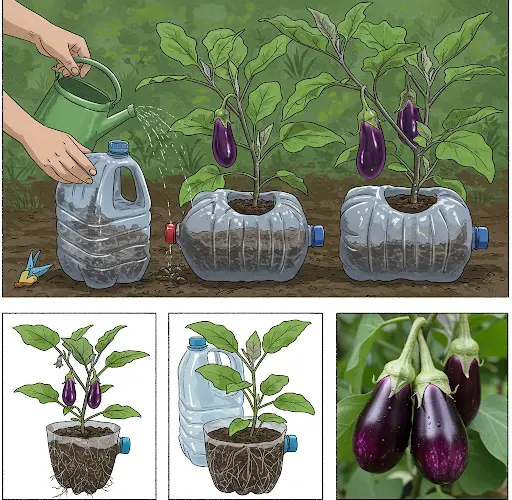
How to Grow Eggplant at Home Using Plastic Jugs and Kitchen Waste
If you’ve been looking for a sustainable and affordable way to grow your own vegetables at home, here’s a great idea: use recycled plastic jugs and everyday kitchen waste to cultivate healthy, productive eggplants right in your backyard, balcony, or terrace. This method is perfect for anyone with limited space or a desire to garden more eco-consciously by repurposing household materials that would otherwise go to waste.
In this guide, you’ll learn how to turn plastic containers and compostable kitchen scraps into a productive mini-garden that can yield delicious, fresh eggplants with very little cost and minimal environmental impact.
Why Eggplant?
Eggplant (Solanum melongena), also known as aubergine or brinjal, is a warm-season vegetable that thrives in containers and raised beds. It’s packed with nutrients, low in calories, and incredibly versatile in the kitchen. Growing your own eggplant is not only satisfying but also allows you to avoid store-bought produce that may have been treated with pesticides.
Eggplants do well in containers, require full sun, and respond well to rich, compost-enriched soil—making them a perfect candidate for this home-growing method.
Materials You’ll Need
To start growing eggplant using plastic jugs and kitchen waste, gather the following materials:
-
Empty plastic jugs or water bottles (4–5 liters)
-
A knife or scissors for cutting
-
Eggplant seeds or seedlings
-
Compostable kitchen waste (vegetable peels, eggshells, coffee grounds, etc.)
-
Garden soil or potting mix
-
A drill or nail for drainage holes
-
Organic fertilizer (optional)
-
Mulch (optional)
Step 1: Prepare the Plastic Jugs
Plastic water jugs or large bottles can be transformed into planting containers with just a few simple modifications:
-
Rinse the jugs thoroughly to remove any residue.
-
Cut an opening on the top or side large enough for planting.
-
Poke 4–5 drainage holes in the bottom using a nail or drill to prevent waterlogging.
This setup helps reuse plastic responsibly while giving your plants a compact, well-drained home.
Step 2: Create a Nutrient Base with Kitchen Waste
Before filling your container with soil, layer the bottom with kitchen waste. This acts as slow-release compost, feeding your plants as it decomposes. Here are good items to include:
-
Crushed eggshells (for calcium)
-
Banana peels (rich in potassium)
-
Coffee grounds (adds nitrogen)
-
Vegetable scraps (chopped finely)
-
Used tea leaves
Avoid oily or processed food waste. Once your kitchen waste is added, cover it with a few inches of soil or compost mix to create a nutrient-rich planting base.
Step 3: Fill with Potting Mix
Fill the rest of the jug with a blend of potting soil and compost. You can also mix in aged cow manure or organic fertilizer if available. Eggplant prefers slightly acidic to neutral soil (pH 5.5 to 7.0) that drains well but retains some moisture.
Step 4: Planting the Eggplant
If using seeds:
-
Sow 2–3 seeds in the center of the jug, about 1 cm deep.
-
Keep the soil moist and warm (70–85°F / 21–29°C).
-
Thin to the healthiest seedling once they sprout.
If using seedlings:
-
Transplant one seedling into the jug when it has 3–4 true leaves.
-
Be gentle with the roots to avoid transplant shock.
Place the container in a sunny location where it gets at least 6–8 hours of light per day.
Step 5: Watering and Maintenance
The kitchen waste will help retain moisture, but consistent watering is still key. Water when the top inch of soil feels dry. Eggplants prefer evenly moist soil but not soggy roots.
-
Add mulch on top of the soil to prevent evaporation.
-
Use a diluted compost tea or organic fertilizer every 2–3 weeks for better growth.
-
As the plant grows, it may need staking or support to keep the branches upright, especially when fruit begins to form.
Step 6: Pollination and Fruit Formation
Eggplants produce self-pollinating flowers, but you can assist the process in container gardens:
-
Gently shake the plant or tap the flowers to move pollen.
-
You can also use a soft brush or cotton swab to manually transfer pollen between flowers.
This encourages higher fruit production, especially in wind-sheltered areas like balconies.
Step 7: Harvesting Your Eggplants
Your eggplants will be ready to harvest when:
-
The fruits are glossy and firm.
-
They reach the typical size for the variety you planted (usually 5–8 inches).
-
The skin is slightly springy when pressed.
Use scissors or a sharp knife to cut the fruit, leaving a short stem attached. Harvesting regularly encourages the plant to produce more.
Final Thoughts
Growing eggplant using plastic jugs and kitchen waste is a sustainable gardening method that turns everyday trash into a thriving food source. It’s an excellent way to teach children about recycling, reduce household waste, and enjoy the rewards of homegrown produce—all without the need for a traditional garden.
Whether you live in an apartment or have a backyard garden, this approach makes it possible to grow nutritious, fresh eggplants with minimal space and resources. Try it out, and you’ll be surprised how easy and rewarding it can be to turn waste into food.


