Fruit is one of the cornerstones of a healthy and balanced diet. Rich in vitamins, minerals, antioxidants, and fiber, it plays a crucial role in supporting the body’s well-being. Strawberries, in particular, are beloved not only for their sweet, refreshing flavor but also for their dense nutritional profile. Unfortunately, strawberries are also highly perishable, often lasting only a few days in the refrigerator before spoiling.
For this reason, farmers and homemakers have long sought ways to preserve strawberries for extended periods. Surprisingly, there is a simple, traditional preservation method that can keep fresh strawberries intact for as long as two years—without losing their natural sweetness and much of their nutritional value. Let’s take a closer look at the benefits of fruit, common preservation methods, and finally, the farmer’s trick for preserving strawberries for years.
Why Fruit is Essential in Our Diet
Health experts recommend eating at least five portions of fruit per day, equivalent to about 80 grams of fresh fruit or 150 ml of unsweetened fruit juice. Each variety of fruit offers unique health benefits:
- Vitamin C, abundant in strawberries, oranges, and kiwis, supports the immune system and stimulates collagen production, which maintains healthy skin and connective tissues.
- Vitamin A, found in fruits like cantaloupe and mango, is vital for eye health and cell regeneration.
- Vitamin K, present in certain berries and grapes, supports blood clotting and bone health.
- Dietary fiber, rich in apples, pears, and berries, improves digestion and contributes to a healthier gut.
While fruits like bananas and grapes are higher in natural sugars, apples, pears, and strawberries offer a good balance of sweetness, fiber, and fewer calories. Strawberries, in particular, are an excellent choice for anyone seeking a nutrient-dense fruit that’s both light and flavorful.
The Challenge of Preserving Strawberries
The problem with strawberries lies in their short shelf life. At room temperature, they spoil quickly; even refrigerated, they may only last up to a week before losing their freshness. Freezing is a popular solution, allowing strawberries to be stored for several months. Frozen strawberries work perfectly in smoothies, baked goods, and desserts but lose their fresh texture.
Drying is another preservation method, where fruits are dehydrated either in the sun or a low-temperature oven. While this creates a concentrated, sweet snack, it also changes the natural taste and texture.
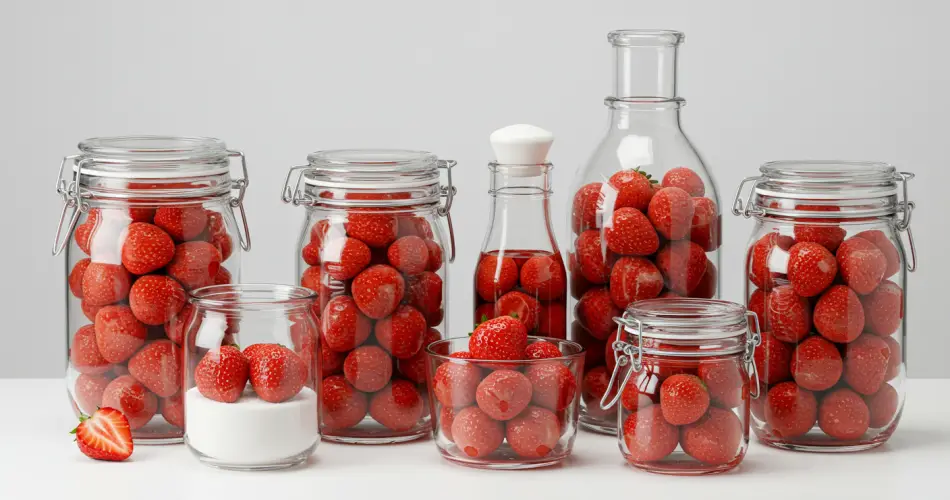
For those who wish to enjoy strawberries in their near-fresh form, canning is one of the most reliable techniques. The farmer’s trick outlined here is a variation of traditional home canning, where strawberries are preserved in glass jars with sugar and hot water, keeping them shelf-stable for up to two years.
Step-by-Step Guide to Preserving Strawberries for Two Years
This method requires only a few ingredients and tools but delivers impressive results.
Ingredients and materials:
- 2 kg of fresh strawberries
- Granulated sugar (2 tablespoons per jar)
- Clean glass jars with lids
- A large pot for boiling water
- Clean kitchen towels
Process:
- Prepare the strawberries.
Place the strawberries in large bowls filled with water and let them soak for 5–10 minutes. This step loosens any dirt and debris. Remove the green stems and thoroughly rinse the berries under running water. - Sterilize the jars.
Wash your glass jars and lids carefully in hot water. For extra safety, you can sterilize them by boiling them in water for a few minutes or placing them in a warm oven for about 10 minutes. Proper sterilization prevents bacteria growth, which is essential for long-term preservation. - Fill the jars.
Place the cleaned strawberries inside the jars, packing them gently but firmly to avoid leaving large gaps. For every jar, add two tablespoons of sugar. The sugar acts as both a preservative and a flavor enhancer. - Add boiling water.
Pour boiling water into the jars until the strawberries are fully covered. Leave a small space at the top of each jar to allow for expansion during boiling. - Seal and boil the jars.
Secure the lids on the jars tightly, then place them upright in a large pot filled halfway with water. Heat the pot until the water begins to boil and let the jars process for about 15 minutes. This step sterilizes the contents and ensures a vacuum seal. - Cool and store.
Remove the jars from the pot carefully. Tighten the lids again if needed, then place the jars upside down on a flat surface. Cover them with a clean kitchen towel and allow them to cool completely.The following day, check the jars to ensure they are sealed properly. The lids should be slightly concave and show no signs of air bubbles inside. Once verified, store the jars in a cool, dark place such as a pantry or cellar.
Using this method, strawberries retain their vibrant color, sweet taste, and much of their nutritional content for up to two years.
Why This Method Works
This preservation method is effective because it combines three essential elements:
- Sugar: Naturally inhibits microbial growth by reducing the water activity inside the jar.
- Heat: The boiling process kills bacteria, molds, and yeast while creating a vacuum seal that prevents recontamination.
- Sealed environment: The airtight jars protect the strawberries from exposure to oxygen, which would otherwise accelerate spoilage.
Together, these steps ensure that the strawberries remain safe to eat and maintain their natural qualities for an extended period.
Additional Tips for Long-Term Storage
- Always use ripe but firm strawberries. Overripe or bruised fruit may spoil faster and compromise the whole jar.
- Label your jars with the date of preparation. While they can last for up to two years, it’s best to consume them within 12–18 months for maximum freshness.
- Store the jars in a cool, dark place, away from direct sunlight and fluctuating temperatures.
Enjoying Preserved Strawberries
Preserved strawberries can be enjoyed in many ways: spooned over yogurt, served with ice cream, added to cakes and pastries, or simply eaten on their own. They retain much of the fruit’s original flavor, making them a versatile addition to your pantry.
This simple yet effective preservation method reflects the wisdom of traditional farming communities, who knew how to make seasonal produce last through the year. By adopting such practices, not only can you reduce waste and save money, but you can also ensure that a taste of summer is available at any time—even two years later.