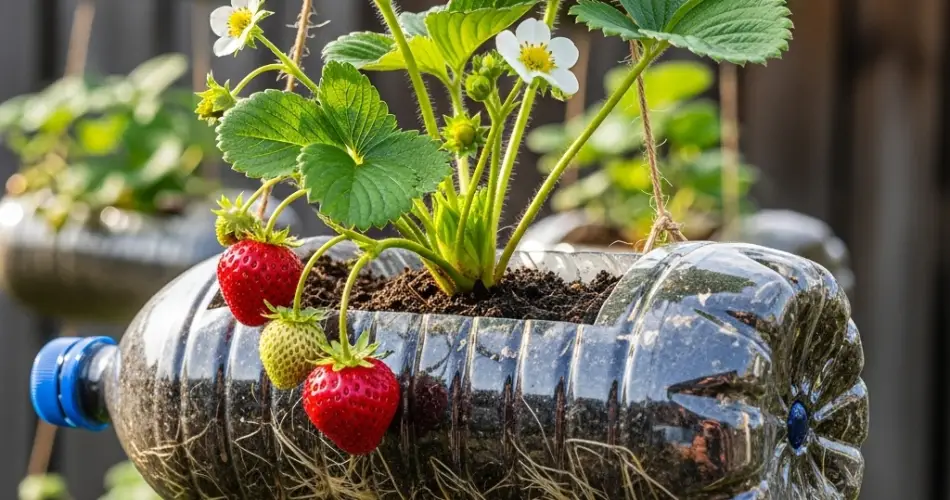
Strawberries are one of the most rewarding fruits to grow, and with a little creativity, you can multiply your plants quickly and cheaply. One of the most effective methods is propagating them in cut plastic bottles. This technique not only reuses materials that might otherwise end up in the trash but also provides a controlled environment for young plants to develop strong roots before being transplanted.
Why Propagate Strawberries in Bottles?
Propagating strawberries in cut bottles offers several advantages:
-
Cost-effective – No need for expensive pots or trays.
-
Eco-friendly – Gives a second life to used plastic bottles.
-
Space-saving – Perfect for small gardens, balconies, or windowsills.
-
Pest protection – Bottles act as a mini greenhouse, shielding plants from insects and harsh weather.
-
Moisture control – Transparent sides help you monitor soil moisture and root development.
This method is particularly useful for propagating runners—the natural offshoots that strawberry plants produce to create new plants.
Choosing and Preparing Bottles
For best results, select 1.5–2-liter plastic bottles made from clear or slightly tinted plastic. Clear bottles let in light, which helps monitor root growth, but avoid dark or opaque ones, as they can retain too much heat.
Steps to prepare the bottles:
-
Cutting – Using a sharp knife or scissors, cut the bottle horizontally about two-thirds from the bottom. The bottom part will serve as the planting container, and the top can act as a removable cover.
-
Drainage holes – Puncture 3–5 small holes in the base for proper drainage. Without them, excess water can cause root rot.
-
Ventilation – Keep the bottle cap off to allow airflow, or drill a small hole in it if you prefer to use the cap as a humidity control feature.
Preparing the Growing Medium
Strawberries thrive in a light, fertile, and well-draining medium. For propagation, a mix that supports healthy root formation is key.
Recommended mix:
-
40% quality garden soil
-
40% compost or well-rotted manure for nutrients
-
20% perlite or coarse sand to improve drainage
Before filling the bottles, mix in a small amount of balanced organic fertilizer. Avoid excess nitrogen, which encourages leaf growth at the expense of flowers and fruit.
Propagating from Runners
Runners are the easiest and fastest way to get new strawberry plants.
-
Identify healthy runners – Choose strong, disease-free runners with a visible node where roots can emerge.
-
Rooting in place – Without detaching the runner from the mother plant, place the node into the prepared bottle’s soil. Gently press it in so roots have good contact with the soil.
-
Watering – Keep the soil consistently moist but not soggy.
-
Detaching – Once the new plant has a healthy root system—usually after 3–4 weeks—cut it away from the mother plant.
Propagating from Seeds
Though slower, seed propagation allows you to grow many plants at once.
-
Sowing – Scatter seeds on the soil surface and lightly press them in.
-
Humidity control – Cover with the top part of the bottle to create a greenhouse effect.
-
Light and warmth – Place in a bright, warm location, avoiding direct midday sun.
-
Germination – This can take 2–4 weeks. Once seedlings have two sets of true leaves, thin them to one strong plant per bottle.
Care During Bottle Propagation
-
Sunlight – Provide 6–8 hours of indirect sunlight daily. Direct, harsh sunlight can overheat the bottle.
-
Watering – Check moisture daily. Bottles dry out faster in hot weather but can stay moist longer in cool conditions.
-
Ventilation – On warm days, remove the top half to prevent excessive heat buildup.
-
Fertilizing – Once plants establish, feed with a diluted liquid fertilizer every two weeks to encourage strong growth.
Transplanting Your New Plants
Once your young strawberry plants have developed strong roots and several leaves, they’re ready for transplanting.
-
Hardening off – Gradually expose plants to outdoor conditions over 5–7 days to prevent transplant shock.
-
Planting site – Choose a sunny, sheltered location with fertile, well-draining soil.
-
Spacing – Plant 12–18 inches apart to allow for airflow and growth.
Maximizing Your Strawberry Harvest
After transplanting, focus on keeping plants healthy to ensure abundant fruiting:
-
Remove excess runners to direct energy into fruit production.
-
Mulch around plants to retain moisture and keep berries clean.
-
Feed with a potassium-rich fertilizer during flowering to boost yields.
Pest and Disease Prevention
-
Slugs and snails – Use barriers like copper tape or crushed eggshells.
-
Aphids – Spray with mild soapy water if infestations occur.
-
Fungal diseases – Water at the base to keep leaves dry and improve air circulation.
Final Thoughts
Cut-bottle propagation is a practical, eco-friendly way to multiply your strawberry plants. By creating a protected, nutrient-rich environment, you give your young plants the best start possible. Whether you’re using runners for quick results or seeds for variety, this method is budget-friendly, space-efficient, and rewarding. With a little care, your small propagation project can turn into a season-long supply of sweet, homegrown strawberries.


