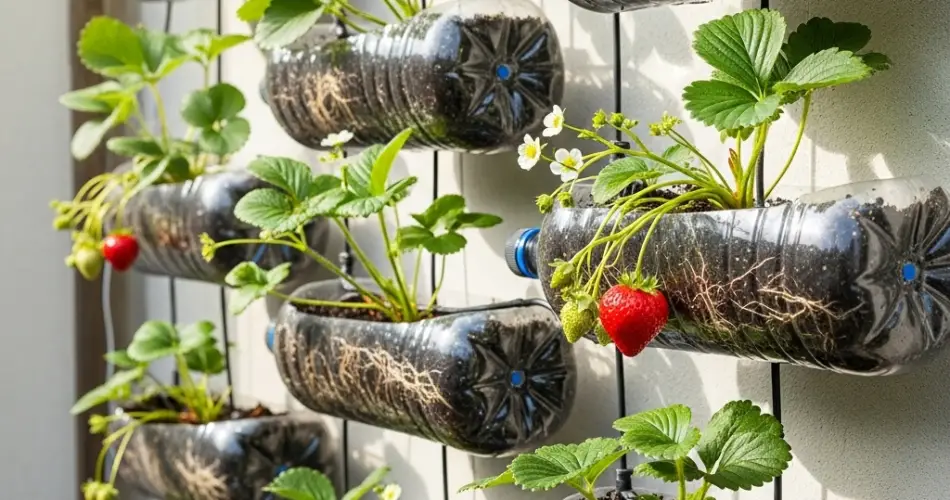
Strawberries are among the most delightful fruits to grow at home—sweet, fragrant, and rewarding with the right care. Whether you have a large garden or just a balcony, you can multiply your strawberry plants using a simple and eco-friendly technique: bottle gardens. By repurposing plastic bottles as small planting containers, you can start new strawberry plants with minimal space, effort, and expense.
This method makes use of strawberry runners—long stems that the plant naturally produces to form new plants. When guided into a bottle garden, these runners can root and grow in a controlled environment before being transplanted to their final location.
Why Choose Bottle Gardens for Strawberries?
-
Space-Saving – Ideal for balconies, patios, or small gardens.
-
Cost-Effective – Uses recycled bottles instead of buying pots or seed trays.
-
Controlled Growth – Provides a safe rooting environment away from pests.
-
Eco-Friendly – Reduces plastic waste by giving bottles a second life.
Selecting and Preparing Bottles
For best results, choose clear 1.5-liter or 2-liter plastic bottles. Wash them thoroughly to remove any residue.
Cut each bottle horizontally about one-third from the top. The bottom portion will be your planting container. Puncture 4–6 drainage holes in the base to prevent water buildup. If you’d like a mini greenhouse effect, you can keep the top portion and fit it back over the bottom after planting.
Creating the Perfect Soil Mix
Strawberries need fertile, well-draining soil to develop strong roots. A good mix for bottle gardens includes:
-
40% garden soil for stability
-
40% compost for nutrients
-
20% sand or coco coir for drainage and aeration
Mix these thoroughly and moisten slightly before filling the bottle base, leaving about 2–3 cm from the top.
Preparing Strawberry Runners
During their growing season, strawberry plants send out runners with small clusters of leaves and a crown. These are potential new plants. Choose runners that are green, healthy, and free from damage. Avoid runners from weak or diseased plants, as they will produce weaker offspring.
Rooting Runners in Bottle Gardens
-
Position the Bottle – Place the prepared bottle close to the parent strawberry plant so the runner can reach it naturally.
-
Insert the Crown – Gently press the crown of the runner into the soil in the bottle, ensuring the base is in contact with the mix.
-
Secure the Runner – Use a plant clip, bent paperclip, or a small twig to hold the runner in place. Stability is key for root development.
-
Water Lightly – Keep the soil moist but avoid overwatering. The transparent bottle makes it easy to see soil moisture levels.
Nurturing the Young Plant
Leave the runner attached to the parent plant for the first 3–4 weeks. During this time, the parent will supply the new plant with the water and nutrients it needs. Ensure the bottle garden gets at least 6 hours of sunlight daily, but shield it from harsh midday sun to prevent overheating.
Check the runner regularly for new root growth. Within a few weeks, you should see white roots spreading inside the bottle and new leaves forming.
Separating and Transplanting
When the young strawberry plant is well-rooted, it’s time to separate it:
-
Cut the Connection – Use clean scissors or pruners to snip the stem linking the runner to the parent plant.
-
Remove from Bottle – Carefully take the plant out of the bottle, keeping as much soil around the roots as possible.
-
Choose a Planting Spot – Select a sunny location with well-draining, fertile soil or a larger container.
-
Plant and Water – Transplant the young strawberry, water generously, and add mulch around the base to retain moisture.
Ongoing Care for New Plants
-
Watering – Keep the soil consistently moist but not soggy.
-
Fertilizing – Apply a balanced, slow-release fertilizer or compost tea every 4–6 weeks.
-
Mulching – Use straw or dried leaves to protect the crown and prevent weeds.
-
Pest Management – Watch for slugs, aphids, and fungal issues, addressing them promptly.
Benefits of Bottle Gardens for Propagation
This method not only saves space but also protects fragile young plants from pests and unpredictable weather. The clear sides of the bottle let you monitor root growth without disturbing the plant, ensuring you transplant at the perfect time.
Final Thoughts
Growing new strawberry plants in bottle gardens is a practical, affordable, and sustainable approach for gardeners of all skill levels. By combining recycling with efficient propagation, you can enjoy an abundant strawberry harvest year after year—starting with just a few runners and a handful of plastic bottles.
With a little care and patience, your small bottle garden can soon lead to a thriving strawberry patch, providing fresh, homegrown berries season after season.


