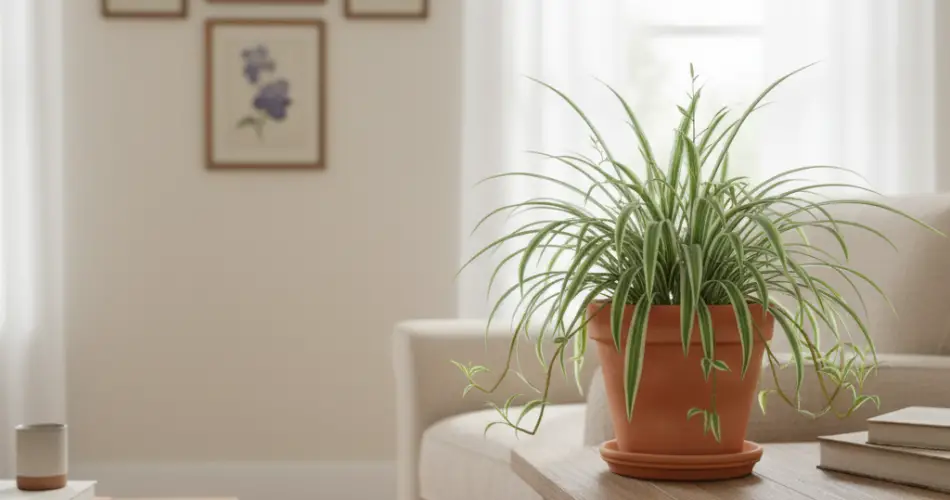
The spider plant (Chlorophytum comosum) is one of the most reliable and forgiving houseplants you can grow. Famous for its arching green-and-white striped leaves and easy-to-produce plantlets, it is a favorite for both beginners and experienced plant owners. Spider plants adapt to a wide range of indoor conditions, but one of the most common questions is whether they prefer shade or bright rooms.
To answer this, let’s explore how different light conditions affect their growth and overall health.
Natural Habitat and Adaptability
Spider plants come from South Africa, where they thrive in bright but indirect light beneath taller plants and grasses. This natural environment makes them well-suited to filtered light rather than full sun exposure. Their adaptability is what makes them such popular houseplants—they can handle low light, bright rooms, or even artificial lighting, though the results differ depending on placement.
Can Spider Plants Grow in Shade?
Yes, spider plants can grow in shade, and this is one of their most attractive qualities. In dimmer rooms or corners without much natural light, they usually remain healthy, though growth slows noticeably.
In shady conditions, expect:
-
Slower leaf production and fewer runners.
-
Leaves that are more green than variegated, since lower light encourages chlorophyll production.
-
Compact growth rather than long arching leaves.
If you want a spider plant mainly for its resilience and greenery in a darker space, it will survive well. However, for faster growth and the best variegation, brighter conditions are preferable.
How Spider Plants Respond to Bright Rooms
Spider plants perform best in bright, indirect light. This means they should be placed near a sunny window but not directly in the path of strong midday rays. East-facing windows, where they get gentle morning sunlight, are often ideal.
In bright rooms, expect:
-
Faster growth and more frequent production of plantlets (baby spider plants).
-
Vibrant leaf coloration, with white or yellow stripes clearly visible.
-
Fuller, more graceful foliage.
Too much direct sun, however, can scorch the leaves, leaving brown tips or patches. A sheer curtain is a simple solution to diffuse harsh light.
Moderate Light: The Best of Both Worlds
For most homes, spider plants thrive in moderate light conditions—a balance between shade and brightness. A spot near a window with filtered light or a few feet back from a sunny window works perfectly. Here, spider plants produce steady growth, strong variegation, and a good number of plantlets without the risk of leaf burn.
Artificial Light and Spider Plants
Another reason spider plants are popular is their adaptability to artificial light. They grow happily under fluorescent or LED lighting, making them perfect for offices, classrooms, or windowless rooms. For the best results, keep them under artificial light for 10–12 hours daily.
If you notice slower growth or fading leaves in artificial-only conditions, adding a grow light with a full spectrum can mimic natural sunlight more effectively.
Seasonal Light Adjustments
The intensity of natural light changes with the seasons, and spider plants may need repositioning:
-
Spring and Summer: Place them in bright but protected areas to avoid scorching during intense sun.
-
Autumn and Winter: Move them closer to windows, as daylight hours are shorter and weaker.
Rotating the plant every few weeks ensures even growth on all sides and prevents one-sided foliage development.
Signs of Too Little or Too Much Light
Your spider plant will show clear signs if its lighting conditions aren’t ideal:
-
Too Little Light: Slower growth, faded or less visible variegation, and fewer runners.
-
Too Much Direct Light: Brown tips or patches on leaves, often from sunburn.
-
Ideal Light: Vibrant green-and-white striped leaves, strong arching growth, and frequent baby spider plants.
By watching these signals, you can easily adjust placement before the plant suffers long-term stress.
Practical Placement Tips
-
In bright rooms, place spider plants near east- or north-facing windows.
-
Use sheer curtains in south- or west-facing windows to soften direct sun.
-
In shadier spaces, pair with artificial lighting to encourage stronger growth.
-
Rotate regularly to ensure balanced light exposure.
Final Thoughts
So, do spider plants prefer shade or bright rooms? The answer is both—but with different outcomes. Spider plants can survive in shade, making them an excellent choice for low-light rooms, but they thrive in bright, indirect light, where they grow fuller, healthier, and produce more of their signature hanging plantlets.
If you want a lush, vibrant display, give your spider plant a spot with plenty of filtered sunlight. If you simply want a reliable plant that can handle a dim corner or office desk, it will adapt and continue to provide fresh greenery.
With their flexibility and resilience, spider plants prove why they have remained one of the most beloved houseplants for generations. Whether in shade or bright rooms, they bring life, air purification, and easy charm to any space.


