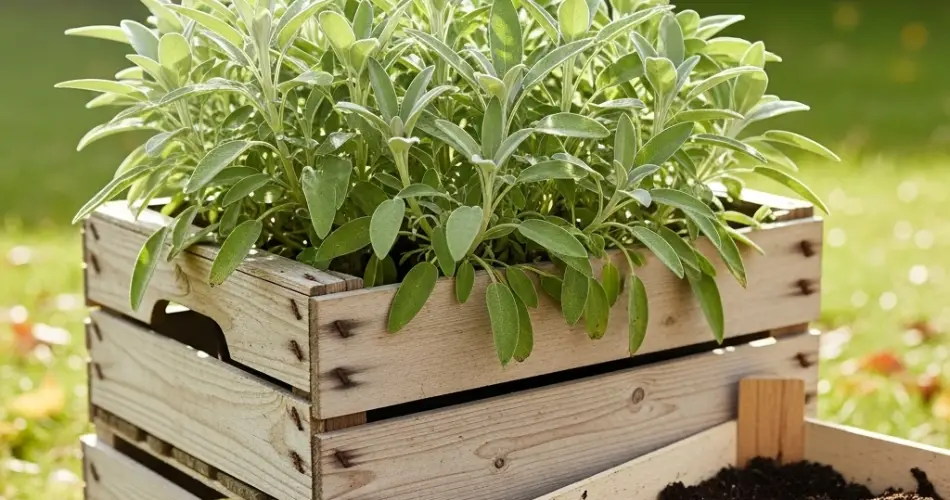
Sage is a versatile and aromatic herb with a long history of culinary, medicinal, and decorative uses. Its earthy flavor complements poultry, meats, and savory dishes, while the leaves also make excellent teas, infusions, and natural remedies. For gardeners, growing sage in rustic wooden crates provides an ideal way to cultivate this herb, particularly in small backyards, patios, or balcony spaces.
Crate gardening combines practicality with aesthetic appeal. Wooden crates not only contain the plant and its root system but also add a charming, rustic touch to your outdoor area. By using crates, you can control soil conditions, manage water drainage, and keep sage plants organized and healthy, all while enjoying the beauty of green foliage and silvery leaves.
Why Grow Sage in Crates
Sage is naturally drought-tolerant, thrives in well-draining soil, and grows compactly—qualities that make it well-suited to container gardening. Using crates for sage offers several benefits:
-
Portability: Move crates to follow sunlight or protect plants from extreme weather.
-
Soil Management: Crates allow precise control over the soil mix and drainage.
-
Aesthetic Appeal: Rustic crates enhance the visual charm of a backyard garden.
-
Space Efficiency: Even small areas can accommodate multiple crates of sage.
This approach is ideal for both beginner and experienced gardeners looking for a manageable and productive way to grow herbs.
Choosing the Right Crate
Selecting a suitable crate is critical for healthy sage plants.
Depth and Size
Sage has a moderately deep root system. Crates should be at least 10–12 inches deep to allow roots to expand and stabilize the plant. Widths of 12–16 inches work well for individual plants, and larger crates can accommodate multiple sages with proper spacing.
Material
Opt for untreated, food-safe wood. Repurposed wine crates, fruit boxes, or handcrafted wooden planters work beautifully, adding a rustic feel while keeping your garden chemical-free.
Drainage
Drill multiple holes in the crate bottom to allow excess water to escape. Line the crate with landscape fabric or burlap to prevent soil loss while ensuring proper drainage.
Preparing the Soil
Sage prefers a well-draining soil mix. An ideal blend for crate planting includes:
-
2 parts high-quality potting soil
-
1 part compost for nutrients
-
1 part coarse sand or perlite for drainage
This mixture ensures the soil retains some moisture while preventing root rot, supporting vigorous growth and long-lasting plants.
Planting Sage in Crates
Sage can be started from seeds, cuttings, or nursery seedlings.
From Seeds
-
Sow seeds about ¼ inch deep and lightly cover with soil.
-
Keep the soil evenly moist until germination, typically 10–21 days.
From Cuttings or Seedlings
-
Transplant small plants carefully, spacing them 10–12 inches apart.
-
Firm the soil gently around the roots to provide stability and encourage early growth.
Staggered Planting
Planting new seedlings every few weeks during the growing season ensures a continuous supply of fresh leaves.
Sunlight, Watering, and Feeding
Sunlight
Sage thrives in full sun, requiring at least 6–8 hours of direct light daily. Position your crates where plants receive maximum sunlight to encourage compact, flavorful growth.
Watering
Water when the top inch of soil feels dry. Sage prefers moderate watering and tolerates drought better than overwatering. Deep, infrequent watering helps establish strong roots.
Fertilizing
Sage is not a heavy feeder. A light application of balanced fertilizer or compost tea once a month is sufficient for healthy growth. Avoid over-fertilizing, which can reduce essential oils and flavor.
Pruning and Maintenance
Pruning sage encourages bushier growth and prolongs the life of your plants:
-
Trim back the stems regularly to prevent legginess.
-
Remove dead or damaged leaves to maintain plant health.
-
Harvest leaves as needed, starting with outer stems to keep the plant productive.
With proper pruning, your sage crate can remain lush and aromatic throughout the season.
Harvesting Sage
You can begin harvesting leaves once the plant is well-established, typically 8–10 weeks after planting.
-
Pick mature leaves as needed, avoiding overharvesting any single stem.
-
Harvest in the morning for the most concentrated aroma and flavor.
-
Sage can be used fresh, dried, or frozen for later culinary use.
Styling Your Sage Crates
Sage’s silvery-green foliage complements other herbs and plants in your garden. Consider:
-
Pairing sage with rosemary, thyme, or oregano in neighboring crates for a Mediterranean herb garden.
-
Arranging crates at varying heights to create visual interest.
-
Decorating crates with stencils or natural finishes for rustic charm.
Crate gardening turns a practical herb-growing project into an attractive feature of your backyard.
Final Thoughts
Growing sage in rustic wooden crates is an accessible and rewarding project. With the right crate, well-draining soil, sufficient sunlight, and proper care, you can enjoy a continuous supply of flavorful, aromatic leaves.
Crate gardening allows even small backyards or patios to become productive herb spaces, blending utility with aesthetic appeal. By cultivating sage in this manner, you create a manageable, beautiful, and aromatic herb garden that elevates both your cooking and your outdoor space.


