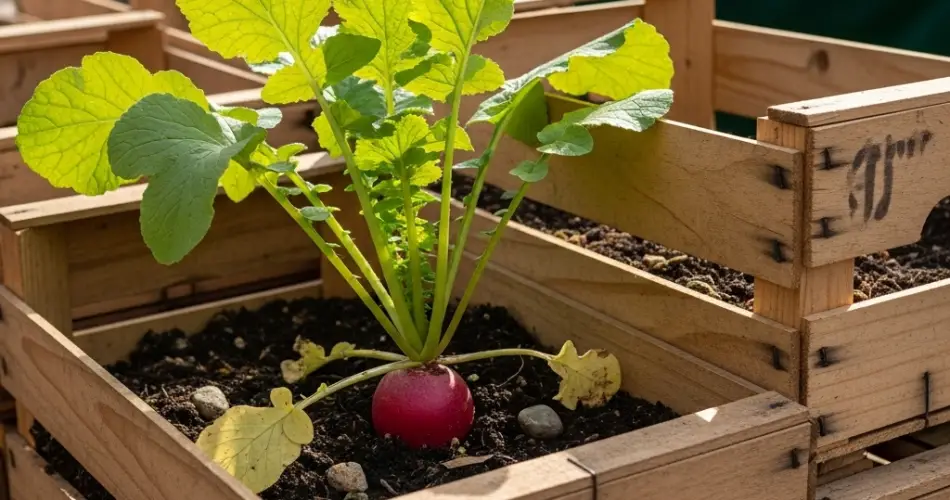
Radishes are one of the fastest and easiest vegetables to grow, making them a favorite for beginner gardeners and seasoned growers alike. Their crisp texture, peppery flavor, and vibrant colors add freshness to salads, sandwiches, and snacks. Best of all, radishes thrive in small spaces and shallow soil, making them a perfect match for rustic wooden crate gardening. This method not only saves space but also allows you to create the ideal growing conditions for a healthy, abundant harvest.
Why Radishes Do Well in Wooden Crates
Radishes have shallow roots and grow best in loose, well-draining soil. Many traditional garden beds suffer from compacted or rocky soil, which can cause radishes to split or grow irregularly. With wooden crates, you can fill the container with a customized soil mix, ensuring it’s light enough for roots to grow straight and smooth. The raised setup also improves drainage and makes it easier to control pests while keeping the plants at a comfortable working height.
Crate gardening is also highly portable. You can move the crate to sunnier spots, protect young seedlings from heavy rain, or bring them under cover during extreme weather.
Choosing the Right Crate
Select a sturdy wooden crate at least 6–8 inches deep. Since radishes mature quickly and don’t require deep soil, this is sufficient for healthy growth. Look for untreated wood, as chemicals from treated lumber can leach into the soil and harm your plants. If you’re repurposing an old crate, give it a good cleaning to remove any dirt, residues, or possible contaminants.
Preparing the Crate for Planting
-
Line the Interior – Use landscape fabric, burlap, or another breathable liner to keep soil in place while still allowing water to drain.
-
Ensure Drainage – If your crate has a solid bottom, drill several small holes to prevent waterlogging. Radishes dislike overly wet conditions, which can cause root rot.
-
Fill with Soil – Use a mix of two parts loose garden soil to one part compost. To further improve drainage, add a handful of sand or perlite. The goal is to create a crumbly, well-aerated texture that encourages even root development.
Choosing Radish Varieties
Radishes come in many shapes, sizes, and colors. For crate gardening, consider:
-
Cherry Belle – A classic round red radish with a mild flavor, ready in about 22 days.
-
French Breakfast – An elongated radish with a red top and white tip, crisp and slightly sweet.
-
Easter Egg Mix – A colorful mix of white, pink, red, and purple radishes that brighten up your harvest.
These fast-maturing types are perfect for small container gardens and can be harvested in just three to four weeks.
Sowing Your Radish Seeds
Radishes grow best in cooler weather, so plant in early spring or late summer for optimal results. Sow seeds directly into the crate rather than starting them indoors, as they don’t transplant well.
-
Plant seeds about ½ inch deep and 1 inch apart in rows spaced 3 inches apart.
-
Cover lightly with soil and water gently to settle them in place.
-
Keep the soil evenly moist until seedlings emerge, usually within 4–7 days.
Caring for Crate-Grown Radishes
Watering – Maintain consistent moisture, especially during the first two weeks of growth. Dry soil can make radishes tough and overly spicy, while soggy soil may cause them to split.
Thinning – Once seedlings are about 2 inches tall, thin them so each plant has 2 inches of space. This ensures proper root development and prevents crowding.
Feeding – Radishes grow so quickly that they don’t need heavy fertilization. However, if your soil is low in nutrients, a light application of balanced, slow-release fertilizer at planting time can boost growth. Avoid high-nitrogen fertilizers, as these encourage leafy tops rather than plump roots.
Sunlight – Position your crate in a location that receives at least 6 hours of direct sunlight daily. Partial shade can be tolerated, but growth will be slower.
Harvesting Your Radishes
Radishes mature quickly—often within three to four weeks. Check their progress by gently brushing away some soil to see the size of the root. Harvest when they reach 1 inch in diameter for the best texture and flavor.
To harvest, grasp the greens near the base and pull straight up. Radish greens are edible, with a slightly peppery taste, and can be used in salads, soups, or sautéed dishes.
Replanting for Continuous Harvests
One of the best things about crate gardening is that you can replant immediately after harvesting. In cool weather, sow new seeds every two weeks to enjoy a continuous supply of radishes. Rotate crate locations or refresh the soil mix to maintain fertility and prevent disease buildup.
Tips for Success
-
Avoid letting radishes sit in the soil too long after maturing, as they can become woody and overly pungent.
-
Keep the crate weed-free to reduce competition for nutrients and water.
-
In warmer months, provide light shade to prevent plants from bolting (producing flowers and seeds too soon).
Final Thoughts
Rustic crate gardening is a practical and attractive way to grow radishes at home. With quick results, minimal care requirements, and the flexibility to grow in small spaces, this method is perfect for busy gardeners or anyone wanting fresh, crisp radishes on demand. By providing the right soil, moisture, and sunlight, your wooden crate can deliver multiple harvests throughout the year, making it a valuable addition to your home garden setup.


