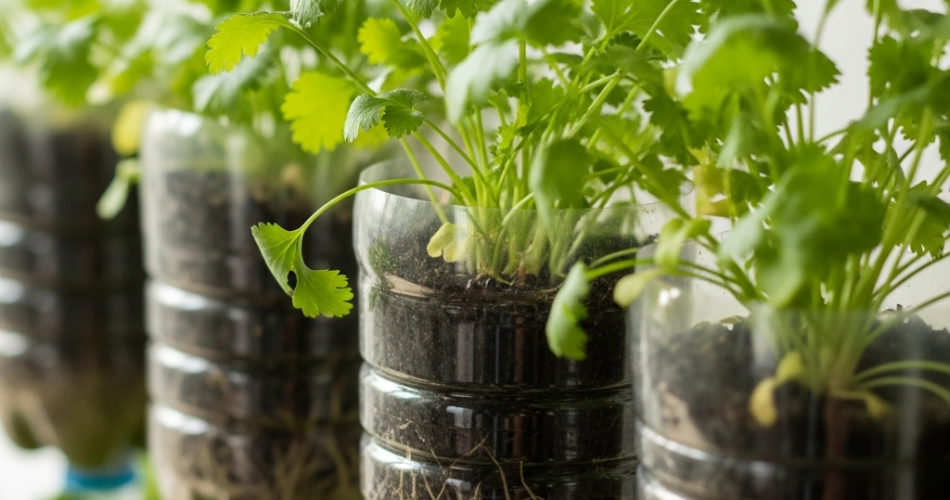
Cilantro, also known as coriander, is a fragrant herb widely used in kitchens around the world. Its bright, citrusy flavor enhances salsas, salads, curries, and sauces, making it a staple in many culinary traditions. Growing cilantro from seeds is common, but propagating it from cuttings offers a faster and more reliable way to multiply plants. One simple and sustainable method is using recycled plastic bottles as propagation containers.
Bottle propagation provides an ideal environment for cilantro cuttings, keeping stems hydrated while protecting developing roots. This method is especially suitable for small-space gardeners, urban dwellers, and anyone looking to reuse plastic bottles for practical gardening purposes. By turning bottles into propagation stations, you can cultivate healthy cilantro plants while reducing environmental waste.
Why Use Bottles to Propagate Cilantro
Using bottles for cilantro propagation offers several benefits:
-
Faster Rooting: Cilantro cuttings often develop roots more quickly in water than in soil.
-
Easy Observation: Transparent bottles let you monitor root growth and detect any potential issues early.
-
Space Efficiency: Bottles occupy minimal space, making them ideal for windowsills, balconies, or compact indoor gardens.
-
Sustainable Gardening: Upcycling plastic bottles reduces waste and transforms them into functional gardening tools.
This method is ideal for gardeners who want a low-maintenance, reliable way to propagate fresh cilantro year-round.
Selecting the Right Bottle
Choosing the right bottle is crucial for successful propagation.
Size and Shape
Bottles of 1–2 liters work best, providing ample water and room for roots to grow. Narrow-neck bottles help keep cuttings upright, while larger bottles allow roots to expand freely.
Cleanliness
Thoroughly wash the bottle with warm water and mild soap to remove residues. Rinse thoroughly to avoid chemicals or contaminants that could harm your cuttings.
Optional Modifications
Cutting the bottle in half can make an open container for easier access to the cutting, or a small slit in the side can hold the stem in place while the top portion reduces evaporation and maintains humidity.
Preparing Cilantro Cuttings
Select healthy, non-flowering stems from an established cilantro plant. Avoid woody stems, as they root more slowly.
Steps for Preparing Cuttings
-
Choose a stem 4–6 inches long with several leaf nodes.
-
Make a clean cut just below a leaf node using sharp scissors or pruning shears.
-
Remove lower leaves to prevent rotting in the water.
-
Optional: Dip the cut end in rooting hormone to encourage faster root development.
Rooting Cilantro in Bottles
Place the prepared cuttings in the bottle filled with fresh, room-temperature water.
Tips for Successful Rooting
-
Ensure at least one leaf node is submerged, as this is where roots will emerge.
-
Position bottles in bright, indirect sunlight; avoid direct sunlight, which can overheat the water.
-
Change the water every 2–3 days to keep it fresh and oxygenated.
Roots typically begin to form within 1–2 weeks, with longer roots indicating the cuttings are ready for transplanting.
Transplanting Cilantro Cuttings
Once roots reach 2–3 inches in length, cilantro cuttings can be moved to soil.
Steps for Transplanting
-
Fill a pot or crate planter with well-draining potting soil. A mix of potting soil and perlite or sand works well.
-
Make a small hole and gently place the rooted cutting, covering the roots with soil.
-
Water lightly and maintain consistent moisture for the first few weeks.
-
Gradually acclimate the plant to full sunlight for stronger growth.
Cilantro prefers sunny locations with 4–6 hours of light per day. Consistent watering and occasional feeding help maintain healthy foliage.
Maintaining Healthy Cilantro
Proper care ensures lush, productive plants:
-
Pinch back tips to encourage bushy growth and prevent legginess.
-
Harvest leaves regularly to promote new growth.
-
Monitor for pests such as aphids or spider mites and manage them promptly.
Regular maintenance keeps cilantro vibrant, flavorful, and visually appealing.
Harvesting Cilantro
Cilantro leaves can be harvested once the plant reaches 6–8 inches in height:
-
Snip outer leaves while leaving the inner growth intact to encourage continuous production.
-
Harvest frequently to prevent the plant from flowering too early, which can cause bitterness.
-
Fresh leaves can be used immediately or preserved by freezing, drying, or infusing into sauces and oils.
Cilantro seeds (coriander) can also be collected for future planting or culinary use.
Styling Your Cilantro Bottle Garden
Cilantro’s delicate green foliage adds both flavor and beauty to any space:
-
Display bottles on a sunny windowsill or balcony for convenient harvesting.
-
Group multiple bottle planters in a rustic crate for a compact herb garden.
-
Decorate or label bottles to enhance the visual appeal of your growing setup.
This method creates an attractive, space-efficient, and sustainable herb propagation system.
Final Thoughts
Using recycled bottles to propagate cilantro is a simple, eco-friendly, and effective gardening technique. With proper preparation, regular water changes, and adequate light, cuttings develop into healthy, robust plants ready for soil or continued growth in bottles.
This approach is perfect for small-space gardeners, urban dwellers, or anyone seeking a continuous supply of fresh, aromatic cilantro. By combining sustainability with practical gardening techniques, you can create a productive, visually appealing, and environmentally conscious herb-growing system.


