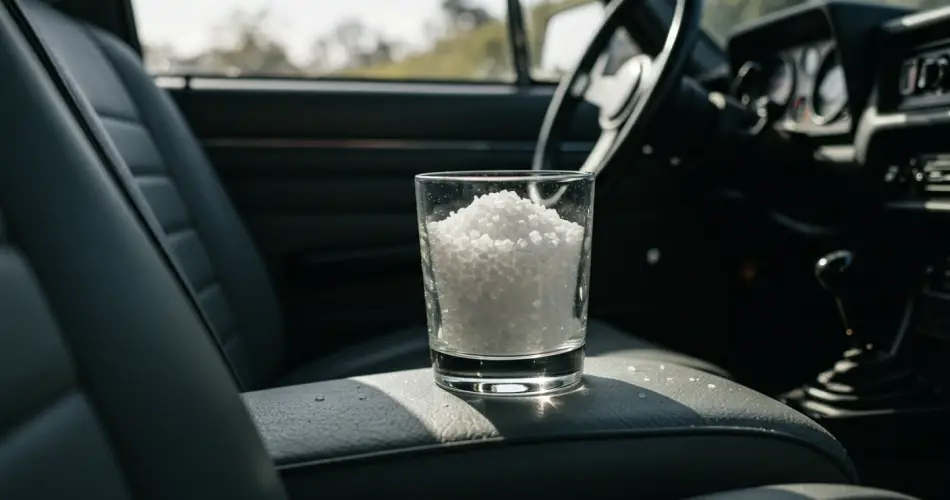
Winter brings with it a series of challenges for motorists. From frosty windshields to sluggish batteries, cold temperatures can make driving and maintaining a car more complicated. Among the many tricks and remedies that circulate during the colder months, one of the simplest and most effective involves something you already have in your kitchen: salt.
Yes, a simple glass of salt placed inside your car can solve one of the most common winter problems drivers face. This clever method is even recommended by some mechanics because it is inexpensive, natural, and effective. But how does it work, and why should you try it? Let’s take a closer look.
Salt: More Than Just a Kitchen Staple
Most of us think of salt as nothing more than a seasoning for food. However, this versatile mineral has a long history of uses outside the kitchen. Salt is often employed in household cleaning because of its abrasive and deodorizing properties. It can help scrub stubborn stains, remove limescale, and even neutralize unpleasant odors.
Beyond cleaning, salt is also known for its ability to absorb moisture. Coarse salt, in particular, contains natural drying agents that pull excess humidity out of the air. For this reason, many people place small containers of salt inside wardrobes, drawers, and cupboards to prevent dampness and mold from forming.
This same property of salt can also be harnessed in another environment that often struggles with humidity: the inside of your car during winter.
Why Salt in the Car Helps in Winter
One of the most frequent issues drivers encounter in winter is condensation forming on the inside of the windows. This happens because of the difference between the cold air outside and the warmer, moisture-filled air inside the vehicle. When the moist air comes into contact with cold glass, it turns into droplets, fogging up your windows.
This can be more than just an inconvenience—it can also be a safety hazard. Driving with foggy windows reduces visibility and increases the risk of accidents. While most cars are equipped with defogging systems, they don’t always work fast enough, especially on very damp days.
This is where salt comes in. By placing a glass of coarse salt inside your car, you create a natural dehumidifier. The salt absorbs excess moisture in the air, preventing condensation from building up on the windows in the first place.
Mechanics often recommend this trick because it’s simple, inexpensive, and requires no special equipment. All you need is a cup of salt placed in your car’s cup holder. From there, the salt will quietly do its job, keeping the interior drier and your windows clearer.
Other Benefits of Using Salt in the Car
Reducing condensation isn’t the only reason to try this method. Excess moisture inside a car can also lead to other problems:
-
Protects the interior: High humidity can cause upholstery, carpeting, and plastic components to wear out faster. By keeping the interior dry, salt helps preserve your car’s condition.
-
Prevents mold and mildew: Dampness inside a car can encourage mold to grow, which not only damages materials but also produces unpleasant odors. Salt helps keep this problem at bay.
-
Reduces electrical issues: Too much moisture can sometimes interfere with a car’s electronics, especially in older vehicles. A drier interior lowers this risk.
How to Use Salt Effectively
If you want to try this method, here’s how to do it properly:
-
Choose coarse salt: While any type of salt works to some extent, coarse salt is more effective because it absorbs more moisture.
-
Put it in a cup or small container: Fill a glass, plastic cup, or small bowl with salt.
-
Place it in the cup holder: This is a safe and convenient spot where the container won’t spill while driving.
-
Replace regularly: Salt becomes saturated over time. Depending on humidity levels, replace it every couple of weeks or whenever it looks damp.
For an even more powerful solution, you can combine salt with other moisture absorbers. For example, put coarse salt and a small amount of charcoal in a container, cover it with an old sock, and place it under the seat or near the air vents. This combination not only absorbs moisture but also helps neutralize odors.
Other Natural Remedies for Car Humidity
While salt is one of the easiest and cheapest methods, there are other options you can try to reduce humidity in your car:
-
Newspapers: Spread old newspapers on the floor of your car. They will absorb moisture from the air and carpeting. Replace them when they become damp.
-
Silica gel packets: Those little packets often found in shoe boxes and electronics packaging are designed to absorb moisture. Collect them, place them in a small fabric bag, and keep them on your dashboard or under the seat.
-
DIY dehumidifiers: You can buy or make reusable dehumidifier bags filled with silica gel or other drying agents. These are particularly effective and can last a long time.
A Simple Solution for a Common Problem
Humidity inside a car during winter is a universal problem, but the solution doesn’t have to be complicated or expensive. A simple glass of salt can prevent fogged windows, protect your car’s interior, and keep your driving environment healthier.
This small step not only makes your daily commute easier but also helps preserve the longevity of your vehicle. So before winter sets in fully, consider keeping a cup of coarse salt in your car—you might be surprised at just how big of a difference it makes.