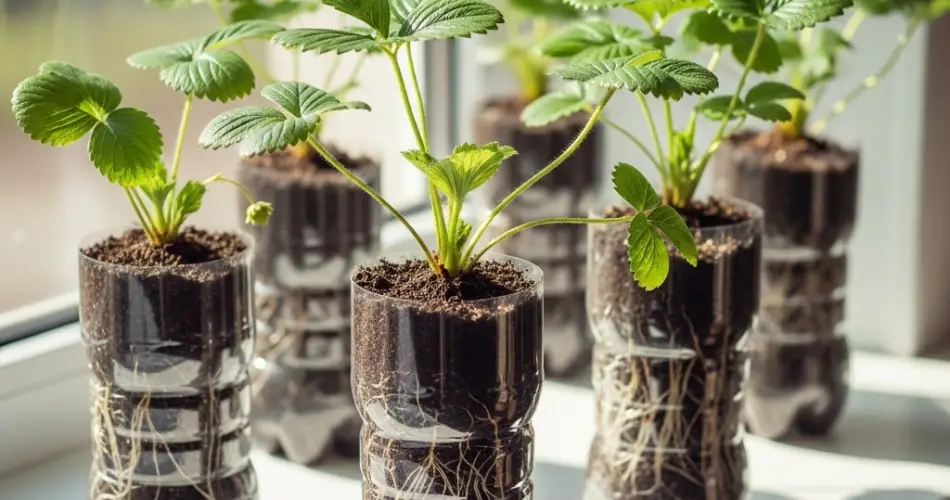
Strawberries are among the most popular fruits to grow at home. They’re sweet, low-maintenance, and propagate easily through runners—slender horizontal stems that extend from the mother plant and develop new baby plants. A practical and space-saving way to root these runners is by using cut plastic bottles.
This method allows you to root strawberry plantlets cleanly, efficiently, and without disturbing the mother plant. Plus, it’s a great way to reuse plastic bottles, making your gardening practices more eco-friendly.
Why Propagate Strawberries from Runners?
Strawberry runners are nature’s way of cloning the parent plant. Each runner sends out one or more baby plants, called “daughter plants,” which can take root and grow independently. Propagating from runners has several benefits:
-
It’s free—no need to buy new plants
-
It ensures identical traits to the parent (taste, size, productivity)
-
It allows you to expand your strawberry patch easily
-
It rejuvenates older plants by starting fresh, productive ones
Using bottles for this process helps guide healthy root development while keeping things tidy and portable.
Materials Needed
To get started, gather the following:
-
1 or more plastic bottles (preferably 1-liter or 1.5-liter sizes)
-
Potting mix (light, well-draining soil)
-
A sharp knife or scissors
-
Watering can or spray bottle
-
A healthy strawberry plant with visible runners
-
Small stones or coconut husk chips (optional for better drainage)
Preparing the Bottles
-
Clean and Dry
Wash the bottles thoroughly to remove any residue. Let them dry completely before use. -
Cut the Bottle
Using scissors or a craft knife, cut the bottle horizontally about 10–12 cm from the base. This bottom portion will serve as a propagation cup. -
Create Drainage Holes
Punch 3–5 small holes into the bottom of each cut bottle. These allow excess water to escape and help prevent soggy soil that can rot developing roots. -
Add Drainage Material (Optional)
Place a few small stones or a thin layer of rice hulls at the bottom to enhance drainage and airflow to the root zone.
Filling the Bottle with Soil
Use a light, well-draining mix to support root growth. A good blend includes:
-
1 part garden soil
-
1 part compost or vermicompost
-
1 part coco peat, sand, or rice hulls for aeration
Fill the bottle with the soil mixture, leaving about 2 cm of space from the top.
Selecting a Runner for Propagation
Choose a healthy, mature strawberry plant with visible runners. Look for baby plants (daughter plants) that already show tiny roots at the base. These are ready to be rooted.
Ideally, use the first or second daughter on the runner for best results, as they tend to be the strongest.
Positioning the Runner into the Bottle
-
Place the Bottle Close to the Mother Plant
Position the bottle near the parent strawberry plant so that the selected daughter plant rests gently on the soil surface. -
Anchor the Runner
Gently press the base of the daughter plant onto the soil in the bottle. Use a small stick, bent wire, or even a hairpin to secure it in place. Make sure the root zone makes direct contact with the soil. -
Water Lightly
Mist the soil with water to keep it moist. Don’t flood it—just enough to keep the soil damp and support root development. -
Leave the Runner Attached
Do not cut the runner at this stage. The daughter plant needs nutrients from the mother plant until it establishes roots.
Caring for the Developing Plant
Keep the bottle in a partially shaded spot to avoid overheating, especially if the weather is hot. Check the soil daily to ensure it remains moist.
After 2–3 weeks, gently tug on the plant. If it resists, roots have formed. Once the daughter plant has rooted securely and has started growing new leaves, it can be separated from the mother plant.
Transplanting the Rooted Plant
Once the new plant is established, follow these steps:
-
Cut the Runner
Use clean scissors to sever the runner connecting it to the mother plant. -
Remove the Plant from the Bottle
Carefully slide the rooted plant out of the bottle, keeping the root ball and soil intact. -
Transplant
Move the young plant into a larger pot, crate, or garden bed. Bury it at the same depth it was growing in the bottle.
Water well after transplanting and place the plant in a sunny area for optimal growth.
Ongoing Strawberry Care
Strawberries need full sun—at least 6 hours a day—and consistent moisture. Mulching around the base of the plants can help retain water and keep weeds down.
Feed with compost or a balanced organic fertilizer every few weeks to encourage flowering and fruit production. Remove any new runners to focus the plant’s energy on growing fruit.
Final Thoughts
Propagating strawberries from runners using bottles is a sustainable, low-cost, and effective method for expanding your strawberry patch. It’s perfect for gardeners with limited space and resources, and it gives you control over the early development of your new plants.
With just a few recycled materials and a bit of patience, you’ll soon enjoy a steady supply of fresh strawberries—all from plants you propagated yourself.


