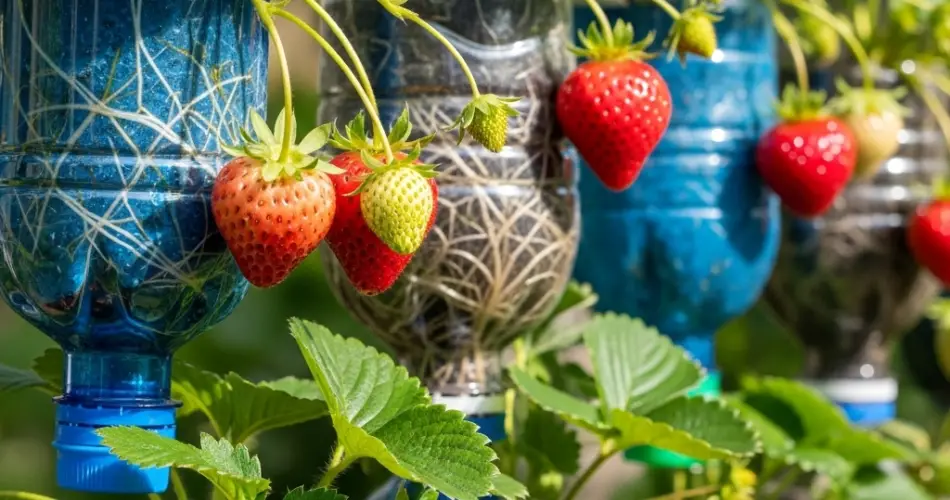
Cloning strawberry plants is a simple and effective way to expand your homegrown berry patch, and using plastic bottles makes the process even more accessible—especially for small-space or urban gardeners. Strawberries naturally send out runners, or stolons, which produce new plants at their tips. With a little care and the right technique, you can encourage these runners to root in plastic bottles and grow into independent, fruit-bearing plants.
This DIY method is perfect for gardeners who want to recycle materials while multiplying their strawberry crop. Here’s a step-by-step guide to cloning strawberry plants using plastic bottles.
Why Clone Strawberry Plants?
Cloning, or propagating, strawberry plants from runners is one of the easiest and most reliable ways to grow new plants. Unlike growing from seeds, cloning ensures that the new plant is genetically identical to the parent, preserving the same fruit quality and characteristics. By rooting runners in plastic bottles, you create a controlled environment that promotes healthy root development, protects young plants from pests, and saves space.
Materials You’ll Need
-
Healthy, mature strawberry plant with runners
-
Clear plastic bottles (1–2 liters)
-
Potting soil or a mix of compost and coco peat
-
Scissors or a sharp knife
-
Toothpick or wooden skewer (optional)
-
Small pebbles or gravel (for drainage)
-
Water spray bottle
Step 1: Prepare the Plastic Bottles
Start by selecting clean plastic bottles with enough room to accommodate soil and root growth. Cut each bottle horizontally about two-thirds up from the bottom. This will create a planting container from the lower portion of the bottle.
Use a sharp tool to make several small holes in the bottom for drainage. Add a layer of pebbles or gravel, then fill the bottle with your soil mix, leaving about an inch of space at the top.
If you’d like a greenhouse effect for better humidity control, keep the top part of the bottle and use it as a dome after planting the runner.
Step 2: Choose Healthy Runners
Look for long, healthy runners from your strawberry plant that have developed small leaves or root nodes. These are signs that the runner tip is ready to root. Select runners that are not too close to the mother plant, as they tend to form stronger roots when spaced slightly farther.
Gently guide the runner tip toward your prepared bottle filled with moist soil. Position the node (the part that will root) on top of the soil surface.
Step 3: Secure the Runner in Place
To encourage rooting, lightly press the node into the soil. You can secure it using a bent paperclip, toothpick, or a small rock to keep it in contact with the soil surface.
Do not cut the runner from the parent plant at this stage. The connection allows the new plant to receive nutrients while its roots are forming. Place the bottle near the parent plant in a sunny but sheltered spot where it gets indirect light.
Mist the soil lightly to keep it moist but not soggy. Avoid overwatering, as this can cause the node to rot before roots form.
Step 4: Encourage Root Development
Over the next 1–2 weeks, keep the soil consistently moist and check the runner regularly. You should see root formation begin as the new plant starts to establish itself.
Once the new plant shows vigorous leaf growth and resistance when gently tugged, it’s a sign that the roots have anchored in the soil.
Step 5: Detach and Transplant
After the roots are well developed—usually after 2 to 3 weeks—you can cut the runner stem connecting the new plant to the mother plant. This marks the beginning of its independent growth.
If desired, you can leave the cloned plant in the bottle to continue growing for a few more weeks or transplant it into a larger container or garden bed. Ensure the new location has good sunlight (at least 6 hours daily), well-drained soil, and consistent moisture.
Step 6: Ongoing Care
Newly transplanted strawberry plants need regular watering to help establish their roots. Add a layer of mulch around the base to conserve moisture and protect the roots. After several weeks, your new plants should begin to flourish and may even start producing fruit by the following season.
Fertilize lightly with an organic liquid fertilizer or compost tea every 3–4 weeks to promote strong growth and flower development.
Final Thoughts
Cloning strawberry plants in plastic bottles is a smart, sustainable way to expand your berry garden. It’s an easy project that requires minimal materials and space, making it perfect for balconies, patios, and even windowsills. With just a few steps, you can transform one strawberry plant into many, ensuring a steady supply of sweet, homegrown berries for seasons to come.


