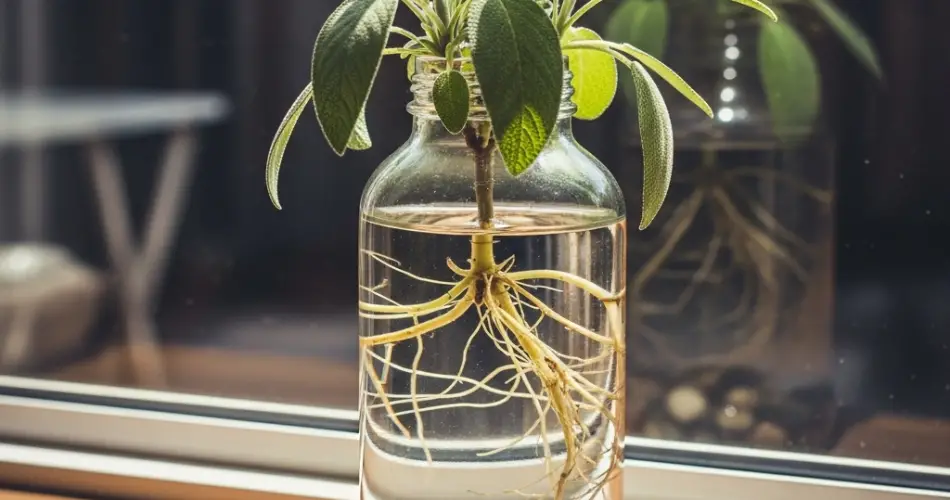
Sage is a versatile herb valued for its culinary, medicinal, and ornamental uses. Its aromatic leaves enhance savory dishes, teas, and even natural remedies. Propagating sage at home is an efficient way to expand your herb collection, and one eco-friendly method is using plastic bottles as humidity domes. This technique creates an ideal microenvironment for rooting cuttings while reusing household plastic, making it a sustainable and cost-effective solution. This guide outlines how to propagate sage using plastic bottle humidity domes successfully.
Why Use Humidity Domes for Sage
Humidity domes help create a controlled environment for cuttings, offering several advantages:
-
Maintains Moisture: Reduces water loss from the leaves, preventing wilting.
-
Encourages Root Development: Provides a humid environment that promotes faster and stronger root formation.
-
Protects Cuttings: Shields young stems from temperature fluctuations, drafts, and pests.
-
Sustainable: Reusing plastic bottles reduces waste while providing a functional propagation tool.
Using a humidity dome is particularly effective for sage, as cuttings can struggle to establish roots in dry indoor conditions or with inconsistent watering.
Selecting and Preparing Sage Cuttings
Choose healthy, disease-free sage stems from a mature plant. Semi-hardwood cuttings—stems that are partially mature but still flexible—are ideal for propagation. Each cutting should be about 4–6 inches long and include several sets of leaves.
Remove the lower leaves from the cutting, leaving 2–3 sets at the top. This prevents submersion in water or soil and allows roots to form from the exposed nodes. A clean, sharp knife or scissors ensures a fresh cut and improves rooting success. Optionally, dip the cut end in rooting hormone to encourage faster root development, though sage can root well without it.
Preparing Plastic Bottle Humidity Domes
Clear plastic bottles make excellent mini-greenhouses for sage cuttings. Follow these steps:
-
Select a 500 ml to 1-liter bottle and cut it horizontally in half.
-
Fill the bottom half with a well-draining potting mix or perlite for soil-based propagation.
-
Insert the sage cutting into the prepared medium, making sure the base is stable.
-
Cover the cutting with the top half of the bottle to create a sealed, humid environment.
Plastic bottles provide an accessible, lightweight, and transparent dome, allowing you to monitor root growth while maintaining humidity around the cutting.
Maintaining the Ideal Environment
Place the bottle dome in bright, indirect sunlight. Direct sunlight can overheat the cuttings, while insufficient light may slow growth. The dome will trap moisture, reducing water loss and creating a microclimate conducive to root development.
Open the dome occasionally to allow airflow and prevent mold or fungal growth. Maintain consistent moisture in the soil or medium, but avoid overwatering, which can lead to rot.
Root Development
Sage cuttings typically begin to develop roots within 3–5 weeks. You can monitor progress through the transparent bottle. Once roots are 1–2 inches long and well-established, the cutting is ready to be transplanted into a larger pot or directly into your garden.
Transplanting Sage
After the cutting has rooted successfully:
-
Prepare a larger pot with well-draining soil enriched with compost.
-
Gently remove the cutting from the humidity dome and transplant it into the new container.
-
Water lightly and place the plant in bright, indirect sunlight, gradually acclimating it to full sun.
Proper care after transplanting ensures the sage grows into a strong, healthy plant capable of producing abundant aromatic leaves.
Benefits of Plastic Bottle Humidity Domes
-
Promotes faster and healthier root development
-
Conserves water by maintaining a humid microenvironment
-
Protects cuttings from drafts, pests, and temperature fluctuations
-
Cost-effective and environmentally friendly by reusing plastic
-
Easy to monitor growth and adjust conditions as needed
Final Thoughts
Using plastic bottle humidity domes is a simple, sustainable, and effective method for propagating sage cuttings. By selecting healthy stems, preparing bottles correctly, and maintaining consistent care, gardeners can successfully root sage in small indoor spaces. This method is ideal for eco-conscious gardeners, urban dwellers, and anyone seeking a practical, low-cost solution for expanding their herb collection. With patience and proper maintenance, bottle-propagated sage will develop into robust plants, providing fresh, aromatic leaves for cooking, teas, and ornamental use.


