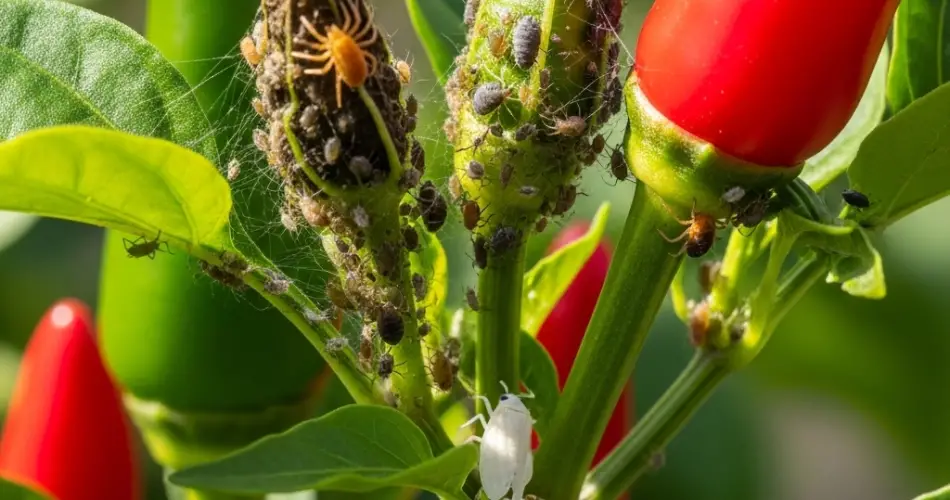
Chili peppers are a favorite crop for many home gardeners thanks to their vibrant colors, spicy flavors, and ease of cultivation. However, like any plant, chili peppers can fall victim to various pests that damage leaves, flowers, and developing fruits. While chemical pesticides may offer a quick fix, they can also harm beneficial insects, affect soil health, and leave chemical residues on your harvest.
Fortunately, effective organic pest control methods can keep your chili plants healthy without compromising your garden’s ecosystem. Below is a guide to identifying common chili plant pests and controlling them naturally.
Common Pests That Attack Chili Plants
Before applying any pest control method, it’s important to correctly identify the culprit. Here are the most common pests that target chili plants:
-
Aphids – Tiny, soft-bodied insects found on leaf undersides. They suck sap, causing curling or yellowing leaves.
-
Whiteflies – Small white flying insects that gather on the underside of leaves. They feed on sap and produce honeydew, which encourages sooty mold.
-
Spider Mites – Nearly invisible pests that cause stippling and fine webbing on leaves.
-
Thrips – Slender insects that cause silvery streaks and distortion in leaves and fruit.
-
Cutworms – Nocturnal caterpillars that sever young chili seedlings at the soil line.
-
Flea Beetles – Small beetles that leave numerous small holes in leaves.
-
Fruit Borers – Larvae that burrow into chili pods, causing internal damage and rot.
1. Encourage Beneficial Insects
One of the most effective organic methods for pest control is to recruit natural predators to do the work for you.
Helpful garden allies include:
-
Ladybugs – Feed on aphids and whiteflies.
-
Lacewings – Their larvae consume aphids, thrips, and spider mites.
-
Parasitic Wasps – Target caterpillars and aphid colonies.
-
Hoverflies – Their larvae devour soft-bodied pests.
How to attract them:
-
Grow companion flowers like marigolds, dill, coriander, alyssum, or yarrow.
-
Avoid spraying broad-spectrum insecticides that can kill beneficial species.
-
Provide water sources and insect habitat (like hedgerows or insect hotels).
2. Neem Oil Spray
Neem oil is a powerful, all-purpose organic pesticide that is safe for people, pets, and pollinators when used correctly.
How it works:
-
Disrupts insect feeding and reproductive systems.
-
Acts as a repellent against a wide range of pests including aphids, mites, thrips, and whiteflies.
Application:
-
Mix 1–2 teaspoons of cold-pressed neem oil with 1 teaspoon of mild liquid soap in 1 liter of water.
-
Spray the mixture on affected plants, especially on the undersides of leaves.
-
Apply early in the morning or late in the afternoon to avoid sunburn.
-
Repeat every 7–10 days or after rain.
3. Garlic and Chili Pepper Spray
Homemade garlic and chili spray can deter many soft-bodied pests with its strong smell and irritating properties.
Recipe:
-
Blend 1 garlic bulb, 1 small hot chili, and 1 quart of water.
-
Strain and add a few drops of liquid soap.
-
Spray directly onto leaves and stems to deter aphids, thrips, and mites.
This spray is best used in the early morning or evening and should be reapplied every few days or after rain.
4. Insecticidal Soap
Insecticidal soaps are made from potassium salts of fatty acids and are safe for use on edible plants.
Uses:
-
Targets soft-bodied insects like aphids, whiteflies, and spider mites.
-
Breaks down their outer coating, leading to dehydration.
How to use:
-
Spray directly on insects, making sure to coat both sides of the leaves.
-
Avoid applying during the hottest part of the day.
5. Diatomaceous Earth
Diatomaceous earth (DE) is a fine powder made from fossilized algae. It works mechanically by cutting into insects’ exoskeletons and dehydrating them.
Best for:
-
Cutworms
-
Flea beetles
-
Ants and crawling pests
How to apply:
-
Dust a fine layer of food-grade DE around the base of the chili plants and on the soil surface.
-
Reapply after rain or watering.
6. Companion Planting
Companion planting is a natural strategy that involves growing pest-repelling plants near your chilies.
Effective companions:
-
Basil – Repels thrips, aphids, and mosquitoes.
-
Marigolds – Deter whiteflies and nematodes.
-
Nasturtiums – Act as a trap crop for aphids and flea beetles.
-
Garlic or chives – Help repel spider mites and aphids.
Planting these nearby adds beauty to your garden while enhancing pest resistance.
7. Physical Barriers and Manual Removal
Some pests can be managed with simple physical methods.
Techniques:
-
Row covers – Protect young plants from flea beetles and cutworms.
-
Sticky traps – Catch whiteflies and fungus gnats.
-
Hand-picking – Remove larger pests like caterpillars or hornworms by hand.
-
Water blast – Spray plants with a strong jet of water to dislodge aphids.
Check your plants daily for pest signs so you can respond quickly before infestations grow.
Conclusion
Protecting your chili plants from pests doesn’t require chemicals. With a combination of organic sprays, beneficial insects, companion planting, and regular monitoring, you can maintain a thriving, pesticide-free chili patch. A healthy, balanced garden ecosystem not only boosts yields but also creates a more sustainable and enjoyable growing experience. Whether you’re cultivating chilies in the ground or in pots on a balcony, these natural methods will help keep your plants pest-free and productive.


