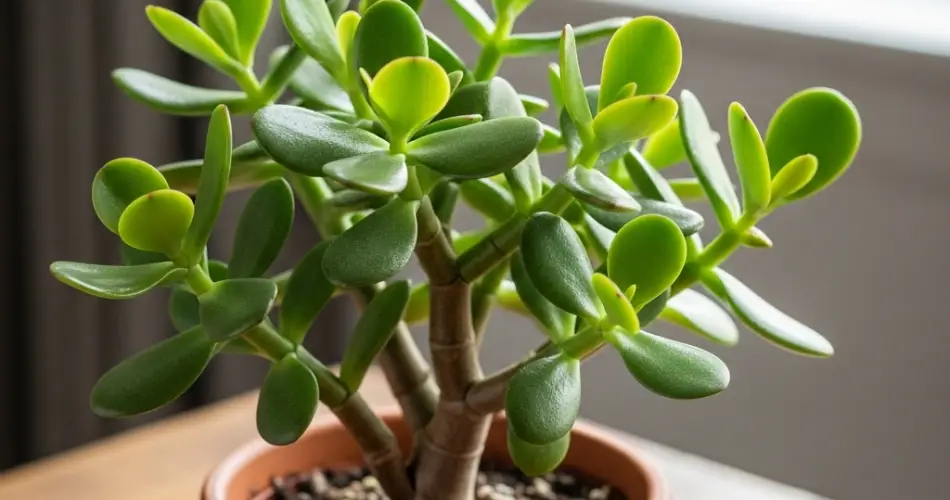
The jade plant (Crassula ovata), often called the “money plant,” is one of the most popular succulents grown indoors. Its thick, fleshy leaves and tree-like structure make it a striking decorative plant. When cared for properly in pots, the jade plant can thrive for decades and even grow into a miniature tree.
Potting a jade plant correctly is essential for its health and longevity. Two of the most critical factors for success are proper drainage and adequate sunlight. Here’s how to master both and keep your jade plant vibrant and thriving.
Choosing the Right Pot
Jade plants don’t like soggy roots. Choosing the right pot is your first step to avoiding root rot.
Pot Material:
Terracotta and unglazed clay pots are ideal. They are breathable and help wick away excess moisture from the soil. Plastic and ceramic pots can also be used, but ensure they have sufficient drainage.
Drainage Holes:
Your pot must have one or more drainage holes at the bottom. Without them, excess water will sit at the bottom of the container, leading to root rot—a common killer of jade plants.
Pot Size:
Select a pot that is only slightly larger than the root ball of the plant. Jade plants like to be slightly root-bound and can tolerate smaller containers better than overly spacious ones, which hold more moisture than needed.
Ideal Soil for Jade Plants
Succulents need soil that drains well and dries out quickly. Jade plants are no exception.
Use a succulent or cactus mix for the best results. You can also make your own by combining:
-
2 parts regular potting soil
-
1 part coarse sand or perlite
-
1 part pumice or crushed lava rock
Avoid moisture-retaining soils or any mix with added fertilizers unless it’s specifically made for succulents.
Sunlight Requirements
Sunlight is essential to keep jade plants healthy and compact. Without enough light, they become leggy, pale, and weak.
Light Preferences:
-
Bright, indirect light is ideal.
-
A south-facing or west-facing window is the best spot indoors.
-
Jade plants can tolerate some direct morning sun, but strong afternoon rays may scorch the leaves, especially in hotter climates.
If growing outdoors, choose a semi-shaded area where the plant receives 4 to 6 hours of sunlight daily. Rotate the pot occasionally so all sides receive equal exposure.
Watering Tips
The golden rule with jade plants is: when in doubt, don’t water.
Jade plants store water in their leaves, so they are quite drought-tolerant. Overwatering is far more dangerous than underwatering.
How to water:
-
Wait until the top 1–2 inches of soil are completely dry.
-
Water deeply until water drains out of the bottom.
-
Empty any water collected in saucers under the pot.
Watering Frequency:
-
Spring and summer: Every 2–3 weeks, depending on humidity and temperature.
-
Fall and winter: Reduce to once a month or less. The plant enters dormancy and needs minimal moisture.
Fertilizing for Healthy Growth
Jade plants are slow growers and don’t need heavy feeding. Use a balanced, water-soluble fertilizer diluted to half strength during the growing season (spring to early fall). Fertilize only once a month. Avoid fertilizing during winter when growth slows.
Pruning and Maintenance
Pruning helps your jade plant maintain its shape and encourages bushier growth. Use clean, sharp scissors or pruning shears to trim:
-
Leggy stems
-
Dead or damaged leaves
-
Excessively tall growth
You can even shape your jade plant into a bonsai-like form by regularly pinching off the top growth.
Also, wipe the leaves occasionally with a damp cloth to remove dust and allow the plant to breathe and absorb more light.
Common Problems and Solutions
-
Soft, mushy leaves: Usually a sign of overwatering. Check the soil and reduce watering frequency.
-
Wrinkled, shriveled leaves: Indicates underwatering. Water deeply and wait for the plant to recover.
-
Yellowing leaves: Can be due to poor drainage or too much moisture in the soil. Improve potting mix and ensure drainage holes are clear.
-
Leggy growth: Not enough light. Move to a brighter location.
Repotting Your Jade Plant
You don’t need to repot jade plants often. Every 2–3 years is usually enough. When repotting:
-
Do it in spring or early summer.
-
Use fresh, well-draining succulent soil.
-
Allow the plant to settle for a few days before watering.
Conclusion
Jade plants are resilient, low-maintenance, and beautiful when grown in the right conditions. With proper drainage and ample sunlight, your potted jade plant can become a long-lasting, eye-catching part of your home or patio. Follow these care tips to keep your jade plant healthy and lush, and enjoy its elegant presence for years to come.


