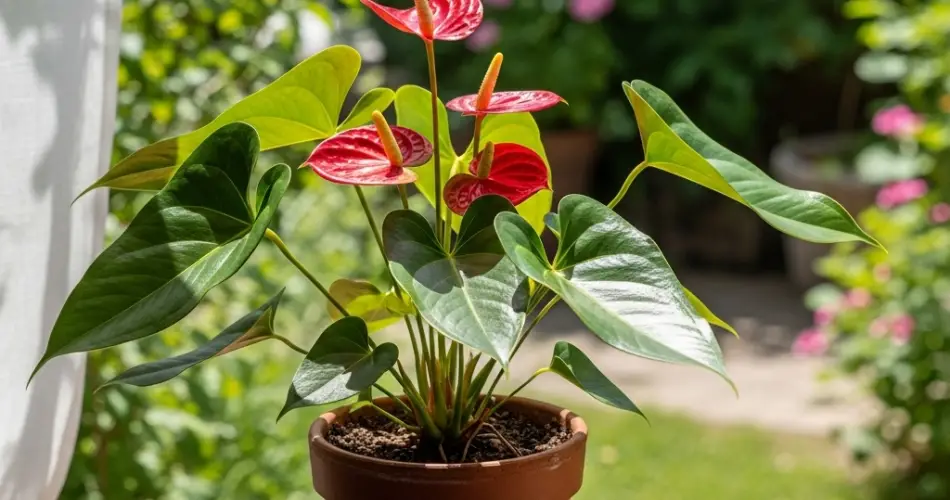
Anthuriums, also known as flamingo flowers or laceleaf plants, are popular houseplants for their glossy foliage and striking, heart-shaped blooms. Native to tropical rainforests, these plants thrive in environments where warmth, moisture, and humidity are abundant. When grown indoors, recreating those natural conditions can be tricky, especially when it comes to striking the right balance between humidity and watering. Too much or too little of either can quickly lead to health problems for your anthurium.
This guide explains how to manage indoor humidity and water correctly so that your anthurium stays vibrant and blooms beautifully throughout the year.
Understanding Anthurium’s Natural Needs
In their native habitats, anthuriums grow under the canopy of rainforests where the air is humid and the soil remains consistently moist but not waterlogged. These conditions allow the roots to breathe while the leaves benefit from constant moisture in the air. Indoors, where air is often drier and watering habits vary, replicating this balance requires attention and adjustment.
The Role of Humidity
Humidity is crucial for anthuriums because it directly impacts leaf health and flower production. Low humidity can cause leaves to develop brown, crispy edges, while consistently high humidity helps keep the foliage glossy and vibrant. Ideally, indoor humidity should be maintained between 60–80% for optimal growth.
Tips to Increase Humidity
-
Humidifiers: Using a humidifier is one of the most reliable ways to maintain consistent moisture in the air.
-
Pebble trays: Place a tray filled with water and pebbles beneath the pot. As the water evaporates, it increases humidity around the plant.
-
Grouping plants: Positioning plants close together creates a microclimate where they benefit from each other’s transpiration.
-
Bathroom placement: If the bathroom has good light, it can provide the natural humidity your anthurium loves.
Be cautious not to overdo it. Extremely high humidity without air circulation can encourage fungal growth on leaves and soil.
Watering Anthuriums Indoors
While humidity affects the air around your plant, watering directly impacts the roots. Anthuriums prefer soil that is evenly moist but never soggy. Both overwatering and underwatering are common mistakes that lead to yellow leaves, root rot, or drooping foliage.
Signs of Overwatering
-
Yellowing leaves starting from the bottom
-
Wilting even though the soil feels wet
-
Mushy, foul-smelling roots
Signs of Underwatering
-
Dry, curling leaves
-
Crispy brown tips
-
Stunted growth and fewer blooms
Watering Best Practices
-
Check the soil: Only water when the top inch of soil feels dry to the touch. Stick your finger into the potting mix to test moisture levels.
-
Use proper soil: A light, airy mix with orchid bark, peat moss, and perlite provides good drainage while retaining some moisture.
-
Choose the right pot: Always grow anthuriums in containers with drainage holes to prevent water from pooling at the bottom.
-
Water thoroughly: When it’s time to water, give the plant a deep soak until excess drains out. Empty any water collected in saucers to avoid root suffocation.
Balancing Humidity and Watering
Humidity and watering are closely connected. If the air is very dry, the soil may dry out faster, requiring more frequent watering. Conversely, in a humid environment, the soil may stay damp longer, meaning less frequent watering is necessary. Observing both soil and foliage will help you adjust your routine.
For example, if your plant’s leaves show brown tips but the soil remains moist, the issue is likely low humidity, not underwatering. On the other hand, if the soil dries too quickly and leaves droop, your home environment may require both more watering and supplemental humidity.
Seasonal Adjustments
Anthurium care also changes with the seasons:
-
Summer: Higher temperatures and longer days mean faster soil drying. Water more often and increase humidity support.
-
Winter: Indoor heating systems can dry out the air, but plants also grow more slowly during this period. Reduce watering frequency, but maintain humidity with a humidifier or pebble tray.
Additional Care Tips
-
Mist carefully: While occasional misting can help, avoid soaking the leaves as this may encourage fungal spots. A light spray in the morning is best.
-
Clean the leaves: Dust buildup reduces the plant’s ability to absorb humidity and light. Gently wipe leaves with a damp cloth every few weeks.
-
Fertilize lightly: A balanced, diluted fertilizer every four to six weeks during the growing season supports healthy leaves and blooms, complementing proper hydration.
Final Thoughts
Caring for anthuriums indoors is largely about mimicking their natural tropical environment. Achieving the right balance between humidity and watering ensures that the plant remains lush, produces glossy leaves, and blooms consistently. By monitoring the soil, adjusting humidity levels, and tailoring your care to seasonal changes, you can enjoy the beauty of a thriving anthurium all year long.


