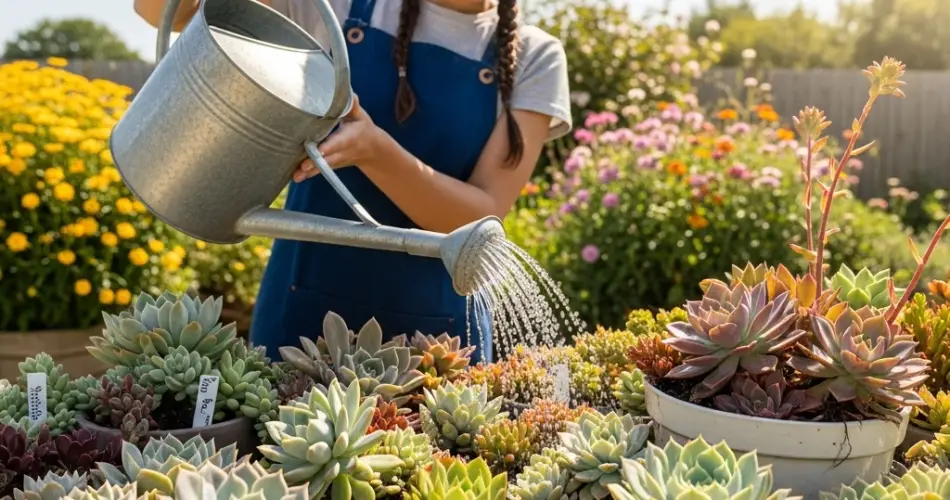
Succulents are among the most popular houseplants today, thanks to their low-maintenance nature and striking variety of shapes, colors, and textures. However, despite their reputation for being easy to care for, many people struggle with one thing: watering. Proper watering is essential to keep your succulents thriving, as both too much and too little can lead to problems.
Here’s a complete guide on how to water succulents correctly so they stay healthy, plump, and beautiful.
Understand What Makes Succulents Unique
Succulents store water in their leaves, stems, or roots, allowing them to survive in arid conditions. This trait means they’re highly drought-tolerant—but also very sensitive to overwatering.
Overwatering is the number one cause of succulent failure. When these plants sit in soggy soil for too long, their roots can rot, leading to mushy leaves, discoloration, and even plant death. On the other hand, prolonged underwatering can cause them to shrivel and drop leaves.
Choose the Right Soil and Pot First
Before diving into how often to water, it’s essential to start with the right foundation. Proper drainage is crucial.
-
Use well-draining soil specifically designed for succulents or cacti. You can also make your own by mixing regular potting soil with sand, pumice, or perlite.
-
Make sure the pot has drainage holes. Succulents don’t like standing water at the bottom of their container. If your pot doesn’t drain, it’s much harder to gauge how much water is too much.
Good drainage helps mimic the dry conditions succulents are adapted to and prevents root rot.
The Soak and Dry Method
The most recommended way to water succulents is the soak and dry method.
-
Water the soil thoroughly until water drains out of the bottom of the pot.
-
Wait until the soil is completely dry before watering again. Don’t rely on the surface—check at least an inch below using your finger or a moisture meter.
This method encourages the plant to grow strong, deep roots and prevents the common mistake of overwatering.
How Often Should You Water?
There’s no one-size-fits-all schedule, as watering frequency depends on several factors:
-
Climate and season: In hot, dry weather, succulents may need water every 7–10 days. During cooler months or dormancy, watering can drop to once every 3–4 weeks.
-
Indoor vs. outdoor: Outdoor succulents in full sun dry out faster than indoor ones.
-
Container size: Small pots dry out more quickly than large ones.
-
Soil and drainage: Fast-draining soil dries faster, reducing the risk of overwatering.
Rather than setting a fixed schedule, it’s best to water based on the condition of the soil.
Watering Indoor Succulents
Indoor succulents tend to need less water because they’re not exposed to wind or full sun. Here’s how to manage watering indoors:
-
Use a watering can with a narrow spout to control the flow.
-
Water directly at the base of the plant, avoiding the leaves to prevent mold or rot.
-
Ensure the pot sits in a well-ventilated area so excess moisture evaporates easily.
If your succulent is near a humidifier or in a bathroom, it may need even less frequent watering.
Watering Outdoor Succulents
Outdoor succulents may need more frequent watering, especially during hot or windy weather.
-
Morning watering is best—it allows moisture to soak in before the heat of the day evaporates it.
-
During rainy seasons, reduce watering and monitor the soil to avoid prolonged wetness.
Succulents in the ground may also need less attention than those in pots, depending on your soil type and drainage.
Signs You’re Watering Incorrectly
Signs of Overwatering:
-
Mushy, translucent, or yellow leaves
-
Leaves falling off with a gentle touch
-
Root rot and foul smell from the soil
Signs of Underwatering:
-
Wrinkled, shriveled leaves
-
Leaves turning brown or crispy
-
Plant appears thin or limp
Adjust your watering habits based on these signs, always allowing time for the soil to dry between waterings.
Bonus Tip: Adjust for Seasons
Succulents enter a dormant period during the winter, when growth slows down. During this time, they need significantly less water. Overwatering during dormancy is a common mistake, so reduce watering to once every 3–4 weeks or less.
In spring and summer, when the plant is actively growing, it will use more water, and you may need to water more frequently.
Final Thoughts
Watering succulents correctly is less about a rigid schedule and more about understanding your plant’s environment and signals. Always use well-draining soil, pots with drainage holes, and let the soil dry out completely between waterings. This simple practice will help you grow healthy, happy succulents without any guesswork.
By observing your plants and adjusting as needed, you can maintain a thriving succulent collection that brings life and color to your home or garden—without fuss or frustration.


