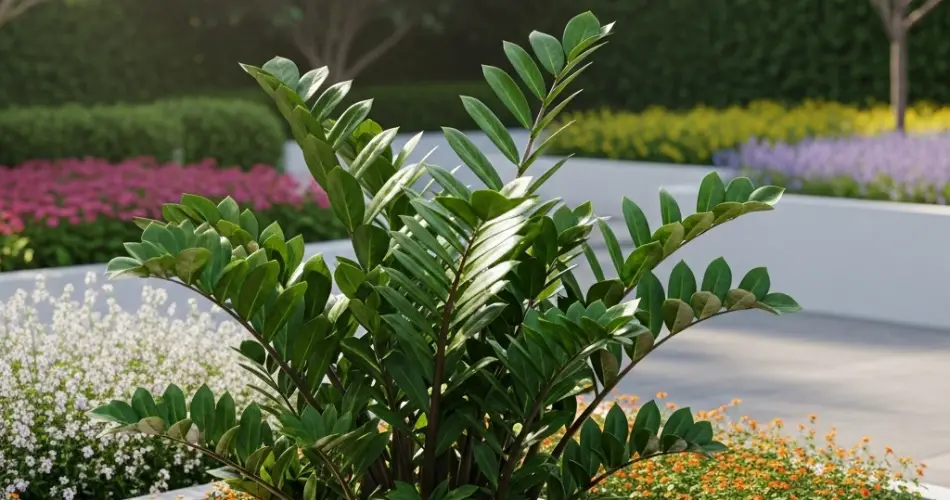
Looking to add lush, low-maintenance greenery to your garden that keeps things vibrant year-round? The ZZ plant (Zamioculcas zamiifolia) might just be your ideal solution. Though it doesn’t produce traditional blooms like roses or lilies, the ZZ plant has a sculptural beauty all its own. With its glossy, deep green leaves and upright growth habit, it adds an eye-catching elegance to any garden setting.
Better yet, it’s incredibly resilient—perfect for beginners, busy gardeners, or those who live in warmer zones where winter gardening can be challenging. While it’s often grown as a houseplant, the ZZ plant can thrive in outdoor gardens under the right conditions and provide a fresh, green contrast to other flowering plants year-round.
What Makes the ZZ Plant Special?
The ZZ plant is a tropical perennial native to Eastern Africa, where it thrives in arid conditions. Its thick, waxy leaves not only make it visually striking but also help retain moisture, making it one of the most drought-tolerant plants around. These attributes make it ideal for gardeners looking to reduce watering or design a more self-sufficient garden layout.
Although the ZZ plant doesn’t produce large, showy flowers, it occasionally forms small, hidden blooms at the base. However, the real attraction lies in its sleek foliage, which stays green throughout the year and reflects light beautifully—even in shaded areas.
Choosing the Right Location in Your Garden
If you plan to grow ZZ plants outdoors, you’ll need to carefully select their location. These plants prefer:
-
Partial to full shade: ZZ plants naturally grow under the tree canopy, so mimic that in your garden. Morning sun is okay, but harsh afternoon sun can burn the leaves.
-
Well-draining soil: They hate soggy roots. If your garden soil is heavy or clay-like, consider planting them in raised beds or amending the soil with sand and organic matter.
-
Sheltered spots: Wind can damage the delicate stems, so choose a protected area near a wall, under large shrubs, or next to taller plants.
In USDA zones 9 to 11, the ZZ plant can be grown outdoors year-round. In cooler zones, it’s best to plant it in pots that can be moved indoors during winter.
Planting and Propagation
The easiest way to start is with nursery-bought ZZ plants, but you can also propagate them from leaf cuttings or by dividing the rhizomes.
Here’s how to plant or transplant ZZ into your garden:
-
Dig a hole twice as wide as the root ball but no deeper.
-
Place the plant and backfill with loose, well-draining soil.
-
Water lightly just to settle the soil—don’t overwater.
If propagating, remove a healthy leaf with its petiole (stem), allow it to dry for a day, and insert it into moist potting mix. Roots and new shoots will begin forming in a few months.
Minimal Watering, Maximum Results
ZZ plants are famously low-maintenance when it comes to watering. Their underground rhizomes store water, so you only need to water when the soil is completely dry.
-
In warm weather, water every 2–3 weeks.
-
In cooler seasons, watering once a month or even less may be sufficient.
Always err on the side of underwatering. Yellow leaves are often a sign of too much water, not too little.
Feeding and Fertilizing
ZZ plants don’t need heavy feeding to stay healthy. A balanced, diluted liquid fertilizer applied once every 2–3 months during the growing season (spring and summer) is more than enough. Avoid over-fertilizing, as it can lead to salt buildup and root burn.
If you’re growing in containers, flush the soil occasionally with water to prevent salt accumulation.
Maintenance and Pruning
One of the best things about ZZ plants is how little pruning they require. Simply remove yellowing or dead leaves to keep the plant tidy. If stems get too long or leggy, you can trim them back to encourage bushier growth.
Also, wipe the leaves occasionally with a damp cloth to remove dust and let their natural shine show through.
Companion Plants and Garden Styling
ZZ plants pair beautifully with flowering plants that enjoy partial shade. Consider combining them with:
-
Impatiens for colorful contrast
-
Ferns for a layered, lush look
-
Caladiums or hostas for tropical flair
Their sculptural form also works well as a feature plant in modern or minimalist garden designs. Group several together near a pathway or under a tree for a low-maintenance focal point.
Final Thoughts
While the ZZ plant may not bloom in the traditional sense, it brings lasting vibrancy and lush texture to gardens with minimal effort. Its glossy leaves reflect light, its growth is steady and strong, and it asks for little in return—just a shady spot and the occasional sip of water.
By adding ZZ plants to your outdoor space, you can enjoy year-round greenery that elevates your garden design, even if your thumb isn’t the greenest. With their resilience and beauty, ZZ plants prove you don’t need blooms to make a bold, botanical statement.