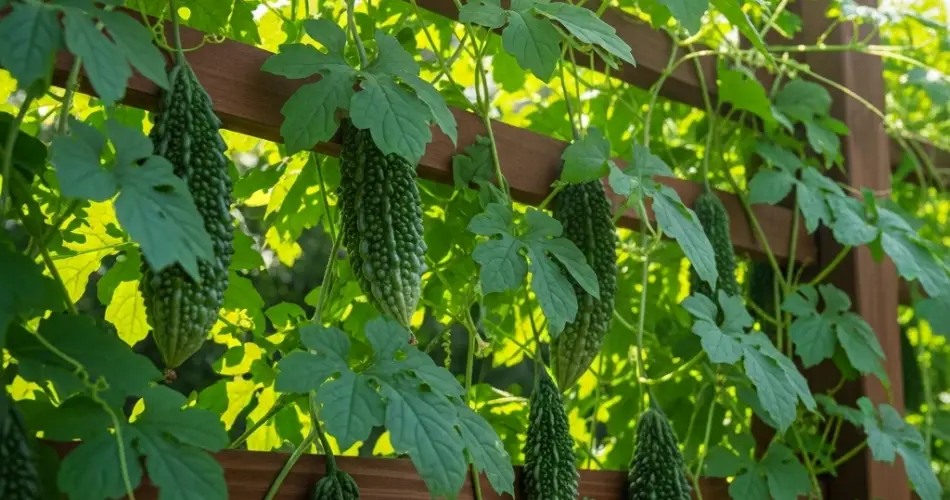
Bitter melon, also known as bitter gourd or Momordica charantia, is a climbing vine valued for its edible fruit with medicinal and culinary uses. This tropical plant thrives in warm climates and can produce impressive yields when given the proper support and care. One of the most effective ways to boost productivity is by training the vines correctly. When allowed to sprawl on the ground, bitter melon plants are more prone to pests, diseases, and reduced fruit quality. In contrast, trained vines benefit from better air circulation, sun exposure, and fruit development.
In this article, we’ll walk through the best methods for training bitter melon vines to grow upward for maximum yield, healthier plants, and easier harvesting.
Why Train Bitter Melon Vines?
Bitter melon is a vigorous climber that can grow 10 to 15 feet (3 to 4.5 meters) or more during the growing season. Without proper support, the vines tangle on the ground, making it hard to manage the plant and harvest the fruits. Training the plant vertically has several benefits:
-
Increased Yield: Trained vines produce more fruits by maximizing exposure to sunlight.
-
Better Fruit Quality: Fruits hang away from soil, keeping them clean and minimizing rot or pest damage.
-
Improved Air Circulation: Vertical growth reduces humidity around the plant, lowering the risk of fungal diseases.
-
Ease of Harvesting: Hanging fruits are easier to spot and pick without damaging the vine or surrounding leaves.
-
Space Efficiency: Training vines upward is ideal for small gardens, balconies, or raised beds.
Choosing the Right Support Structure
Several types of vertical supports work well for bitter melon. The goal is to create a sturdy structure that can hold the plant’s weight throughout the growing season. Consider the following options:
1. Trellis
A-frame trellises or vertical wall trellises are popular choices. They allow the vines to climb freely while offering plenty of room for sunlight and airflow.
-
Materials: Use bamboo poles, wooden slats, or wire mesh.
-
Height: Aim for 6–8 feet tall for optimal vertical growth.
-
Spacing: Keep individual plants about 12–18 inches apart along the base.
2. Arbors or Archways
An arbor-style support adds beauty to the garden and offers shaded areas underneath. Bitter melon vines quickly cover the arch and hang fruits attractively from above.
3. Fencing
If growing near a chain-link or mesh fence, you can allow the vine to climb it directly. Just ensure it’s in a sunny location and doesn’t compete with other climbing plants.
4. String or Netting
For balcony or patio gardeners, nylon netting or garden twine secured vertically can provide excellent support while remaining lightweight and space-saving.
How to Train the Vines
Training starts as soon as the plant develops its first few vines. Bitter melon naturally climbs, but some gentle guidance helps ensure better structure and maximum productivity.
Step 1: Guide Young Shoots
Once the plant reaches about 12 inches tall, start directing the central stem toward the trellis or support using soft garden ties, clips, or twist ties. Be careful not to tie too tightly, as this can damage the stem.
Step 2: Prune for Structure
To encourage strong, productive growth:
-
Pinch the main vine after it has reached 5–6 feet in height to stimulate side shoot development.
-
Remove lower side shoots and leaves up to 1 foot from the base to reduce overcrowding and improve airflow.
-
Thin excessive branches as needed to prevent shading and allow better fruit development.
Step 3: Continue Securing Vines
As the plant grows, regularly secure longer vines to the support structure. This keeps the plant upright and prevents it from collapsing under its own weight.
Pollination Tips for Better Fruit Set
Bitter melon produces both male and female flowers. Bees and pollinators play a crucial role in fruit production. To boost yield:
-
Plant pollinator-friendly flowers nearby.
-
Avoid using pesticides during flowering.
-
If pollination is low, you can hand-pollinate by transferring pollen from male flowers to female flowers using a soft brush or cotton swab.
Watering and Feeding for Trained Vines
Trained vines require consistent moisture to support vigorous growth and fruiting. Water deeply when the top inch of soil feels dry. Avoid overhead watering to reduce fungal risks.
Feed bitter melon plants every 2–3 weeks with a balanced organic fertilizer, compost tea, or diluted fish emulsion. Once flowering begins, switch to a fertilizer higher in potassium and phosphorus to encourage fruit production.
Pest and Disease Prevention
Training vines vertically already reduces many issues, but continue to monitor for:
-
Powdery mildew: Improve air circulation and remove infected leaves.
-
Aphids and whiteflies: Spray with neem oil or insecticidal soap.
-
Fruit flies: Harvest fruits promptly and remove any damaged or overripe ones from the plant.
Harvesting Bitter Melon
Fruits are typically ready to harvest 12–16 weeks after planting. Pick bitter melons when they’re still green, slightly glossy, and firm to the touch. Don’t wait for them to turn yellow or orange—this means they’ve over-ripened and will taste more bitter.
Use scissors or garden shears to cut the fruit from the vine, leaving a short stem attached. This reduces damage to the plant and allows it to continue producing.
Final Thoughts
Training bitter melon vines is a simple yet powerful way to enhance yield, improve plant health, and make the most of your growing space. With a sturdy support system, regular pruning, and proper guidance, your vines will reward you with a generous harvest of flavorful fruits throughout the season. Whether you’re gardening in a backyard plot or on a balcony, vertical growing makes bitter melon cultivation more manageable and productive.


