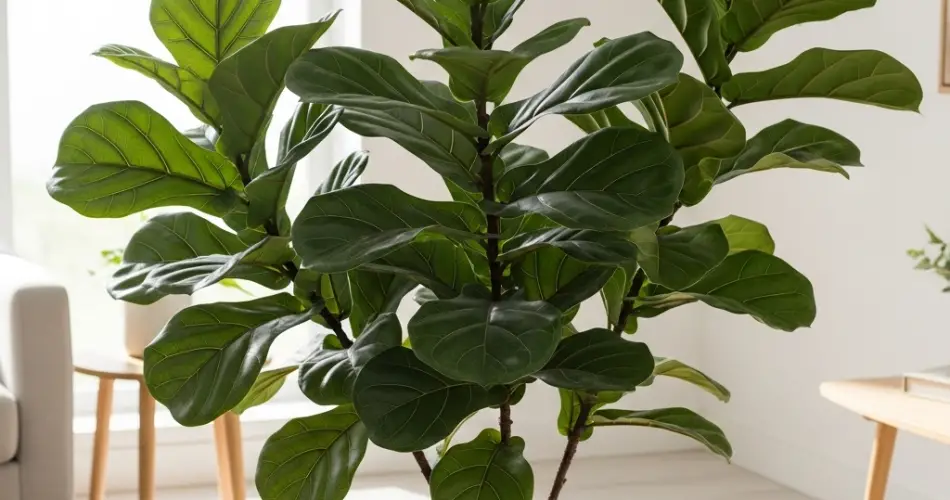
The fiddle leaf fig (Ficus lyrata) is admired for its striking, violin-shaped leaves and ability to transform an ordinary space into a lush, green sanctuary. However, many plant owners quickly realize that without the right care, these plants can grow unevenly, with leaves leaning dramatically toward one side. This imbalance often results from the plant’s natural tendency to grow toward its primary light source.
One of the simplest yet most effective ways to promote even, symmetrical growth is to rotate your fiddle leaf fig regularly. While it may sound like a minor task, rotation plays a major role in keeping your plant healthy, attractive, and well-balanced.
This guide will explain why rotation matters, how often to do it, and the best practices for ensuring your fiddle leaf fig thrives.
Why Rotation Matters
Plants naturally exhibit a behavior known as phototropism, where they grow toward the direction of light. For fiddle leaf figs, this can lead to uneven growth if they are left in the same position for months at a time. You might notice leaves stretching toward the window, a lopsided canopy, or a leaning trunk.
Rotating your plant ensures that all sides receive adequate light exposure. Over time, this creates a more balanced shape and reduces the risk of a plant that becomes unstable or top-heavy.
Rotation also has indirect benefits:
-
Healthier leaves: Even light distribution prevents yellowing or weaker leaves on the shaded side.
-
Stronger stems: Regularly changing orientation encourages the trunk and branches to grow sturdier as they adjust to new light angles.
-
Better aesthetics: A plant that grows evenly looks fuller and more attractive as a centerpiece in your home.
How Often Should You Rotate?
The frequency of rotation depends on your light conditions:
-
Bright, consistent light: If your fiddle leaf fig is near a large window or in a room with abundant indirect light, rotate it about every 2–3 weeks.
-
Moderate light: For areas with less consistent sunlight, rotate more frequently, about once a week, to ensure balanced growth.
-
Low light: Rotation helps, but if your plant is struggling in very low light, consider supplementing with a grow light rather than relying on rotation alone.
Consistency is key. Even if your plant looks balanced, continuing a rotation routine will prevent uneven growth from developing in the future.
Best Practices for Rotating
1. Rotate a Quarter Turn
When you rotate your fiddle leaf fig, turn it about 90 degrees (a quarter turn) each time. This ensures that every side of the plant eventually faces the light source. Avoid spinning it randomly, as this can cause confusion in growth direction.
2. Be Gentle
Fiddle leaf figs can be sensitive to stress, so avoid moving the pot too roughly. Support the trunk when rotating, especially for taller plants, to prevent damage to the roots or tipping the pot.
3. Combine Rotation with Inspection
Rotation day is also a great opportunity to inspect your plant’s leaves and soil. Check for signs of pests, dust on leaves, or dryness in the soil. Wiping the leaves clean at this time ensures they can absorb more light efficiently.
4. Balance with Staking if Needed
If your fiddle leaf fig has already developed a lean, rotating alone might not correct it quickly. In such cases, use a plant stake to provide temporary support as you encourage more upright growth. Over time, consistent rotation will help restore balance.
5. Match with Pruning and Training
Rotation works best when combined with light pruning and training. If one side of your plant has fewer leaves, pruning the denser areas encourages balanced growth. Gentle training, such as tying branches to encourage outward spread, can also complement the rotation process.
What to Avoid
-
Rotating too often: Constantly spinning your plant every few days can cause stress and slow growth. Stick to a regular schedule.
-
Moving locations frequently: Rotation is not the same as relocating your plant entirely. Fiddle leaf figs dislike sudden environmental changes, so keep them in the same spot while adjusting only their orientation.
-
Neglecting light quality: Rotation alone cannot fix insufficient lighting. Ensure your plant receives bright, indirect sunlight for at least 6–8 hours daily.
After Rotation Care
After rotating your fiddle leaf fig, monitor its response. Some leaves may shift direction slightly within a few days as the plant reorients to the light. This is normal and a good sign that it is actively adapting. Continue your usual care routine—watering only when the top inch of soil is dry, providing steady humidity, and ensuring good airflow around the plant.
Conclusion
Rotating your fiddle leaf fig may seem like a small step, but it plays a big role in maintaining balanced growth and a visually appealing shape. By giving all sides of the plant equal access to light, you encourage even leaf development, stronger stems, and a healthier overall appearance. With just a few minutes of attention every couple of weeks, your fiddle leaf fig will reward you with lush, symmetrical growth that enhances your living space.


