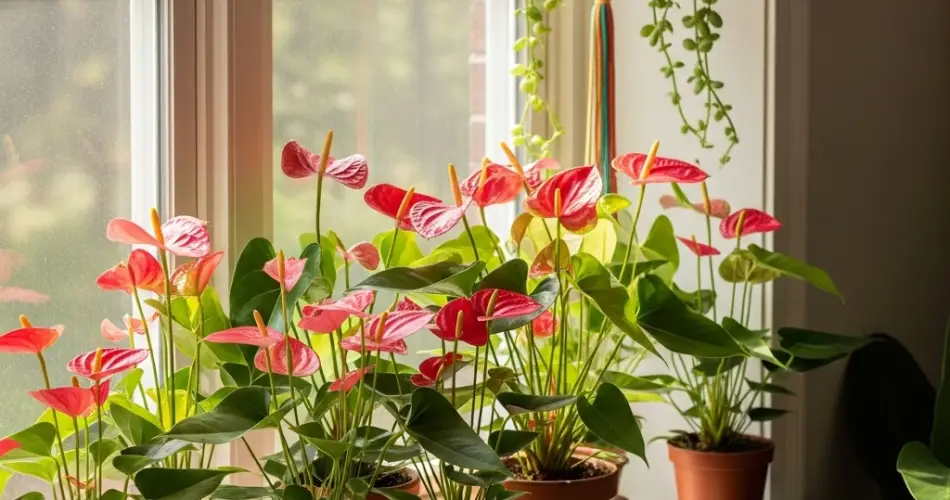
Anthuriums, known for their glossy leaves and vibrant spathes that resemble flowers, are among the most rewarding plants to grow indoors. While commonly appreciated for their beauty, many overlook the potential to significantly boost blooming and leaf production—even in the compact environment of a windowsill.
With the right setup, care techniques, and environmental control, your potted anthurium can yield lush, long-lasting blooms and healthy foliage year-round. Here’s how to maximize the output of this tropical stunner from the comfort of your sunny windowsill.
Understanding Anthurium’s Growth Pattern
Anthuriums are native to tropical rainforests, where they grow in dappled sunlight with high humidity and well-draining soil. Indoors, they adapt well to container life but need a few specific conditions to thrive.
“Yield” for anthuriums generally refers to the number of blooms and new leaves. Maximizing this requires consistency, balanced nutrients, and a bit of attention to their natural growth habits.
Step 1: Choose the Right Container and Soil Mix
The foundation of a thriving anthurium begins with its container and soil.
Container tips:
-
Select a pot with drainage holes to avoid root rot.
-
Choose a container just slightly larger than the root ball; too large a pot can lead to water retention and fungal problems.
-
Repot every 1–2 years as the plant grows.
Soil mix:
-
Combine orchid bark, perlite, and peat moss in equal parts.
-
Alternatively, a high-quality aroid mix or a chunky potting mix designed for epiphytes works well.
Good airflow and drainage are critical, as anthuriums are prone to root issues in heavy or compact soil.
Step 2: Sunlight Is Your Secret Weapon
To get the most blooms and foliage from your anthurium, place it in bright, indirect sunlight. While these plants tolerate lower light, their productivity declines without adequate brightness.
Light strategy:
-
A southeast- or east-facing windowsill is ideal.
-
Filter direct midday sun with sheer curtains to prevent leaf burn.
-
Rotate the pot every week to ensure balanced growth.
In low-light environments, consider supplementing with a full-spectrum LED grow light placed 12–18 inches from the plant.
Step 3: Master the Watering Schedule
One of the most common mistakes with anthuriums is inconsistent watering.
Watering tips:
-
Water when the top 1–2 inches of soil feels dry.
-
Allow water to drain completely; don’t let the pot sit in water.
-
Reduce watering in winter, when growth slows down.
For a boost in yield, try misting the leaves or placing a tray of pebbles and water beneath the pot to maintain ambient humidity around the plant.
Step 4: Feed for Flowers and Foliage
To encourage frequent flowering and robust growth, regular feeding is essential.
Fertilizing schedule:
-
Use a balanced liquid houseplant fertilizer (20-20-20) diluted to half strength every 4–6 weeks.
-
During the growing season (spring to early autumn), feed monthly.
-
In winter, cut back to once every 2–3 months.
For more blooms, switch to a bloom booster fertilizer high in phosphorus (like 10-30-20) once a month during peak growth periods.
Step 5: Prune and Clean to Encourage New Growth
Regular grooming redirects the plant’s energy toward new leaves and blooms.
Maintenance steps:
-
Remove faded flowers and yellow leaves with sterilized scissors.
-
Wipe the leaves gently with a damp cloth to remove dust and improve light absorption.
-
Check for pests like mealybugs and spider mites, especially around leaf joints.
A clean, well-maintained plant focuses energy on growth instead of recovery.
Step 6: Boost Humidity and Maintain Temperature
Anthuriums thrive in conditions that mimic the tropics: warm and moist.
Optimal environment:
-
Keep temperatures between 65–80°F (18–27°C).
-
Avoid placing the plant near cold drafts or heating vents.
-
Maintain humidity around 60–70%.
Use a small humidifier near your windowsill or group plants together to create a naturally more humid microclimate.
Step 7: Encourage Continuous Blooming
With proper care, anthuriums can produce blooms nearly all year.
Bloom-enhancing techniques:
-
Stay consistent with watering and feeding.
-
Ensure stable light levels—sudden changes in lighting can halt blooming.
-
If blooms slow down, try repotting with fresh soil and slightly trimming back leggy stems to encourage fresh growth.
Each bloom can last up to 8 weeks, and new ones can emerge every 6–12 weeks with ideal care.
Final Thoughts
Anthuriums are more than just pretty houseplants—they can be impressively productive when nurtured with the right care. Even if you only have a small windowsill, you can enjoy vibrant spathes and lush leaves year-round by focusing on proper light, feeding, humidity, and routine maintenance.
Don’t let limited space deter you. With a little planning and consistency, your anthurium can become a thriving centerpiece that brings color, elegance, and botanical success into your apartment.


