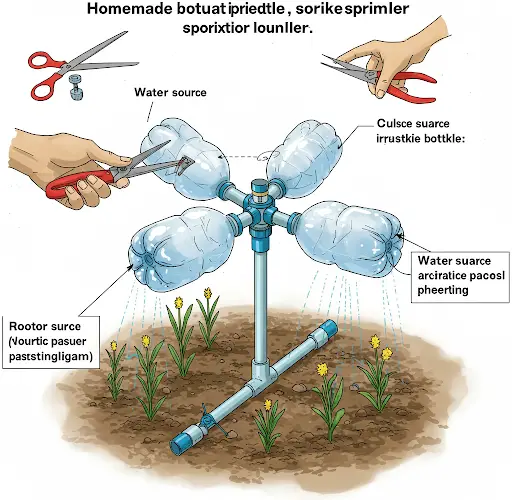
Watering your garden or lawn evenly and effectively is a challenge, especially when you don’t have access to an expensive sprinkler system. However, there is a simple and cost-effective way to create your very own rotating irrigation sprinkler using plastic bottles. This homemade sprinkler system works wonders for evenly distributing water across your garden beds or lawn, and it’s easy to make with just a few simple materials. The best part? It’s a sustainable solution that helps reduce plastic waste while keeping your plants well-watered.
In this guide, we’ll show you how to create a rotating irrigation sprinkler using plastic bottles. Not only is this system easy to build, but it also provides a fun and eco-friendly way to manage your watering needs.
Why Choose a Rotating Irrigation Sprinkler?
Before we dive into the construction process, let’s take a look at why rotating sprinklers are so effective:
-
Even Coverage:
Rotating sprinklers help distribute water evenly over a large area, ensuring that every plant or patch of grass gets a consistent amount of moisture. -
Water Conservation:
Since rotating sprinklers distribute water evenly, they are often more efficient than traditional watering methods, reducing water wastage. -
Simplicity and Cost-Effectiveness:
A homemade rotating sprinkler system using plastic bottles is very inexpensive to build, especially when compared to commercial sprinklers. Plus, it’s a fun DIY project that’s easy to customize to your needs. -
Eco-Friendly:
Using recycled plastic bottles for this project reduces waste and is an environmentally conscious way to reuse materials you might already have lying around.
Materials You Will Need
To make your homemade rotating irrigation sprinkler, gather the following materials:
-
2 plastic bottles (1-liter size or larger)
-
A small drill or nail for making holes
-
A utility knife or scissors
-
A PVC pipe (optional, for attaching the sprinkler to a water source)
-
Duct tape or waterproof glue
-
A sharp pin or needle (for making small holes in the bottles)
-
A rubber stopper or a piece of sponge (optional, for sealing)
Step-by-Step Instructions
1. Prepare the Plastic Bottles
The first step in creating your rotating sprinkler is to prepare the plastic bottles. The bottles will act as the main body of your sprinkler system.
-
Cut the Bottom Off One of the Bottles:
Using a sharp utility knife or scissors, cut the bottom off one of the plastic bottles. This bottle will serve as the “sprinkler head” that distributes the water. -
Drill Holes in the Second Bottle:
The second bottle will be used to attach to the rotating mechanism. Use a small drill or nail to create several small holes around the circumference of the second bottle. These holes will allow water to flow out evenly. -
Create a Hole for the Water Source:
In the center of the second bottle, create a hole that is just large enough for the PVC pipe to fit through. The pipe will be used to connect the sprinkler to a water source.
2. Attach the Bottles Together
Now, it’s time to combine the two bottles to form the rotating sprinkler.
-
Insert the PVC Pipe into the Second Bottle:
Take a piece of PVC pipe and insert it through the hole you made in the center of the second bottle. The pipe should be long enough to reach your water source. Use duct tape or waterproof glue to seal the pipe around the hole, ensuring it is secure and no water leaks out. -
Attach the First Bottle to the Second:
The first bottle (the one with the bottom cut off) should be attached to the second bottle in such a way that the open end is facing downward. This bottle will act as the rotating nozzle of the sprinkler. Use duct tape or waterproof glue to attach the two bottles together, making sure the connection is tight and secure.
3. Create the Rotating Mechanism
To make the sprinkler rotate, you need to create a simple mechanism that allows the sprinkler head to spin as water flows through it.
-
Make Small Holes in the First Bottle:
Using a sharp pin or needle, create small holes near the top of the first bottle. These holes will let the water shoot out in different directions, creating the rotating effect. Make sure the holes are evenly spaced for an even water distribution. -
Optional: Add a Rubber Stopper or Sponge for Stability:
If you want to ensure that the sprinkler head spins smoothly, you can insert a rubber stopper or a piece of sponge into the neck of the first bottle. This will act as a stopper and prevent the bottle from wobbling too much.
4. Connect the Sprinkler to the Water Source
Now that the sprinkler is ready, it’s time to connect it to your water supply.
-
Attach the PVC Pipe to Your Water Source:
Connect the other end of the PVC pipe to a hose or a water tap. Use a hose connector if necessary to make a tight, leak-free connection.
5. Test the Rotating Sprinkler
With everything assembled, it’s time to test your new rotating irrigation sprinkler.
-
Turn on the Water:
Open the water supply and watch as the water flows through the PVC pipe and into the bottles. The pressure should cause the first bottle (the sprinkler head) to rotate and distribute water through the holes you made. -
Adjust the Holes as Needed:
If the water is not spraying evenly, you can adjust the size or number of holes in the first bottle to control the flow and ensure an even distribution.
6. Set Up the Sprinkler in Your Garden
Once your sprinkler is working as expected, place it in your garden or lawn. Make sure it’s positioned in an area where it can rotate freely and cover a large area with water.
Maintenance and Tips
-
Check for Clogs:
Occasionally, the holes in the bottle may get clogged with dirt or debris. Clean the bottle and the holes regularly to ensure consistent water flow. -
Position the Sprinkler Carefully:
Make sure the sprinkler is placed in an area with good water flow and is not obstructed by plants or other objects. -
Customize the Water Flow:
Adjust the number of holes or their size to increase or decrease the water flow, depending on your garden’s needs.
Conclusion
Creating a homemade rotating irrigation sprinkler using plastic bottles is a simple, fast, and cost-effective way to water your garden or lawn. Not only does it save you money, but it also reduces plastic waste, making it an environmentally friendly solution. By following these easy steps, you can create a rotating sprinkler that distributes water evenly and efficiently, ensuring your plants get the hydration they need. Whether you’re a beginner or an experienced gardener, this DIY sprinkler system is a great way to improve your watering routine and conserve water in your garden.


