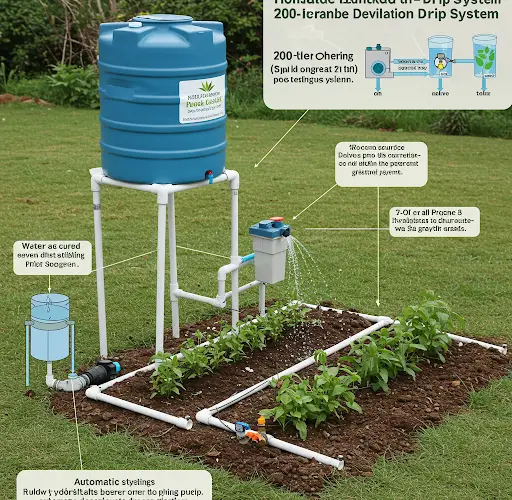
How to Make a Homemade and Automatic 200-Liter Gravity Drip Irrigation System
Watering plants efficiently is key to a healthy and productive garden, especially if you are growing fruits and vegetables like tomatoes, chilis, and strawberries. A homemade 200-liter gravity drip irrigation system is an excellent way to ensure your plants get the consistent moisture they need — without constant manual effort. This system is low-cost, simple to set up, eco-friendly, and works without electricity or pumps.
Here’s a step-by-step guide on how to build your own 200-liter automatic gravity-fed drip irrigation system.
Materials You Will Need
-
1 plastic 200-liter water drum or barrel
-
Irrigation tubing (mainline tubing, 16mm or 20mm in diameter)
-
Microtubing (4mm diameter) for branches
-
Drip emitters (1–4 liters/hour adjustable recommended)
-
Faucet/tap for the barrel (if not already installed)
-
Hose connectors, tees, and end caps
-
Filter (optional but highly recommended)
-
Drill and hole saw or spade bit
-
Water timer (optional for better automation)
-
PVC stand or solid base to elevate the barrel (at least 1 meter off the ground)
-
Sealant tape or rubber gaskets for leak-proofing
All materials are available at garden centers, agricultural supply stores, or online.
Step 1: Prepare and Position the Barrel
Start by thoroughly cleaning the 200-liter barrel to remove any residue or contaminants. Install a faucet near the bottom of the barrel. Most barrels come with a fitting spot, but if yours doesn’t, drill a hole and securely attach a faucet using rubber gaskets and sealant tape to prevent leaks.
Elevate the barrel on a sturdy stand at least 1 meter high. The higher the barrel, the stronger the water pressure through the system, thanks to gravity.
Tip: Make sure the stand is strong enough to support the weight of a full barrel (around 200 kilograms).
Step 2: Connect the Main Irrigation Line
Attach your main 16mm or 20mm tubing to the faucet. This will serve as the backbone of your irrigation system, distributing water throughout your garden.
Secure the tubing with clamps or ties as you lay it out along your garden rows or plant beds. Ensure the tubing slightly slopes downward for smoother water flow.
If you are using a filter, connect it immediately after the faucet. A filter helps prevent clogging, especially if using natural or untreated water.
Step 3: Install Branches and Drip Emitters
Punch holes into the mainline tubing using a punch tool or sharp object, spacing them based on your plant arrangement.
Insert 4mm microtubing into each hole, leading directly to the base of each plant. At the end of every microtube, attach a drip emitter. Emitters regulate the amount of water each plant receives, ensuring uniform watering.
Adjustable emitters are ideal if you have plants with varying water needs.
Step 4: Test and Adjust the System
Open the faucet slowly to allow water to flow into the system. Observe:
-
That water reaches all emitters.
-
That there are no major leaks.
-
That each plant receives an appropriate flow of water.
Adjust the emitters as needed to increase or decrease the output.
If you want to automate watering fully, install a simple mechanical or battery-operated water timer between the faucet and mainline tubing. Set the timer to open the valve once or twice daily, depending on weather conditions and plant needs.
Step 5: Maintain the System
Regular maintenance is crucial for long-term efficiency:
-
Clean the filter periodically.
-
Flush the mainline monthly to remove any sediment buildup.
-
Check emitters weekly to ensure they are not clogged.
-
Refill the barrel when the water level runs low.
Adding a fine mesh over the barrel opening can also prevent debris, insects, or algae from contaminating the water.
Benefits of a 200-Liter Gravity Drip System
-
Saves Water: Drip systems deliver water directly to the roots, reducing waste.
-
Low-Cost: No need for pumps or electricity.
-
Sustainable: Great for areas with limited resources.
-
Scalable: Easily expand by adding more lines and emitters.
-
Improves Plant Health: Reduces fungal diseases by keeping foliage dry and providing steady moisture to roots.
This setup is ideal for vegetable gardens, fruit orchards, and even ornamental plants.
Final Tips
-
Customize flow rates for different plants by adjusting emitters or using different types.
-
Group plants with similar water needs together for easier management.
-
Use rainwater by connecting the barrel to a roof runoff system, making your setup even more sustainable.
Setting up a 200-liter gravity drip irrigation system is a practical, eco-friendly solution for keeping your garden thriving with minimal effort. It ensures plants get exactly the water they need — reliably and efficiently.


