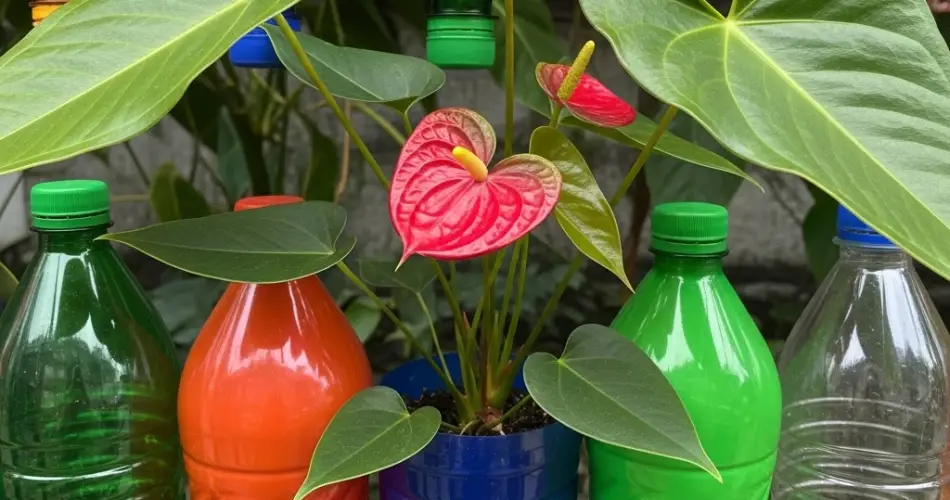
Anthuriums, also known as flamingo flowers or laceleaf plants, are striking tropical plants loved for their glossy, heart-shaped leaves and vibrant spathes. Often grown as ornamental houseplants, they can be successfully cultivated in upcycled bottle containers, making them a fantastic option for small indoor spaces and eco-conscious gardeners.
Growing anthuriums in plastic bottles is not only a sustainable gardening solution, but also an excellent way to enjoy the plant’s exotic appeal without needing large pots or complex setups. With the right conditions and care, these tropical beauties can flourish and even bloom year-round. Here’s a comprehensive guide on how to grow and maintain anthuriums in bottle containers.
Choosing the Right Bottle and Setting It Up
When selecting a bottle for your anthurium, choose a sturdy plastic container that can hold enough soil for root development. A 1.5- or 2-liter soda or water bottle works well.
How to prepare your bottle:
-
Cut the bottle horizontally about one-third from the top. The bottom portion will serve as the planter.
-
Poke drainage holes in the bottom using a heated nail or sharp object.
-
Optional: Use the top part as a funnel insert to create a self-watering system.
-
Line the base with small stones or gravel to enhance drainage.
-
Decorate the exterior with paint, twine, or fabric to make it more appealing.
If you prefer a hanging version, puncture holes near the bottle’s upper edge and attach cords for suspension.
Best Soil for Bottle-Grown Anthuriums
Anthuriums need light, airy, and well-draining soil to prevent root rot. Their roots are sensitive and prone to suffocation in compact or soggy soil, especially in non-traditional containers like plastic bottles.
Ideal potting mix:
-
1 part orchid bark or coco chips
-
1 part perlite
-
1 part peat moss or coconut coir
This combination mimics the plant’s natural habitat—epiphytic or semi-epiphytic conditions with excellent airflow and drainage. You can also add a bit of charcoal to prevent fungal buildup in confined bottle environments.
Planting the Anthurium in a Bottle
Choose a young or medium-sized anthurium with healthy roots. Large plants may not adapt well to small bottle planters unless pruned and repotted carefully.
Steps to plant:
-
Moisten the soil mix lightly before use.
-
Add a layer of soil over the drainage base.
-
Place the anthurium gently into the bottle, ensuring the crown (base of the plant) sits above the soil line.
-
Fill around the roots with more soil, pressing gently to remove air pockets.
-
Water lightly until moisture drains from the bottom.
Make sure not to bury the crown, as this can lead to rot. Use a spray bottle to moisten the plant in tight container spaces.
Light and Temperature Requirements
Anthuriums love bright, indirect light. While they can tolerate lower light levels, this will slow down growth and reduce blooming. Avoid placing them in direct sunlight, as this can scorch their leaves.
Lighting tips:
-
Near an east-facing window is ideal.
-
If natural light is limited, consider using a grow light.
-
Rotate the container weekly to encourage even growth.
Temperature range: 65–80°F (18–27°C)
Humidity: 60% or higher is ideal for lush foliage and flowers.
Watering and Humidity Maintenance
Watering is key to keeping anthuriums healthy. Since bottle containers retain moisture longer, it’s important not to overwater.
Watering tips:
-
Allow the top inch of soil to dry before watering again.
-
Use filtered or distilled water if possible, as anthuriums dislike salts and chlorine.
-
Water thoroughly but let excess drain completely.
Boosting humidity:
-
Mist the leaves regularly.
-
Place the bottle on a tray filled with pebbles and water.
-
Group with other houseplants to create a more humid microclimate.
Fertilizing for Healthy Growth and Blooms
Anthuriums in small containers need occasional feeding to maintain healthy foliage and encourage blooming.
Fertilizing tips:
-
Use a balanced liquid fertilizer diluted to half strength.
-
Feed every 6–8 weeks during spring and summer.
-
Avoid over-fertilizing, especially in tight containers—it can cause salt buildup and leaf burn.
For bloom encouragement, choose a phosphorus-rich formula during the flowering season.
Common Problems and How to Avoid Them
Root rot: Caused by poor drainage or overwatering. Always ensure the bottle has holes and allow soil to dry slightly between watering.
Brown tips: Usually due to low humidity or mineral-rich tap water. Increase humidity and switch to rain or distilled water.
Yellowing leaves: Often a sign of overwatering or poor light. Adjust care accordingly.
Regularly wipe dust from leaves to keep the plant breathing well and looking vibrant.
Repotting and Long-Term Care
Anthuriums can live in bottle containers for up to a year or two. Eventually, the roots may outgrow the space or the soil may become compacted.
When to repot:
-
If you notice roots circling inside the bottle or pushing up.
-
If the plant stops growing or wilts despite proper care.
Repot into a larger container with fresh soil mix, and trim any dead or mushy roots during the process.
Final Thoughts
Bottle gardening with anthuriums is a wonderful way to blend sustainability with style. These tropical plants are naturally elegant and well-suited for minimalist, space-saving indoor gardening. With proper setup, the right potting mix, and attentive care, your bottle-grown anthuriums will thrive and bloom—bringing color, texture, and a tropical touch to your home.


