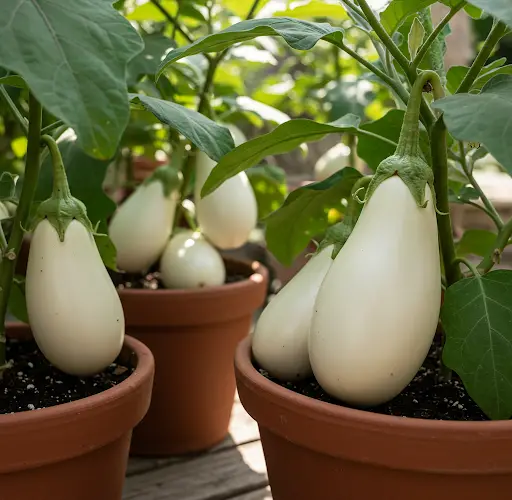
White eggplants are a striking and delicious addition to any container garden. With their glossy, pale skin and tender flesh, white eggplants are not only attractive but also milder and less bitter than their purple counterparts. Growing them from seed in containers is a simple and rewarding process, especially if you have limited space or want more control over growing conditions.
This guide provides a step-by-step overview on how to grow white eggplants—such as the popular ‘White Beauty’ or ‘Gretel’ varieties—from seed in pots or grow bags, from sowing to harvest.
Why Grow White Eggplants in Containers?
Growing eggplants in containers allows you to manage soil quality, move plants for better sunlight exposure, and reduce the risk of soil-borne diseases. White eggplants are compact and highly suitable for container gardening, especially the smaller, early-fruiting varieties.
Containers also help maintain warmth in the root zone, which is essential for heat-loving eggplants. Plus, it’s a great way to grow fresh produce even on a patio, balcony, or sunny porch.
What You’ll Need
-
White eggplant seeds (varieties like ‘White Beauty’, ‘Cloud Nine’, or ‘Gretel’)
-
Seed-starting mix and pots
-
Large container or grow bag (minimum 5 gallons per plant)
-
High-quality potting soil mixed with compost
-
Organic vegetable fertilizer
-
Watering can or hose
-
Warm, sunny location (6–8 hours of sunlight daily)
Step 1: Start Seeds Indoors
White eggplants are warm-weather crops, so they need a long growing season. Start seeds indoors 8–10 weeks before the last frost date in your area.
Sow seeds in small pots or seed trays filled with a sterile seed-starting mix. Plant seeds about ¼ inch deep and lightly water. Keep the soil moist and place the tray in a warm spot—eggplant seeds germinate best at 75–85°F (24–29°C).
Germination usually takes 7–14 days. Once the seedlings emerge, move them to a bright windowsill or place them under grow lights to prevent leggy growth.
Step 2: Transplant to Containers
After the last frost and once outdoor temperatures consistently remain above 60°F (15°C), it’s time to transplant the seedlings into their final containers.
Choose pots or grow bags that are at least 12–14 inches deep and wide for each plant. Fill the containers with a rich potting mix amended with compost or aged manure. Avoid garden soil, which may compact and hinder root growth.
Carefully transplant one seedling per pot, placing it slightly deeper than it was in the seed tray. Water gently to help settle the roots.
Step 3: Provide Sunlight and Warmth
Eggplants require full sun to thrive—ideally 6 to 8 hours of direct sunlight daily. Place your container in the sunniest location available. If you live in a cooler climate, positioning the container near a south-facing wall or reflective surface can boost warmth.
If needed, use black pots or mulch around the plant base to help retain heat in early spring.
Step 4: Watering and Fertilizing
Keep the soil evenly moist but not waterlogged. Water when the top inch of soil feels dry. Container-grown eggplants dry out more quickly than those in the ground, so check moisture levels regularly, especially during hot spells.
Feed your eggplant every 2–3 weeks with a balanced organic fertilizer or one formulated for vegetables. Once the plant begins flowering, switch to a fertilizer with higher potassium to support fruit development.
Step 5: Support and Prune
While some white eggplant varieties stay compact, others may need support as they grow. Install a small tomato cage or stake to prevent the stems from breaking under the weight of developing fruit.
Pinch off early flower buds for the first couple of weeks to encourage stronger root and leaf growth. Remove any suckers or non-productive branches to focus energy on fruit-bearing stems.
Step 6: Pollination and Fruit Set
Eggplants produce self-pollinating flowers, but pollinators like bees still improve fruit set. If you’re growing in an enclosed space or don’t see many bees, you can hand-pollinate flowers by gently brushing the center of the flower with a soft paintbrush or cotton swab.
Consistent moisture and fertilization are important during fruiting. Mulching around the base of the plant can help retain moisture and keep roots cool.
Step 7: Harvesting White Eggplants
White eggplants are typically ready to harvest 65–85 days after transplanting, depending on the variety. Harvest when the skin is glossy and firm but before it becomes dull or over-mature. Fruits should feel slightly soft when pressed gently.
Cut the fruit from the plant with scissors or garden pruners, leaving a short stem attached. Frequent harvesting encourages more fruit production.
Additional Tips for Success
-
Avoid overwatering, which can lead to root rot and fungal issues.
-
Rotate container locations if needed to ensure full sun throughout the day.
-
Watch for pests such as aphids or flea beetles; neem oil or insecticidal soap can help manage them.
-
Use light-colored containers in hot climates to avoid overheating the roots.
Growing white eggplants from seed in containers is a simple yet rewarding experience. With a little attention to warmth, light, and moisture, you’ll be able to enjoy your own fresh, creamy eggplants right from your patio or balcony.


