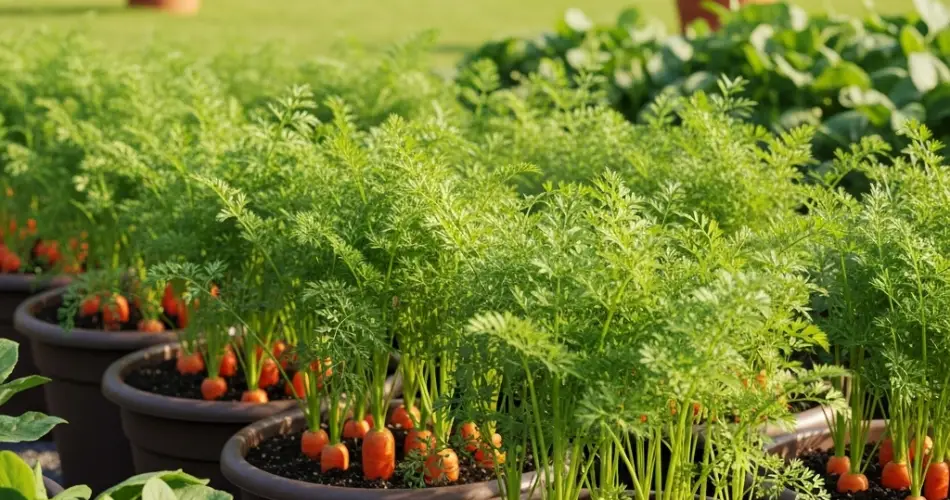
Carrots are a garden favorite for their crisp texture, sweet flavor, and versatility in the kitchen. While they’re often grown in garden beds, carrots can also thrive in containers—as long as you choose the right pot and provide ideal growing conditions. With deep containers, loose soil, and consistent care, you can successfully grow straight, tender carrots right on your balcony, patio, or windowsill.
Container-grown carrots allow for excellent control over soil quality, moisture, and pests, which are all important factors for achieving long, uniform roots. Whether you’re working with limited space or want a low-maintenance growing option, deep pot gardening is a smart solution.
Why Use Deep Pots for Carrots?
Carrots are root vegetables that require room to grow downward. Shallow containers can lead to stunted or misshapen carrots. Using deep pots—at least 30–35 cm (12–14 inches) deep—gives the roots space to grow straight and reach their full potential.
Deep pots also:
-
Provide better drainage and reduce the risk of waterlogging
-
Help prevent pests like root maggots and nematodes
-
Allow easier mobility and sunlight access
-
Make soil preparation and harvest cleaner and simpler
Choosing the Right Container
Look for containers that are:
-
At least 30 cm (12 inches) deep
-
Equipped with good drainage holes
-
Made from plastic, clay, wood, or recycled materials that are sturdy and UV-resistant
You can use large flower pots, buckets, storage bins, or even vertical tube planters. Just make sure the container allows enough depth and width for the number of carrots you plan to grow.
Best Carrot Varieties for Pots
While standard carrots can grow in deep containers, some varieties are especially well-suited to pot culture:
-
Danvers: Classic, tapered carrots ideal for deeper pots
-
Nantes: Straight, blunt-ended carrots known for tenderness
-
Chantenay: Shorter, thicker roots suitable for medium-depth pots
-
Thumbelina or Paris Market: Round, small carrots perfect for shallow containers
Choose a variety based on your pot depth and desired harvest size.
Preparing the Soil
Carrots grow best in loose, well-draining soil that allows roots to expand freely. Heavy, compacted, or rocky soils can lead to forked or twisted carrots.
Create a soil mix using:
-
2 parts potting soil or compost
-
1 part coarse sand or perlite (to improve drainage)
-
1 part coconut coir or peat moss (for water retention)
Avoid using fertilizer-rich soil with high nitrogen content, as this promotes leaf growth at the expense of root development.
Sowing Carrot Seeds
-
Moisten the Soil: Before sowing, lightly moisten the soil in your pot to create a welcoming environment for the seeds.
-
Sow the Seeds: Sprinkle carrot seeds evenly across the surface. Cover them with a thin layer (0.5 cm) of soil or compost. Keep the spacing about 2–3 cm apart for baby carrots, or 5–8 cm for full-sized ones.
-
Water Gently: Mist the surface or use a fine spray to avoid disturbing the seeds. Keep the soil moist until germination.
-
Provide Light: Place the pot in a location that receives at least 6 hours of sunlight per day. Carrots thrive in full sun but can tolerate light afternoon shade in very hot climates.
Germination and Thinning
Carrot seeds can take 10 to 20 days to germinate, so be patient. During this time, keep the soil consistently moist but not soaked.
Once seedlings reach about 5 cm tall, thin them out by snipping weaker sprouts at the base, leaving only the strongest seedlings spaced evenly. Proper spacing is essential to allow each root to develop fully and stay straight.
Caring for Carrots in Pots
-
Watering: Carrots prefer steady moisture. Water when the top 2–3 cm of soil feels dry. Avoid overwatering, which can lead to rot, or letting the soil dry out, which can cause cracking.
-
Feeding: Lightly feed with a balanced liquid fertilizer or compost tea every 3–4 weeks. Avoid high-nitrogen fertilizers.
-
Mulching: A layer of straw or dry leaves on top of the soil can help retain moisture and protect roots from heat.
-
Pest Management: Watch for aphids or leaf miners on the foliage. Use insecticidal soap or neem oil as needed. Avoid disturbing the roots.
Harvesting Carrots
Carrots are typically ready to harvest 60 to 80 days after sowing, depending on the variety. Check the seed packet for maturity time.
To test readiness, gently brush away soil near the top of a root and check its diameter. When the shoulders of the carrots are visible and wide enough, gently pull them from the soil by gripping the base of the foliage.
Watering lightly before harvest makes the soil looser and helps prevent breakage during pulling.
Storing and Replanting
After harvesting, rinse the carrots and trim the tops to about 2 cm. Store in a cool, dry place or refrigerate them in a container with a damp paper towel to retain freshness.
You can immediately replant another round of seeds for continuous harvests, especially in regions with mild climates. Just loosen and refresh the soil with compost before replanting.
Final Thoughts
Growing straight, tender carrots in deep pots is an easy and efficient way to enjoy fresh vegetables at home—even without a garden. By selecting the right container, using loose soil, and maintaining consistent care, you can grow high-quality carrots that are just as delicious as those from the ground. Whether on a sunny balcony or patio corner, your carrot container garden can yield beautiful roots from seed to table.


