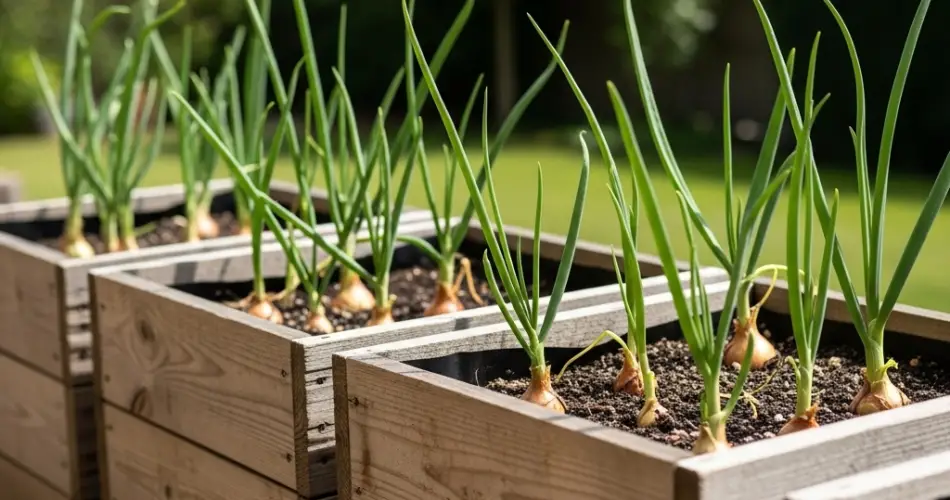
Onions are a kitchen staple found in cuisines worldwide. They add flavor to countless dishes and can be stored for months after harvest. For gardeners with limited space, growing onions in wooden containers is a smart and rewarding option. Wooden planters are durable, eco-friendly, and attractive, making them ideal for cultivating onions on balconies, patios, or small gardens. With proper preparation and care, you can enjoy a steady supply of fresh onions without needing a large outdoor plot.
Why Choose Wooden Containers for Onions?
Wooden containers are particularly well-suited for growing onions. Unlike thin plastic pots, wooden planters provide insulation, keeping the soil temperature stable during both hot and cool weather. They are sturdy enough to hold multiple bulbs at once and can be built or purchased in various sizes. Another advantage is their breathability—wooden boxes allow for better air circulation around the soil, helping prevent waterlogging and rot. Beyond functionality, wooden containers also add a natural and rustic look to any gardening space.
Selecting the Right Wooden Box
The first step to successful onion gardening is choosing the correct container. Onions do not need extremely deep soil compared to other vegetables, but they do require enough room for root expansion and bulb formation. A depth of 10 to 12 inches is sufficient, while the width and length should be adjusted based on how many onions you want to grow. The more surface area you have, the more bulbs you can plant. Be sure the box has multiple drainage holes at the bottom to avoid standing water, which can cause root rot.
If building your own container, avoid pressure-treated lumber as it may contain harmful chemicals. Instead, opt for untreated wood such as cedar or pine, which are naturally more resistant to rot.
Preparing the Soil
Onions thrive in loose, fertile, and well-draining soil. Since they form bulbs beneath the surface, compact or heavy soil will restrict their growth. A good container mix should include equal parts garden soil, compost, and coarse sand or perlite to promote drainage. You can also mix in a slow-release organic fertilizer or well-rotted manure before planting. Onions prefer slightly acidic to neutral soil, with a pH between 6.0 and 7.0.
Planting Onions in Containers
There are three main ways to grow onions: from seeds, sets (small onion bulbs), or transplants. For beginners, onion sets are the easiest option because they establish quickly and reduce the growing time.
When planting sets in a wooden container:
-
Space each bulb about 3 to 4 inches apart.
-
Position them with the pointed end facing upward.
-
Cover with 1 to 2 inches of soil.
For green onions (scallions), you can plant more closely since they are harvested before full bulb formation. If starting from seeds, sow them indoors 8 to 10 weeks before the last frost and transplant seedlings once they are strong enough to handle outdoor conditions.
Watering and Sunlight Requirements
Onions are sun-loving vegetables and require at least 6 to 8 hours of direct sunlight each day. Place your wooden container in the brightest spot available, such as a south-facing balcony or patio.
Consistent watering is crucial for onion growth. The soil should remain evenly moist but never soggy. Wooden boxes can dry out faster than in-ground soil, so check moisture levels regularly. Water deeply whenever the top inch of soil feels dry. Mulching with straw, dried leaves, or grass clippings helps retain moisture and prevents weeds from competing with the onions.
Fertilization and Ongoing Care
Since onions are heavy feeders, they benefit from additional fertilization during the growing season. Use a nitrogen-rich organic fertilizer every two to three weeks until the bulbs begin to form. Once bulb development starts, switch to a balanced fertilizer to encourage larger bulbs. Be careful not to over-fertilize, as this can lead to excessive leafy growth instead of bulb expansion.
Remove weeds promptly, as they compete for nutrients and water. Container-grown onions usually face fewer pest problems, but you may still encounter thrips or onion maggots. Companion planting with carrots or herbs like dill and parsley can help deter pests naturally.
Harvesting Onions
The time to harvest depends on whether you are growing green onions or full bulbs. Green onions can be pulled once they reach pencil thickness. For bulb onions, wait until the tops turn yellow and begin to fall over. Stop watering at this stage to allow the bulbs to mature and the outer skins to dry. After a few days, gently lift the onions out of the soil and cure them in a warm, dry, and well-ventilated area for about two weeks before storing.
Advantages of Growing Onions in Wooden Containers
Using wooden boxes for onion gardening offers several benefits:
-
Space efficiency: Perfect for balconies, patios, or small yards.
-
Soil control: You can create the ideal growing medium without worrying about poor garden soil.
-
Fewer pests and diseases: Elevating onions reduces the risk of soil-borne problems.
-
Mobility: Wooden containers can be shifted to follow the sun or to protect plants from heavy rain.
-
Aesthetic value: Rustic boxes enhance the appearance of your outdoor space while serving a practical purpose.
Final Thoughts
Growing onions in wooden containers is a simple and efficient way to enjoy this essential vegetable at home. With the right soil, consistent care, and plenty of sunlight, even a small planter can yield a satisfying harvest. Whether you use them fresh in salads, sauté them for savory dishes, or store them for later use, homegrown onions bring freshness and flavor straight from your container garden to your kitchen.


