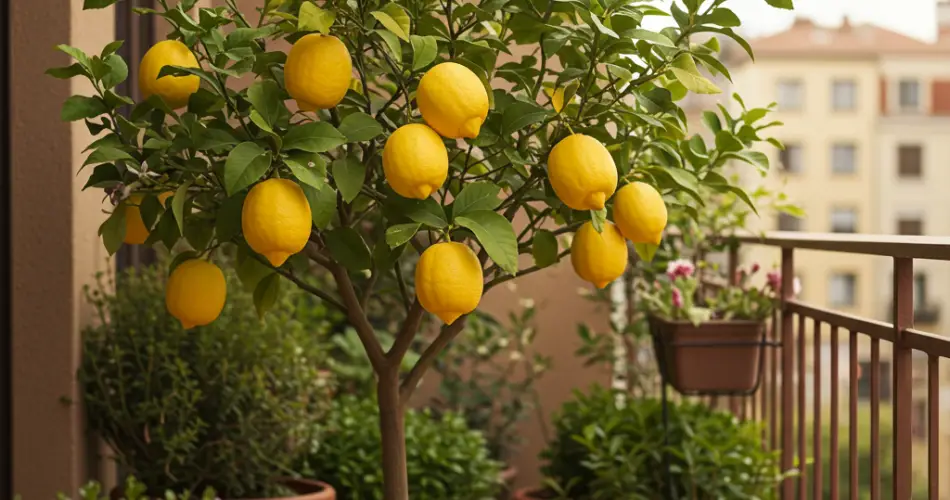
Growing lemons on your balcony is not only possible, but it can also be highly rewarding. With just a few simple tips and a bit of care, you can enjoy the fresh scent of lemon blossoms and eventually harvest your own organic citrus fruit at home. Whether you live in an apartment or have limited space, these practical tricks will help you turn your balcony into a small lemon grove.
Choose the Right Variety
Not all lemon trees are suited for container gardening. When growing lemons on a balcony, it’s important to select a dwarf or compact variety. Options such as the ‘Improved Meyer Lemon’ or ‘Ponderosa’ are ideal because they are smaller in size but still produce full-sized fruit. These varieties are also more adaptable to pot cultivation and limited root space.
The Right Pot Makes a Difference
Lemon trees need space for their roots to grow. Start with a container that is at least 40 cm (16 inches) in diameter and has proper drainage holes. As the tree grows, you may need to repot it into a larger container. Use a pot made of clay or another breathable material to help maintain soil aeration. Always place a saucer underneath the pot to catch excess water and prevent mess on your balcony.
Use the Best Soil Mix
Lemon trees prefer slightly acidic, well-draining soil. You can either buy a pre-made citrus potting mix or create your own by combining equal parts of garden soil, compost, and coarse sand or perlite. Good drainage is essential to avoid root rot, so make sure the bottom of the pot is layered with pebbles or clay shards before adding the soil.
Provide Plenty of Sunlight
Lemon trees are sun-loving plants. For best results, place your tree in a spot that receives at least 6 to 8 hours of direct sunlight per day. South-facing balconies are ideal. If your balcony doesn’t get enough natural light, consider using a grow light during the darker months or if you’re in a cooler climate.
Watering Tips
Lemons don’t like to sit in water, but they also don’t tolerate completely dry soil. Keep the soil evenly moist, especially during the growing season. Water the tree thoroughly when the top 2–3 cm (about an inch) of the soil feels dry to the touch. Avoid shallow watering, as it encourages weak surface roots. During winter, reduce the frequency but never let the soil dry out completely.
Regular Feeding is Essential
To produce healthy fruit, lemon trees require frequent feeding. Use a balanced, slow-release fertilizer formulated for citrus plants. During the growing season (spring to early autumn), feed the plant every 4 to 6 weeks. You can also supplement with a liquid seaweed or fish emulsion once a month to boost micronutrient levels and encourage flower production.
Pruning and Maintenance
Pruning helps maintain the shape of the tree and encourages new growth. Remove any dead or damaged branches, as well as any shoots growing below the graft line. Prune lightly after the fruiting season to improve air circulation and allow more light to reach the inner branches. Keep an eye out for pests like aphids or spider mites, and treat any infestations early using neem oil or insecticidal soap.
Winter Protection
Lemon trees are sensitive to cold. If temperatures in your area drop below 10°C (50°F), bring the plant indoors or protect it using a frost cover. You can place it near a bright window indoors or in a sheltered part of the balcony with a plastic or cloth wrap during cold nights. Avoid placing it near heaters or in drafty areas to prevent stress.
Pollination Tips
If your lemon tree is kept outdoors, pollination often happens naturally thanks to bees and other insects. However, if it’s kept indoors or on a high-rise balcony with limited insect access, you can hand-pollinate the flowers using a soft brush or cotton swab. Gently transfer pollen from one flower to another to encourage fruit formation.
Be Patient
Growing lemons in containers takes time, especially if starting from a small plant. It may take 1–2 years before the tree produces fruit, but the wait is worth it. During this time, enjoy the lush green foliage and fragrant blooms, and take pride in nurturing your own citrus tree in a small space.
With the right variety, care, and attention, you can successfully grow a lemon tree right on your balcony. It’s a great way to bring greenery into your living space and enjoy homegrown citrus all year round.


