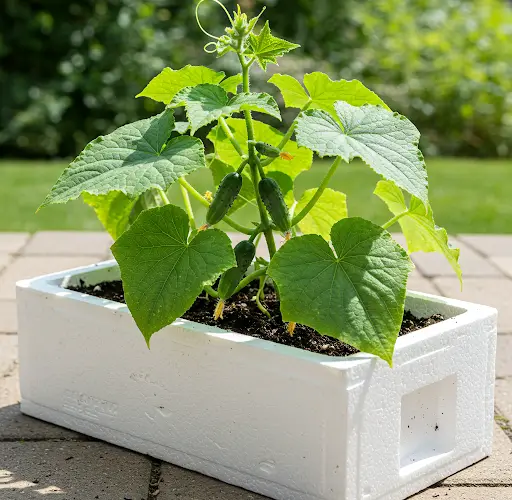
How to Grow Cucumber Plants in Styrofoam at Home
If you’re looking for a simple, space-saving way to grow fresh cucumbers at home, try using something you might already have—Styrofoam boxes. These lightweight, insulated containers are often discarded after use, but they can be turned into ideal planters for growing vegetables, especially cucumbers.
Cucumbers are fast-growing, productive plants that love warmth, water, and rich soil. By repurposing Styrofoam boxes, you can create a low-cost container garden that keeps the roots cool and moist—perfect for healthy cucumber growth. This method works well for balconies, rooftops, patios, or any small space with access to sunlight.
Here’s a complete guide on how to grow cucumber plants at home using Styrofoam containers.
Why Use Styrofoam Boxes for Gardening?
Styrofoam boxes are typically used to transport seafood, fruits, or frozen items. While they are not biodegradable, reusing them for gardening helps reduce waste and provides a number of benefits:
-
Excellent insulation: Keeps soil temperature stable
-
Lightweight: Easy to move around
-
Good drainage: Can be easily modified to prevent overwatering
-
Cost-effective: Often free or inexpensive
-
Durable: Withstands outdoor conditions
Because cucumbers are sensitive to excessive heat and moisture fluctuations, the insulation provided by Styrofoam is especially helpful.
What You’ll Need
-
A clean Styrofoam box (medium to large size, at least 10–12 inches deep)
-
Garden soil or potting mix
-
Well-rotted compost or organic fertilizer
-
Cucumber seeds or seedlings
-
Bamboo sticks, trellis, or netting for support
-
Small knife or screwdriver (for making drainage holes)
-
Mulch (optional)
-
Watering can or spray bottle
Step-by-Step Guide to Growing Cucumbers in Styrofoam
1. Prepare the Container
Clean the Styrofoam box thoroughly to remove any residues. Use a knife or screwdriver to poke several drainage holes at the bottom. This is essential to prevent waterlogging, which can lead to root rot.
You can also poke a few holes along the sides near the bottom for additional airflow and drainage.
Place the box in a sunny area where it will receive at least 6–8 hours of sunlight daily.
2. Fill with Nutrient-Rich Soil
Cucumbers thrive in loose, well-draining soil that is rich in organic matter. Mix the following in equal parts:
-
Garden soil or potting mix
-
Compost or well-rotted manure
-
Coconut coir or rice husk (to improve aeration)
Fill the Styrofoam box with the soil mix, leaving about 2 inches of space at the top to allow for watering.
3. Plant the Seeds or Seedlings
You can either start from seeds or transplant young cucumber seedlings.
-
Seeds: Plant 2–3 seeds about 1 inch deep and 3–4 inches apart. Once the seedlings emerge, thin them out to leave the strongest one or two plants.
-
Seedlings: Gently transplant into the soil, being careful not to disturb the roots.
Water the soil gently after planting.
Caring for Your Cucumber Plants
1. Watering
Cucumbers love moisture but hate soggy roots. Water the plants regularly to keep the soil evenly moist—especially during flowering and fruiting stages. During hot weather, you may need to water daily.
Use a watering can or spray bottle to avoid disturbing the soil and roots.
2. Fertilizing
Feed your cucumber plants with organic fertilizer every two weeks. Options include compost tea, fermented banana peel water, or fish emulsion. These natural fertilizers promote vigorous growth and better fruiting.
Top-dress with compost mid-season if the plant starts to slow down.
3. Providing Support
Cucumber vines grow quickly and need support to stay healthy and produce quality fruit. Insert bamboo sticks or build a small trellis and guide the vines upward as they grow. Vertical growth improves air circulation and reduces the risk of pests and diseases.
You can also use nylon mesh or string tied to nearby walls or railings.
4. Mulching
Add a layer of dry leaves, straw, or rice husks to cover the soil surface. Mulch helps retain moisture, suppress weeds, and regulate temperature in the Styrofoam box.
Pollination Tips
Cucumbers need pollination to produce fruit. If you’re growing them in an enclosed space with few insects, you can hand-pollinate. Use a soft brush or cotton swab to transfer pollen from the male flowers to the female ones.
Male flowers usually appear first and have a thin stem. Female flowers have a tiny cucumber-shaped bulge behind the petals.
Harvesting Cucumbers
Cucumbers can be harvested in 40–60 days, depending on the variety. Check daily once the fruit begins forming. Harvest when cucumbers are firm, dark green, and about 6–8 inches long (for most varieties).
Cut the stem cleanly with scissors or a knife instead of pulling the fruit, which may damage the vine.
Frequent harvesting encourages the plant to produce more fruit.
Tips for Best Results
-
Don’t overcrowd the box—limit to 1–2 cucumber plants per Styrofoam container.
-
Place a tray or board under the box to collect excess water if needed.
-
Turn the box every few days if sunlight is uneven.
-
Protect young seedlings from heavy rain or pests with a mesh cover.
Conclusion
Growing cucumbers at home using Styrofoam boxes is not only eco-friendly but also highly productive and satisfying. With just a little effort, you can enjoy a steady supply of fresh, crispy cucumbers from your balcony, rooftop, or garden corner.
So, the next time you find a Styrofoam box lying around, don’t throw it away—turn it into a thriving mini-garden and start growing your own food, one plant at a time.


