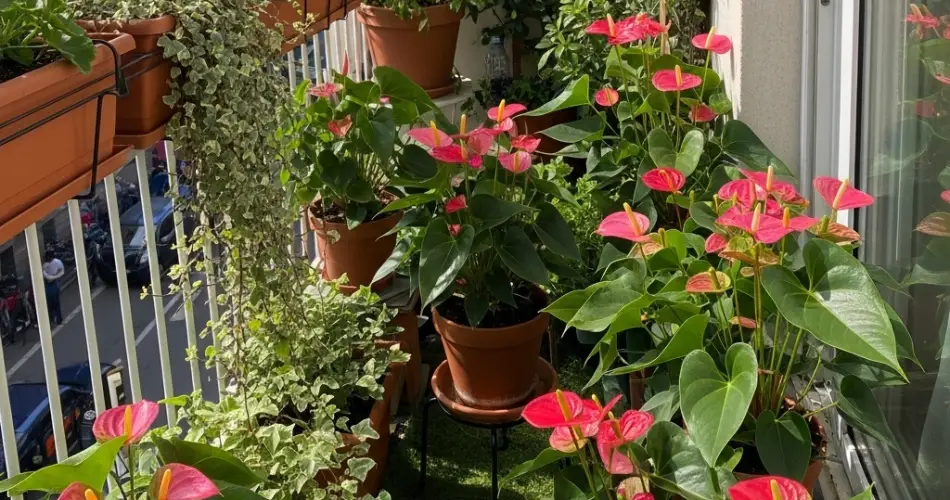
Anthuriums, with their vibrant, heart-shaped flowers and glossy green leaves, are among the most striking ornamental plants you can grow. Although they are often associated with lush tropical gardens or indoor displays, they can thrive beautifully on a balcony—even if you’re completely new to gardening.
Whether you live in an apartment or a home with limited space, growing anthurium on your balcony is not only possible but surprisingly easy with a few basic tips. Here’s everything you need to know to get started.
1. Understanding Anthurium’s Natural Preferences
Anthuriums originate from tropical rainforests, where they grow under the canopy of trees. This means they naturally prefer bright but indirect light, high humidity, and warm temperatures. Replicating these conditions on your balcony is the key to helping your anthurium thrive.
Even if you’re new to gardening, don’t worry. Anthuriums are relatively forgiving and adapt well to container life, making them perfect for balconies.
2. Choose the Right Pot and Soil
Use a pot with good drainage holes to prevent root rot. Anthurium roots need air as much as they need moisture, so avoid heavy garden soil. Instead, opt for a light, airy potting mix—ideally a blend designed for orchids or a mix of peat moss, pine bark, and perlite. This will help retain moisture without becoming soggy.
Make sure the pot isn’t too big; anthuriums prefer slightly snug conditions. As the plant grows, you can gradually move it to a larger container.
3. Provide the Right Lighting
Place your anthurium in a spot with bright, indirect light. Avoid direct sunlight, especially in the afternoon, as it can scorch the leaves. A balcony with eastern or northern exposure works well, or you can use a sheer curtain or shade cloth to filter strong sun if your balcony faces south or west.
Insufficient light can cause the plant to stop blooming, while too much direct sun can burn the foliage.
4. Water Wisely
Watering is one of the most important aspects of anthurium care—and the one that often causes problems for beginners. Anthuriums like to be kept slightly moist, but not soggy. Allow the top inch of soil to dry out between waterings.
In warm months, you may need to water once or twice a week. In cooler months, reduce the frequency. Always empty any water that collects in the saucer under the pot to avoid root rot.
5. Increase Humidity
Anthuriums love humidity levels of around 60-80%. On a balcony, especially during dry or windy weather, humidity can drop. To boost it:
-
Group your anthurium with other plants to create a microclimate.
-
Place a shallow tray filled with water and pebbles near the plant (make sure the pot is not sitting in water).
-
Mist the leaves occasionally using a spray bottle—but avoid misting the flowers directly.
If your balcony is enclosed or partially protected, it’s easier to control the humidity. In very dry climates, a small portable humidifier may help.
6. Feed for Flowers
To encourage regular blooming, feed your anthurium once a month during the growing season (spring and summer) with a balanced liquid fertilizer diluted to half strength. Choose a fertilizer with phosphorus to promote flower development.
Reduce feeding in fall and winter, when the plant’s growth naturally slows down.
7. Maintain the Right Temperature
Anthuriums prefer temperatures between 18°C and 28°C (65°F–82°F). They do not tolerate cold or frost. If temperatures on your balcony drop below 15°C (59°F), it’s best to move the plant indoors temporarily.
Protect the plant from sudden temperature changes and cold drafts. If your balcony is exposed, consider using a plastic screen or clear barrier to shield your plant on chilly nights.
8. Pruning and Repotting
Trim off dead or yellowing leaves regularly to keep the plant looking neat and to encourage new growth. Use clean scissors to avoid spreading disease.
Repot your anthurium every 2 to 3 years, or when you notice the roots outgrowing the container. This gives the plant fresh soil and more room to grow.
9. Watch for Pests
Although generally hardy, anthuriums can sometimes attract pests like aphids, mealybugs, or spider mites. Regularly inspect the leaves and undersides for signs of trouble. If you notice pests, remove them manually or spray with neem oil or an insecticidal soap.
Final Thoughts
Even if you’ve never grown a plant before, anthuriums are a great place to start. Their bold appearance adds instant charm to any balcony, and with just a bit of care, they’ll reward you with blooms that last for weeks at a time.
By following these simple tips, you can create a tropical oasis right outside your door—no green thumb required.


