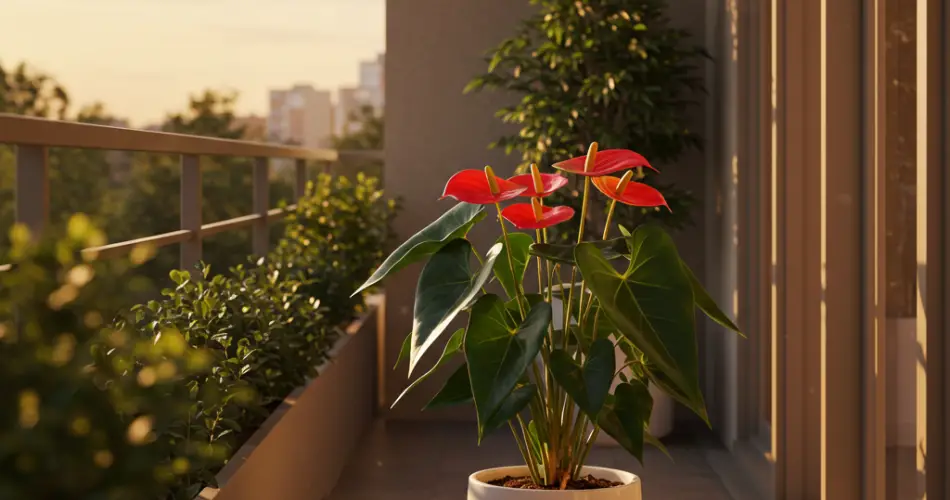
Anthuriums, often called “flamingo flowers” or “laceleaf,” are exotic plants admired for their vibrant, glossy blooms and striking foliage. With their long-lasting flowers and tropical elegance, they make a stunning addition to any space—even a small balcony. The good news? You don’t need to be an expert gardener to grow Anthuriums successfully.
Whether you live in a city apartment or have limited outdoor space, Anthuriums can thrive on a balcony with a few basic care techniques. Follow these simple tips to enjoy their beauty all year round.
Why Anthuriums Are Perfect for Balconies
Anthuriums are tropical plants that naturally grow in the understory of rainforests, which means they love filtered light, warm temperatures, and humidity. These needs align well with many balcony conditions—especially if your space gets indirect sunlight or is partially shaded.
Compact, low-maintenance, and striking in appearance, Anthuriums are ideal for container gardening. They offer a bold pop of color and a tropical vibe without needing a large garden or complicated care routine.
Choosing the Right Anthurium Variety
There are over 1,000 species of Anthurium, but the most popular for home gardening is Anthurium andraeanum. It’s known for its heart-shaped, waxy spathes in red, pink, white, or purple, and a contrasting yellow spadix (the spike in the center). These vibrant “flowers” are actually modified leaves and can last for weeks.
Other notable types include:
-
Anthurium clarinervium: Grown for its large, velvety, white-veined leaves.
-
Anthurium crystallinum: Known for its beautiful foliage and tolerance to indoor or shaded conditions.
Choose a healthy plant from a nursery or garden center, preferably one that already has blooms or visible new growth.
Selecting the Right Pot and Soil
Anthuriums thrive in well-draining pots that mimic the loose, airy soil of their native rainforest habitat. Use a pot with drainage holes to prevent water from pooling at the roots.
For best results, use a light and breathable potting mix, such as:
-
Orchid mix combined with peat moss or coconut coir.
-
A mix of perlite, pine bark, and compost.
-
A store-bought tropical plant mix.
Avoid regular garden soil, as it’s too dense and can suffocate the roots.
Ideal Balcony Conditions
Your balcony doesn’t need to be large, but it does need the right environment. Anthuriums prefer:
-
Bright, indirect light: Morning sunlight is ideal; avoid direct afternoon sun, which can scorch the leaves.
-
Temperatures between 65–85°F (18–29°C): Protect the plant from cold drafts or sudden temperature drops.
-
Moderate to high humidity: Balconies in humid climates are perfect. In dry regions, mist the plant daily or use a small tray of water and pebbles nearby.
If your balcony faces west or south and gets strong sun, provide light shade using curtains, a trellis, or positioning the plant behind taller pots.
Watering and Feeding
Anthuriums enjoy consistent moisture but hate soggy soil. A good rule of thumb is to water once the top inch of soil feels dry. During hot weather, you may need to water more frequently, while cooler months require less.
Tips for proper watering:
-
Water deeply until it drains from the bottom.
-
Always empty saucers to avoid root rot.
-
Use room-temperature water.
Feed your Anthurium with a balanced liquid fertilizer every 4–6 weeks during the growing season (spring through early fall). A fertilizer formulated for flowering houseplants or orchids works well. Reduce feeding in winter when the plant’s growth slows.
Pruning and General Maintenance
Anthuriums are generally low-maintenance. To keep your plant healthy:
-
Remove dead or yellowing leaves to encourage new growth.
-
Trim faded blooms to redirect energy into producing more flowers.
-
Clean the leaves occasionally with a damp cloth to remove dust and improve photosynthesis.
If your plant becomes too large, you can repot it every 2–3 years or divide the root ball to create new plants.
Common Issues and Simple Solutions
Anthuriums are hardy but can occasionally show signs of stress. Here’s how to address some common problems:
-
Yellow leaves: Usually caused by overwatering or poor drainage.
-
Brown leaf tips: A sign of low humidity or too much direct sun.
-
No blooms: Possibly due to low light or lack of feeding. Move the plant to a brighter spot and ensure regular fertilizing.
-
Pests: Watch out for mealybugs or spider mites. Remove them with neem oil spray or by wiping with a cotton swab dipped in alcohol.
Encouraging More Blooms
To help your Anthurium bloom continuously:
-
Ensure it receives bright but indirect light.
-
Maintain consistent humidity and warmth.
-
Avoid stressing the plant by overwatering or moving it too often.
-
Keep it slightly root-bound, which can stimulate flowering.
With these care strategies, you’ll enjoy more vibrant blooms and healthy growth year-round.
Final Thoughts
Growing Anthuriums on a balcony is not only possible—it’s easy and rewarding, even for beginners. These tropical beauties bring lush greenery and long-lasting color to any space, and they don’t demand much in return. With the right potting mix, regular watering, and proper lighting, your Anthurium can thrive and bloom beautifully right outside your door.
Whether you’re looking to enhance your balcony with eye-catching plants or simply want to try something new, Anthuriums are a perfect choice for beginner gardeners and plant lovers alike.


