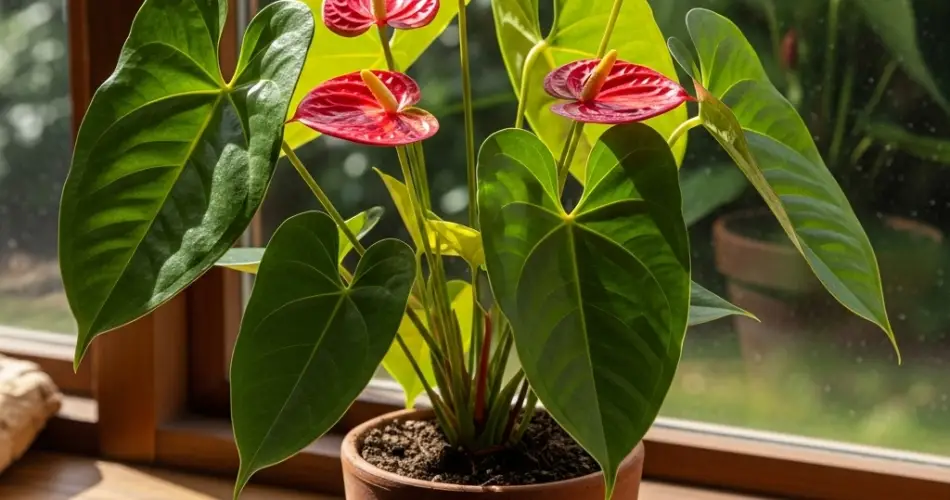
Anthuriums are tropical houseplants prized for their glossy, heart-shaped leaves and striking, long-lasting flowers. Known as “flamingo flowers” or “laceleaf,” they bring vibrant color and elegance to any indoor space. While relatively low-maintenance, proper watering is critical for maintaining healthy foliage and flower production. Overwatering can cause root rot and yellowing leaves, while underwatering may lead to drooping foliage and stunted growth. Understanding how often to water anthuriums ensures optimal growth and keeps your plant vibrant year-round.
Understanding Anthurium Water Needs
Anthuriums originate from tropical rainforests, where humidity is high and rainfall is frequent. Their roots are adapted to well-draining conditions and cannot tolerate waterlogged soil. Despite this, they also cannot thrive in overly dry conditions, as consistent moisture is necessary for healthy growth. The goal is to provide sufficient water to keep the soil slightly moist while avoiding excess moisture that can damage roots.
Overwatering is the most common issue among indoor growers. It can lead to yellow leaves, mushy stems, and fungal problems. On the other hand, underwatering slows growth, causes leaf drooping, and can affect flower development. Striking the right balance is essential for maintaining a thriving anthurium.
Choosing the Right Container and Soil
Proper soil and pot selection play a vital role in regulating water for anthuriums. Use a container with drainage holes to allow excess water to escape, preventing root rot. Terracotta or ceramic pots are ideal, as they provide airflow and help the soil dry evenly. Avoid plastic pots without drainage, as water can accumulate and damage roots.
Anthuriums thrive in a well-draining, airy soil mix. A combination of high-quality potting soil, orchid bark, perlite, and peat moss works well. This mix retains enough moisture to nourish the plant while allowing excess water to drain efficiently, mimicking the plant’s natural environment.
Watering Techniques
Watering anthuriums properly requires attention and consistency:
-
Check Soil Moisture: Insert your finger about 1–2 inches into the soil. Only water if the soil feels dry at this depth.
-
Water Thoroughly: Pour water evenly around the base of the plant until it drains from the bottom. This ensures all roots receive adequate moisture.
-
Avoid Wet Leaves: Focus on watering the soil rather than the foliage to prevent fungal growth or leaf damage.
-
Use Room-Temperature Water: Water that is too cold can shock the roots, while room-temperature water is absorbed efficiently.
Seasonal Adjustments in Watering
Anthurium water requirements vary throughout the year:
-
Spring and Summer: These are the active growing months. Water roughly every 7–10 days, depending on temperature, humidity, and light. Increased warmth and sunlight accelerate growth and water uptake.
-
Fall and Winter: Growth slows in cooler months, reducing water needs. Water approximately every 2–3 weeks, allowing soil to dry slightly between sessions. Overwatering during this period is a common cause of root problems.
Environmental factors such as indoor heating, air conditioning, and light exposure can also influence watering frequency. Adjust your routine based on these conditions rather than relying on a strict schedule.
Signs of Proper Hydration
Healthy anthurium leaves are firm, glossy, and upright. Signs that your plant needs water include drooping or curling leaves, dry leaf tips, or slowed growth. Conversely, yellowing leaves, mushy stems, or a musty smell from the soil indicate overwatering. Observing these signs ensures that your watering routine meets your plant’s needs.
Additional Tips for Healthy Anthuriums
-
Humidity: Anthuriums thrive in moderate to high humidity. Using a humidity tray, misting occasionally, or placing the plant in a naturally humid area supports leaf turgor and flower production.
-
Light: Bright, indirect light encourages growth and flower development. Avoid direct sunlight, which can scorch leaves and increase evaporation.
-
Fertilization: Feed sparingly with a balanced, diluted fertilizer during the growing season to promote healthy foliage and vibrant blooms.
-
Repotting: Refresh soil every 2–3 years to accommodate root growth and maintain optimal drainage and nutrient availability.
Benefits of Proper Watering
Maintaining a consistent watering schedule ensures your anthurium remains lush, vibrant, and free from common problems like root rot or brown leaf tips. Proper hydration supports strong root systems, encourages the production of healthy leaves and flowers, and prolongs the plant’s indoor lifespan. By monitoring soil moisture, adjusting for seasonal changes, and following best watering practices, indoor gardeners can enjoy a thriving anthurium all year round.
With careful attention to watering and environmental conditions, anthuriums can flourish indoors, providing dramatic foliage and vibrant blooms that enhance any space. Correct hydration is the foundation of healthy growth, ensuring that your plant remains beautiful and resilient for years to come.


